Is Social Media Really Success? One Generation, Many Questions
Waqas Rehman Sahar
Until a few years ago, the path to fame in Pakistan was relatively straightforward. Aspiring actors looked toward television and film, singers pursued the music industry, and journalists built careers through newspapers and television networks. Recognition came through established institutions, each with its own standards, pace, and gatekeepers.
Then social media arrived.
It did more than change how people became famous—it fundamentally reshaped the very definition of success.
Today, a smartphone, an internet connection, and a creative idea can propel an ordinary young person into the view of millions. While this digital revolution has opened unprecedented opportunities, it has also raised difficult questions that remain unanswered.
Is going viral the same as being successful?
Do millions of followers guarantee a secure future?
And is digital fame really as permanent as it appears?
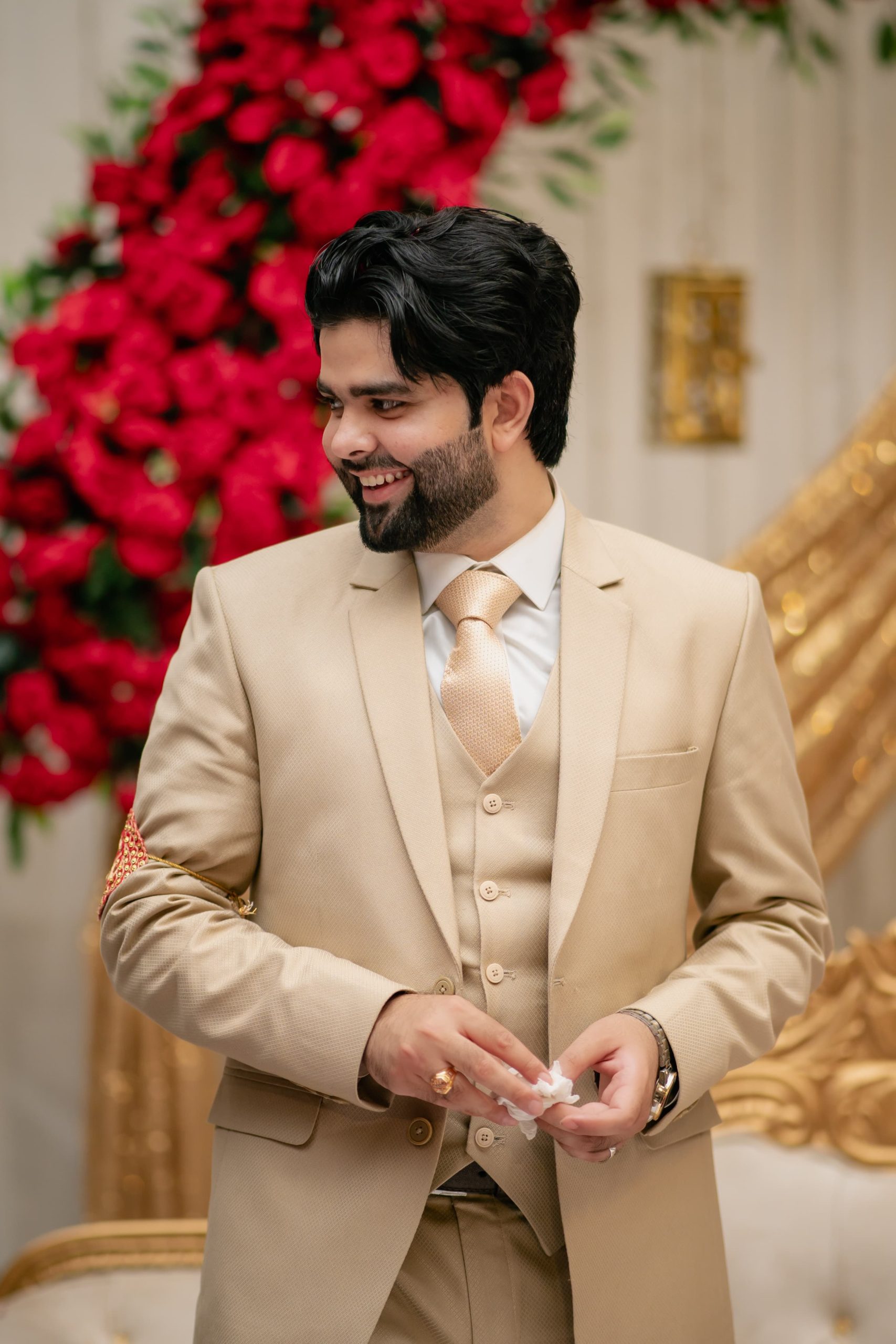
Searching for answers to these questions makes a lengthy conversation with Pakistani comedy content creator Yaseen Malak particularly revealing. Surprisingly, the discussion centered very little on comedy, TikTok, or viral videos. Instead, it revolved around time, responsibility, consistency, and preparing for the future.
That is precisely what distinguishes this conversation from a typical influencer interview.
Born in December 2000 in Peshawar, Yaseen Malak belongs to the Gagyani family of Charsadda and was raised in the historic heart of the city. Reflecting on his early years, he avoids presenting his life as an extraordinary struggle. Instead, he describes himself as no different from thousands of other young Pakistanis.
“I had the same dream every young person has—to become someone and accomplish something meaningful.”
Simple as it sounds, that statement forms the foundation of his story.
His journey is not one of overnight fame but of a young man who began experimenting with digital platforms long before social media became the career path it is today.
Many people only know the successful chapters of his career. Few are aware of what came before.
Before TikTok, Malak spent years creating content on platforms like Dubsmash and Musical.ly, constantly experimenting with different ideas and formats. The video that eventually reached millions on TikTok in 2018 may have been only his third or fourth upload there, but it was built on years of trial, failure, and persistence.
His story mirrors a broader trend emerging across Pakistan, where many content creators are attempting to transform their online identities into sustainable businesses, professional careers, or entrepreneurial ventures.
It also exposes one of social media’s biggest misconceptions.
Success online is often described as “overnight.”
Malak disagrees.
For him, the viral moment is not the achievement itself—it is simply the visible outcome of years of invisible work.
When asked what it felt like to become famous for the first time, his answer was unexpectedly modest.
“Even today, I don’t really think of myself as a famous person.”
Many social media personalities build their identity around popularity. Malak, however, repeatedly insists that there are better performers, more talented creators, and endless opportunities to keep learning.
That humility is perhaps one of the defining characteristics of his personality.
Young people who achieve fame early often face a greater challenge after success than before it—remaining grounded.
Malak credits his family, particularly his elders, for constantly reminding him not to let popularity become arrogance.
Yet perhaps no sentence captures his philosophy more completely than this:
“I paid for my fame with my time.”
More than a memorable quote, it serves as the central theme of his journey.
Since 2016, he says, he has devoted much of his youth to creating videos, developing characters, and consistently producing content. Had he invested those same years in another profession or business, he believes he might have succeeded there as well.
But he chose passion.
That admission is significant because conversations about social media success often celebrate results while overlooking the cost.
Viewers may watch a one-minute video.
They rarely see the countless hours, months, or even years required to create it.
As the discussion turns toward his personal life, another dimension of his character becomes visible.
Speaking about the death of his father in 2010, Malak offers perhaps the most emotionally powerful sentence of the interview.
“I was born in 2000, but my eyes truly opened in 2010.”
Within those few words lies the story of a child forced to mature long before his time.
For him, losing his father was more than a family tragedy—it became the moment he first understood responsibility.
His mother’s heart attack in 2023 became another defining chapter, one he describes as among the most difficult periods of his life.
Notably, he never presents these experiences as reasons to seek sympathy.
Instead, he regards them as experiences that shaped his perspective and strengthened his character.
That distinction matters.
Where many interviews use personal hardship to evoke emotion, Malak speaks of it simply to explain the person he has become.
At this point, the conversation evolves beyond one individual’s story.
It becomes the story of an entire generation.
Across Pakistan, thousands of young people are trying to build identities through social media. Many see viral success as the ultimate goal.
To Be Continued
Malak does not.
For him, the real challenge begins afterward.
Perhaps no other industry creates such a wide gap between becoming famous and remaining relevant.
That reality is one he understands well.
A video reaching millions is only the first step, he says.
The real test is staying in people’s minds long after the algorithm has moved on.
As he puts it:
“Going viral is easy. Staying in people’s minds after going viral is much harder.”
His observation extends far beyond his personal experience.
Around the world, countless creators have experienced explosive popularity only to disappear as new trends, new personalities, and changing algorithms replaced them.
That, he believes, is simply the nature of social media.
It is also why he refuses to treat fame as something permanent.
Building an entire future on digital popularity alone, he argues, means building on uncertain ground.
That philosophy is reflected in his own long-term planning.
While social media gave him visibility, he felt it was essential to transform that recognition into something more enduring.
He therefore expanded his family’s traditional business by establishing a restaurant chain under his own name in two major cities of Khyber Pakhtunkhwa.
The point, however, is not the restaurant itself.
It is the principle behind it.
Malak believes fame should eventually be converted into practical skills, sustainable work, and lasting value.
Otherwise, its usefulness inevitably fades with time.
His advice to young people reflects that same philosophy.
Rather than encouraging them to become famous, he urges them to develop real skills.
In his view, creating videos alone will not be enough in the years ahead. Every young person, he believes, should acquire practical abilities that remain valuable regardless of how technology changes.
That perspective challenges one of the most common assumptions surrounding influencer culture.
Many young people imagine that millions of followers automatically translate into financial security.
Malak disagrees.
Content creation carries expenses, uncertainty, and dependence on platforms whose policies and algorithms constantly evolve.
Social media, he insists, should be viewed as a tool—not as life’s only foundation.
The conversation also touches on another important issue: the changing culture of online content.
While social media has created remarkable opportunities, it has also encouraged some creators to chase attention through humiliation, insults, or low-quality content designed purely for views.
Significantly, this criticism comes not from an outsider but from someone deeply embedded in the digital world.
Malak believes that popularity gained at the expense of dignity, respect, or quality rarely lasts.
The discussion also explores a long-standing perception about Pashtun society and the creative arts.
Many believe the two naturally conflict.
Malak sees it differently.
The issue, he argues, is not creativity itself but how it is practiced.
Families are concerned about young people losing their way, not about art itself. Creative work carried out with responsibility, integrity, and respect, he believes, can earn acceptance within society.
Whether everyone agrees with that view or not, it reflects something increasingly visible among Pakistan’s younger generation—a desire to balance cultural identity with the opportunities of the digital age rather than choosing one over the other.
Perhaps that is the interview’s most important insight.
Yaseen Malak’s story is not simply about a young man who found fame through a smartphone.
It is also the story of a generation that grew up with the internet, built identities through social media, and is now beginning to think beyond followers toward sustainability, responsibility, and long-term purpose.
Over the past several years, an entire generation of Pakistani content creators has emerged.
Some have entered acting.
Others have pursued music.
Many have built businesses or expanded into entirely different professions.
This shift represents more than changing careers.
It reflects a changing definition of success itself.
There was a time when government jobs or traditional professions represented the ultimate aspiration for many young Pakistanis.
Today, the opportunities are broader than ever.
But so is the uncertainty.
Perhaps that is why words like time, skills, and consistency appear so often throughout Malak’s conversation—qualities that are often overshadowed by the glamour of social media.
If there is one sentence worth remembering after the interview, it is unlikely to be one of his comedy sketches or viral performances.
Instead, it is the quiet reflection he offers with complete sincerity:
“I paid for my fame with my time.”
Perhaps that single sentence not only summarizes his personal journey but also captures the mindset of a new digital generation in Pakistan—one that is gradually learning that fame alone is never enough unless it is transformed into lasting skills, meaningful work, and a sustainable future.