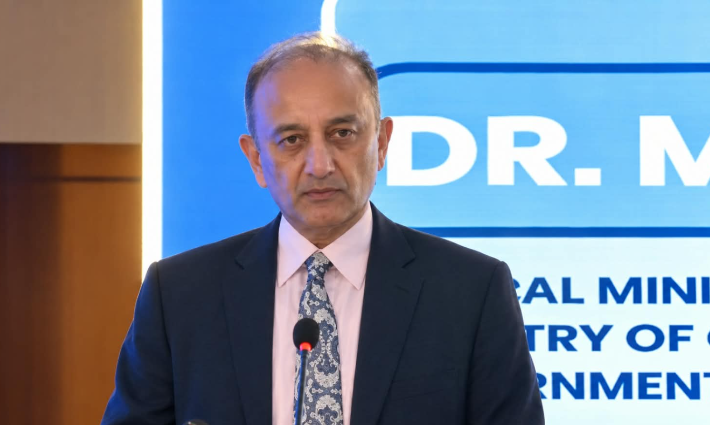
Federal Minister for Climate Change Dr Musadik Malik on Wednesday highlighted the unequal burden of air pollution on society, saying poor communities, schoolchildren, street vendors and farmers were more exposed to smog than affluent people who could afford air purifiers and other protective measures.
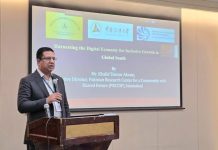
Addressing the Pakistan National Clean Air Conference 2026 here, the minister described air pollution as a man-made crisis resulting from policy choices and human activities, arguing that its health and economic consequences fell disproportionately on those with the fewest resources to protect themselves.
He said pollution imposed an economic burden equivalent to 6.5 per cent of the country’s gross domestic product, attributing the cost to illness, hospitalisation and the financial pressures faced by affected families.
Highlighting the impact on public health, Dr Malik referred to chronic obstructive pulmonary disease (COPD) patients requiring oxygen and medication, saying the consequences of pollution extended beyond what could be immediately seen in the environment.
Citing a UNICEF report, he said air pollution was damaging children’s lung health and growth, while questioning whether children exposed to polluted air could fully understand the harm being done to their health.
He stressed that the ability to cope with pollution varied according to people’s economic circumstances and living conditions.
“Some will adapt, some will install purifiers,” he said, contrasting the protection available to affluent households with the exposure faced by children travelling to school through smog and workers earning their livelihoods outdoors.
The minister said street vendors, farmers and other outdoor workers also bore the consequences of polluted air, while farmers involved in crop-residue burning were themselves affected by the resulting pollution.
He called for a broader understanding of the crisis, saying the people contributing to pollution through agricultural practices were also part of the communities suffering its consequences.
Describing air pollution as a policy challenge rather than a natural disaster, Dr Malik said industrial activity and other human actions had contributed to the crisis and that its remedy lay in effective policy measures.
He cited the construction of the Karakoram Highway through mountainous terrain and efforts to control dengue as examples of challenges that could be addressed through determined action. He also referred to China’s experience, saying Beijing and Shanghai had moved from being among the world’s most polluted cities to becoming major exporters of solar technology.
The minister said Pakistan could also make progress on clean air through policy implementation and cooperation with development partners.
Announcing a planned $10 million fund for clean-air startups, he said the government had decided to establish the fund using its own limited resources after seeking support from partners. He said approval of the fund’s board was expected the following day.
Dr Malik described the proposed fund as an obligation to future generations rather than a grant or loan, saying the government was committed to pursuing clean-air measures with or without external partners.
He acknowledged the role of development partners, including the World Bank, Asian Development Bank, UNICEF and the German development agency GIZ, in supporting climate-related initiatives.
Emphasising the need to translate commitments into action, the minister said the government’s clean-air agenda required engineering, policy and financial commitments rather than slogans.
He expressed the government’s resolve to work with partners to implement measures aimed at improving air quality and protecting public health.