DLP Report
PESHAWAR
Member of the Khyber Pakhtunkhwa Education Advisory Council Dr Aamir Abdullah has urged public sector universities to improve financial governance, strengthen internal audit systems and ensure drug-free campuses, calling for practical reforms to address the higher education sector’s long standing challenges.
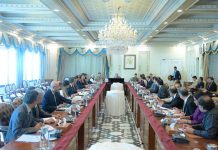
He was speaking as chief guest at a vice-chancellors’ conference attended by Secretary Higher Education, Archives and Libraries Abidullah Kakakhel, Special Secretary Fazal Hussain, Director Quality Assurance Higher Education Dr Imranullah Marwat, vice-chancellors of public sector universities across the province and other senior officials.
The conference aimed to identify key challenges facing public universities and develop practical recommendations through collective consultation.
Dr Abdullah said education and learning should remain the primary focus of university students and that campuses must provide an environment conducive to academic development. He stressed the need to monitor student activities to ensure that their time was spent on positive and constructive pursuits.
He said the government had a zero-tolerance policy towards negative activities on university campuses and urged administrations to ensure that campuses remained free from such practices.
Emphasising financial management, he expressed concern over the state of internal audit systems at universities and called for improvements in financial governance. He also directed university administrations to provide quality accommodation in hostels and improve existing residential facilities.
Dr Abdullah said campuses must be made free of drugs and advised university administrations to seek immediate assistance from district administrations and police whenever required.
He urged the experts participating in the conference’s working groups to develop actionable recommendations that could be effectively implemented to improve university administration and academic standards.
Discussing the historical evolution of higher education, he said the region had long been a centre of learning, citing the educational traditions associated with the Gupta and Maurya empires and institutions such as Nalanda and Taxila, where scholarly debate and freedom of expression were valued.
He also highlighted the contribution of institutions such as Al-Qarawiyyin to the advancement of knowledge and research in Islamic history, alongside translation movements and centres of learning, including the House of Wisdom.
He said the subsequent development of universities during the medieval period strengthened the concept of academic degrees, while the British era introduced an educational model whose influence remained visible in the existing teaching system.
Referring to the modern phase of higher education, Dr Abdullah said financial sustainability played a significant role in the development of leading universities worldwide. He noted that institutions increasingly relied on diverse sources of funding to reduce financial dependence and strengthen research, academic development and competitiveness.
“This is the era of endowment funds, research and competition,” he said, urging universities to prioritise financial stability, research and improvements in educational quality.
He described the vice-chancellors’ conference as an important opportunity to address institutional challenges and formulate practical solutions. He said the recommendations could have been developed through an external consultancy, but collective deliberations by experienced university experts could prove an important step towards improving institutional performance, academic activities and governance.
Vice-Chancellor of the University of Peshawar Prof Dr Johar Ali, Secretary Elementary and Secondary Education Abidullah Kakakhel and other senior officials of the Higher Education Department also addressed the conference.
The working groups discussed a range of issues, including academic and administrative challenges, governance reforms, implementation of anti-harassment policies, prevention of drug use, financial constraints, establishment and strengthening of endowment funds, and activation of alumni associations.
Participants presented proposals and recommendations to address these concerns.