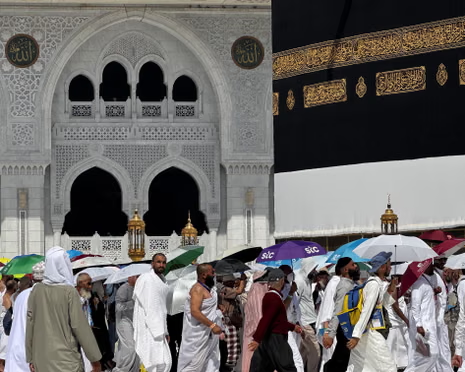
This year, theme for World Population Day is – Family Planning: Empowering People, Developing Nations
NEW YORK
This World Population Day, understand the problems associated with a rapid rise in population and what we can do to coexist with fellow humans and nature
The gap between increases in the population by a billion is diminishing. While the last billion was added in a little over a decade, the next might be added in a shorter span.
However, the total land and resources we have at our disposal remain the same. Even among the existing population, there are several issues that need to be addressed like poverty, gender equality and the outbreak of diseases. To address these issues, the United Nations declared July 11 ever year as the World Population Days.
The World Population day is celebrated every year on July 11 since it was established by the Governing Council of the United Nations Development Programme in 1989. It is celebrated on this day due to the public’s increased interest in Five Billion Day on July 11, 1987 – approximately the day the world population reached five billion.
The day seeks to focus the attention on the importance of population issues with different themes for each year.
This year, the theme for World Population Day is – Family Planning: Empowering People, Developing Nations. It aims to shed light on access to safe, voluntary family planning which is key to gender equality and reducing poverty.
According to the UN, roughly 83 million people are added to the population every year. At this rate, global population is expected to reach 8.6 billion in 2030 and 9.8 billion in 2050, according to the medium-variant projection.
However, with the population rising rapidly, several problems can arise due to the availability of limited resources in this planet. Some of these include:
Depletion of natural resources: Currently, humans are using 50 per cent more resources than the Earth can provide. With the population constantly increasing, this equation can become more skewed until we run out of resources altogether.
Lack of infrastructure: Governments in many developing countries do not have the funds to meet the infrastructure requirements of their current population. So, a rise in population would only increase the pressure on the governments who would in turn look to expand land to support infrastructure.
Unemployment: Many educated students today are unemployed due to the lack of job creation. A rapid increase in population will only mean more unemployed individuals.
Poverty: With an increase in unemployment rates and lack of infrastructre, poverty is sure to rise because of overpopulation.
Pollution: Air and noise pollution affect us and the evironment more than you can imagine. And rise in population will only lead to increased pollution.
While we cannot stop the rise in population, we can certainly curb the rate of increase. UN’s initiatives like the one on Family Planning are a step towards this. As responsible citizens, we can use our existing natural resources judiciously and shift our dependence towards renewable sources of power and energy.
We need to discover means of job creation and reduce the gap between the number of graduates and the number of jobs available. Urban planning is also a step towards effective use of infrastructure.
The future of the world is in our hands and we should learn to make the best use of available resources and coexist peacefully with others and nature, on whom we are largely dependent for survival.