ISLAMABAD
A year after deadly floods inundated a third of Pakistan, the broken promises to rebuild the country present “a litmus test for climate justice,” the head of the United Nations said.
“Billions were pledged” by rich nations in the aftermath of the disaster, said Secretary-General Antonio Guterres, “but the vast majority was in loans. And Pakistan is still waiting for much of the funding.”
“Delays are undermining people’s efforts to rebuild their lives,” the UN chief said during a special session dedicated to the catastrophe, adding that the Asian nation was “a double victim — of climate chaos and of our outdated and unjust global financial system.”
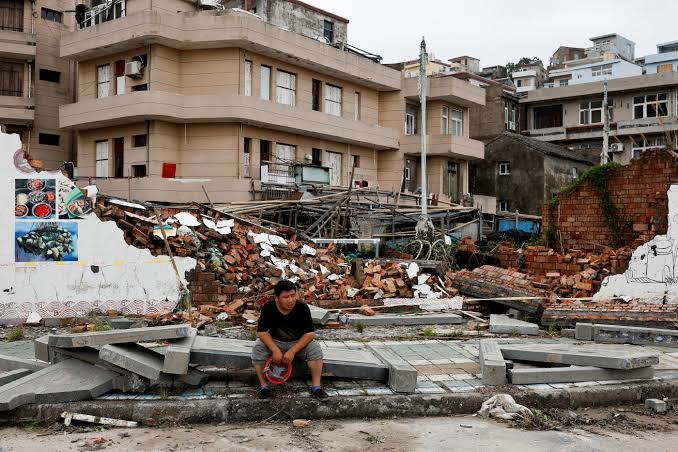
Some $9 billion was pledged to help reconstruct Pakistan in January, though it is still reeling from the effects of the heavy monsoon rains, which displaced eight million people and killed some 1,700.
More than eight million residents in areas hit by the floods lack access to clean water, Guterres said, while noting that Pakistan is responsible for less than one percent of the greenhouse gas emissions that likely fuelled last year’s “climate chaos.”
“The countries that contributed most to global heating must contribute most to righting the harm it has done.” Guterres also called for the creation of a “loss and damage” fund for developing countries — many of which, like Pakistan, are at outsized risk of climate change despite contributing relatively little in the way of carbon emissions.
Such a fund was promised at COP27 late last year, though it has yet to take shape. It is on the agenda for this year’s COP28, to be hosted by the United Arab Emirates. Calling again for the world to move away from fossil fuels, Guterres warned that climate change is no longer “knocking on everyone’s door.”
“Today, it is beating that door down, from Libya to the Horn of Africa, China, Canada and beyond.” During the special session, Guterres, his top officials and representatives of key nations reaffirmed support for Pakistan as it pushes ahead with the massive task of rebuilding following last year’s “apocalyptic” flood that submerged a third of the country.
The occasion was an informal meeting of the UN General Assembly convened to review the implementation of its last year’s resolution calling on the world community to increase aid and keep up the political will to support the country’s recovery long-term.
That resolution also expressed solidarity with the government and people of Pakistan in dealing with the aftermath of the devastation left behind by the climate-induced deluge. Record-breaking floods in Pakistan affected over 33 million people and killed 1,700 or more. Nearly 8 million people were displaced, with many still living in tents and makeshift homes.
“We are here for the people of Pakistan,” the UN chief, who saw the huge damage for himself during a visit to the flood-hit country in August 2022, said in his keynote speech to the delegates in the UN’s Trusteeship Council chamber.
“I will never forget the climate-related carnage I saw. Lives, homes, livelihoods, schools, hospitals all obliterated,” Guterres said. “While much of the water has receded, the needs have not,” he said. “When the floods hit Pakistanis were first to help each other,” Guterres said, adding that the United Nations stood with them.
He said that as of now 69 percent of the $816 million UN appeal for immediate aid and protection has been funded, the amount sought for Pakistan’s Floods Response Plan. Expressing gratitude to the “esteemed” Secretary-General , Pakistan’s UN Ambassador Munir Akram said he was with the people of Pakistan all the way; visiting those affected, issuing an Emergency appeal, mobilizing relief, and then working with Pakistan and other development partners.
The partners included the World Bank, the Asian Development Bank, the European Union, the UNDP and the Resident Coordinator to develop, first, a Post-Disaster National Assessment, and then the Resilient Recovery, Rehabilitation and Reconstruction Framework (the 4RF Plan).
Pakistan, Ambassador Akram said, is grateful for the solidarity and support displayed by the international community. OCHA (UN Office for the Coordination of Humanitarian Affairs) Emergency Response Fund was critical in the early stages of the disaster.
Noting that OCHA’s Flood Response Plan has received $563 million, or 69 percent, of the $816 million requested, the Pakistani envoy said, “We hope it will be fully funded.”
The mechanisms for the timely implementation and oversight of the Plan have been established — the Policy and Strategy Committee, and Oversight Board, and the Recovery and Reconstruction Project Management Unit; and the Investment Partners’ Support Group, he told delegates.
Implementation of the Plan is underway, Ambassador Akram said. Sindh, the worst affected province, with funding from the World Bank and Asian Development Bank, and its own resources, has launched a multifaceted reconstruction strategy, encompassing the reconstruction of 2 million homes, flood assistance and rehabilitation, a Water and Agriculture Transformation Project, and projects for integrated health and women’s empowerment and strengthening of the social protection delivery system.