ISLAMABAD
The Pakistan Industrial and Traders Associations Front (PIAF) Chairman Faheemur Rehman Saigol has observed that the women’s economic participation promotes agricultural productivity, enterprise development at the micro, small, and medium enterprise levels, as well as enhances business management and returns on investment.
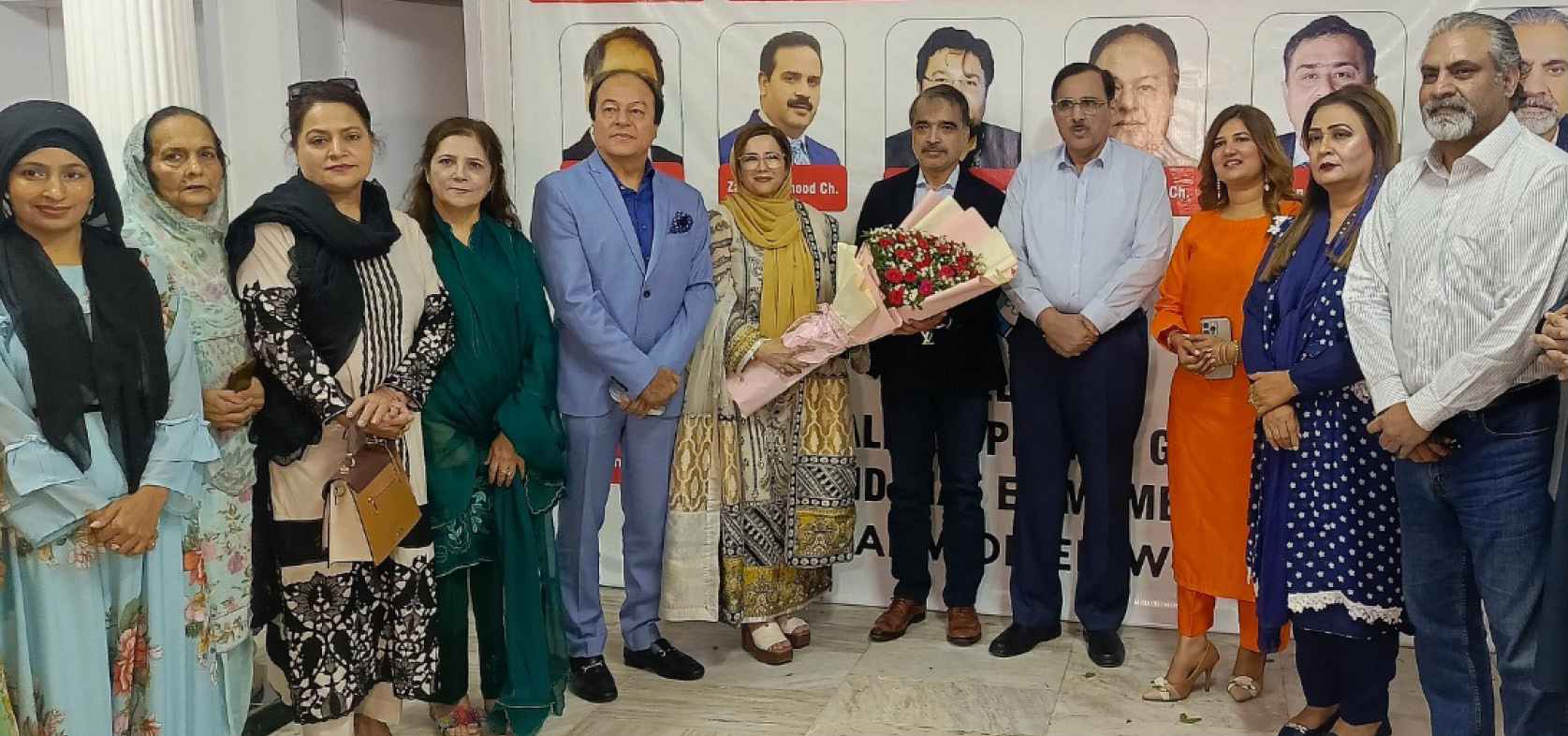
He was talking to the dinner reception hosted by PIAF Women Wing’s Nabeela Intisar and Firdous Nisar, which was also attended by Mian Anjum Nisar.
The PIAF chairman emphasized the need for separate representation and appropriate quotas for businesswomen in every sector. He stated that women should be given 30 to 40 percent representation in business institutions so that they can demonstrate their abilities in all fields of life.
Speaking at an event in Lahore celebrating the historic success of the PIAF Women Wing, the PIAF officials highlighted that the constitution guarantees the protection of women’s rights, but these laws are not fully implemented.
Both the government and the private sector need to play their role in providing opportunities for the development of women.
Faheemur Rehman Saigol stressed the importance of skill development for women to succeed in practical life. He said that national progress is not possible without integrating women into the mainstream.
One of the major barriers to the development of women is the lack of access to loans from banks, which must be addressed.
Other PIAF officials who spoke at the event echoed the need for the private sector to join hands with the government in creating a conducive environment and providing equal opportunities for businesswomen.
Like many Asian countries, Pakistani women form a major part of the labour, as they play a catalytic role in the achievement of transformational economic, environmental, and social changes essential for sustainable development.
Historically, women have played a vital role in many developing economies, struggling to build a pathway out of poverty for themselves and the surrounding communities.
In Pakistan, they have been a major driver of Pakistan’s economy. Participants of the meeting said that Pakistan needs more of these initiatives that allow women to gain more control over their resources and have greater decision-making power in the households.
Enterprising interventions such as these ensure inclusive growth and profitability, allow for income-generating activities that are sustainable, and strengthen women’s overall bargaining power in the household – in terms of land and property rights, financial security, access to markets and assets, and profits.
A large proportion of production attributable to women makes them key agents of economic development and essential to making Pakistan economically strong.
The productivity and economic empowerment of women should therefore be a logical priority of corporate programmes and national policies of Pakistan.
The priority is warranted both in terms of the importance of women’s contribution to economic growth and as a source of livelihood and poverty reduction.
These initiatives represent new opportunities that should address gender disparity because poverty is deeply rooted in the imbalance between what women do and what they have.
It provides a deeper insight into the role and contribution that marginalised women can play to improve their position within the household and society at large. Creating such inclusive settings in Pakistan is important and necessary as the country is already struggling economically.