Islamabad, November 14, 2024 – Day 2 of the National Learning Event 2024 brought together policymakers, development partners, and civil society stakeholders to explore governance reforms covering local government empowerment, inclusive development planning, and civil service reform. Discussions focused on actionable strategies aimed at building a more accountable, inclusive, and responsive governance system across all tiers of government.
The first session discussed factors affecting the effective functioning of local governments. Presentations identified the failure of Pakistan’s constitution to achieve Pakistan’s devolution objectives, and the reluctance of provincial governments to fully devolve authority and resources to local governments. Panelists highlighted the importance of local governments in building accountable and inclusive governance, and the urgent need for constitutional amendments to formally establish and empower local governments.
The second session shifted focus to development planning reforms designed to mainstream social inclusion and gender responsiveness. Presenters Iftikhar Ali Sahoo, former Secretary of the Government of Punjab, and Rashida Dohad, Executive Director of the Omar Asghar Khan Foundation, shared insights on current challenges and innovations. Ali Sahoo identified the problem of supplementary grants regularly exceeding annual development budgets, undermining the sustainability of project funding. Rashida Dohad highlighted initiatives in Khyber Pakhtunkhwa and Punjab, where Gender Budgeting Tagging has been introduced to track expenditures that benefit women and girls, in support of Article 25 of Pakistan’s Constitution which promotes equity across citizens. Chaired by Fauzia Viqar, Federal Ombudsperson for Protection Against Harassment of Women at Workplaces, the session brought together prominent voices who agreed that inclusive and gender-sensitive planning approaches are essential to fostering a more equitable and responsive public sector.
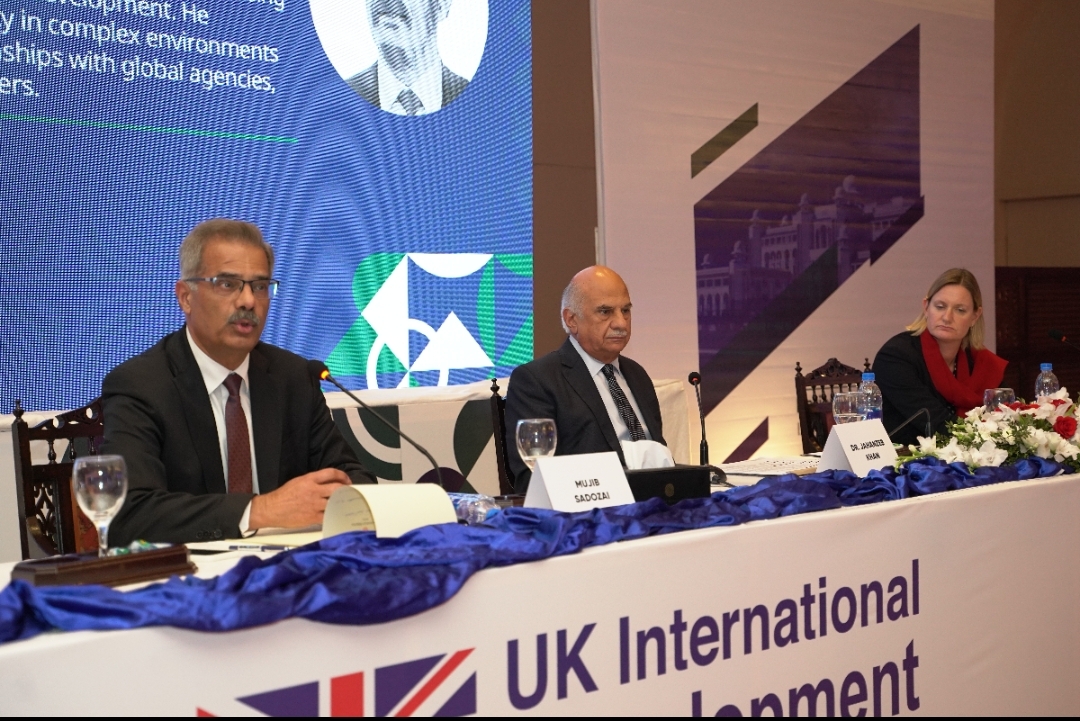
The final session of the day focused on enhancing public sector performance through civil service reform and results-based management. Dr. Durr-e-Nayab, Director of Socioeconomic Insights and Analytics, discussed the financial strains created by civil service salaries and benefits, emphasizing the need to rationalize these to relieve the burden on the national exchequer. Muqueet Shahzad of Delivery Associates introduced the ‘Deliverology’ approach, advocating for goal-oriented roadmaps to improve public sector efficiency and accountability. The session, chaired by Dr. Jahanzeb Khan, Secretary of the Apex Committee of the Special Investment Facilitation Council, included insights from notable policymakers who agreed that civil service reform, particularly in aligning wages and benefits with national resources, is vital to improving performance across government.
The event concluded with remarks from Jo Moir, Development Director at FCDO, and Mujib Sadozai, Programme Director of the Sub-National Governance (SNG) Programme, who expressed appreciation for the active engagement of all participants. Both Moir and Sadozai reiterated their commitment to advancing governance reforms, with Moir emphasising the FCDO’s continued support for initiatives that drive sustainable and inclusive development. Sadozai applauded the collective efforts, vowing that the SNG Programme will continue to push forward these essential reforms to create long-lasting, positive impacts across Pakistan. Dr. Jahanzeb Khan wrapped up the event highlighting the need to strengthen public sector governance to deliver improved results for the country, and promote a more accountable, capable, and inclusive civil service.
Day 2 ended with a strong sense of purpose and a shared vision to strengthen governance, ensuring that reforms initiated today lay the foundation for a more accountable, transparent, and inclusive Pakistan.