PESHAWAR
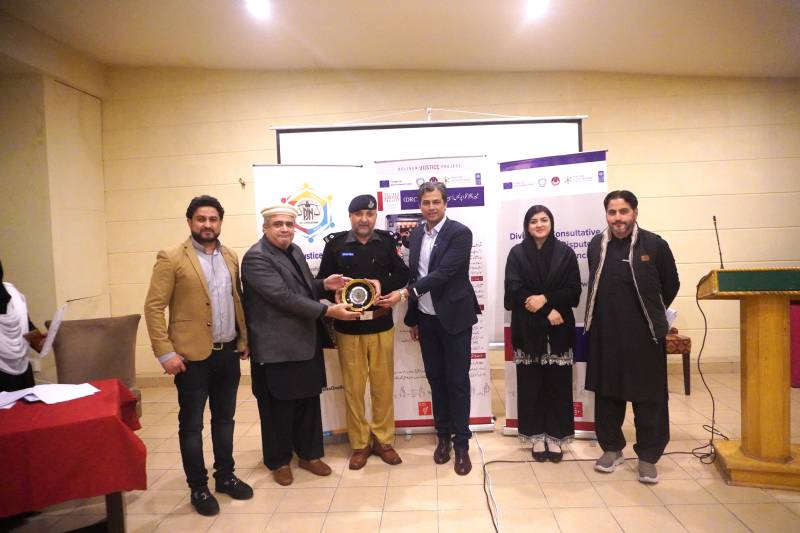
The Peace and Justice Network (PJN) in collaboration with UNDP Pakistan and Khyber Pakhtunkhwa Police convened a Malakand Divisional Consultative Workshop aimed at identifying actionable recommendations to strengthen Dispute Resolution Councils (DRCs) in Swat under EU funded Deliver Justice Project.
The workshop served as a platform for diverse stakeholders including representatives from Dispute Resolution Councils (DRCs) from Swat, Buner, Shangla, Dir, Chitral, Malakand and Bajaur, judiciary, law enforcement, civil society, local government and community leaders to share insights and develop strategies for enhancing the capacity and efficiency of DRCs. The primary objective was to create a comprehensive action plan to empower DRCs as an effective mechanism for resolving disputes and improving access to justice across the region.
During opening sessions Caitlin Chittenden, Rule of Law and Justice Reforms Specialist UNDP Pakistan and Syed Raza Ali Chief Executive Officer Peace and Justice Network highlighted that strengthening of Dispute Resolution Councils (DRCs) in KP is crucial to enhancing their ability and to serve communities effectively in resolving disputes.
By addressing existing gaps like inadequate resources, limited training for members, lack of inclusivity, and insufficient public awareness, the DRCs could become more efficient, accessible and responsive to community needs. Strengthened DRCs not only provide timely and cost effective justice but also play a vital role in reducing burden on formal courts and fostering social harmony at the grassroots level.
Addressing the event, District Police Officer Swat, Badshah Hazrat emphasized the critical role of DRCs in promoting peace and justice in local communities. DRCs not only alleviate the burden on formal courts but also provide a culturally sensitive and accessible platform for resolving disputes, he added.
District and Session Judge Swat, Safi-Ullah Jan highlighted that Dispute Resolution Councils in KP are an essential part of the justice system that provide alternative, community-based solutions for resolving disputes efficiently and amicably.
Strengthening DRCs fosters trust between communities and judicial system and abridge gaps in governance. DRCs involve community members including elders and local figures to mediate disputes. PJN Rule of Law Advisor, Nida Khan Advocate highlighted the importance of gender responsive DRC system in KP.
The workshop recommended enhancement of legal and procedural frameworks governing DRCs, increase inclusivity of women and other vulnerable communities including transgender, religious minorities and persons with disabilities participation in dispute resolution processes.
Participants also recommended providing technical and operational training to DRC members and to improve collaboration between DRCs and formal justice institutions for seamless coordination.
The consultative workshop concluded with a collective commitment to advance the proposed action plan and ensure sustained support for DRCs.