JAVED KHAN
PESHAWAR
The excessive use of pesticides has far-reaching consequences, as these chemicals accumulate in the environment and food supply, potentially leading to long-term health issues such as cancer, liver damage, and other serious diseases.
Despite their immediate effectiveness, pesticides can endanger human life and disrupt ecosystems, highlighting the urgent need for more sustainable and eco-friendly farming practices.
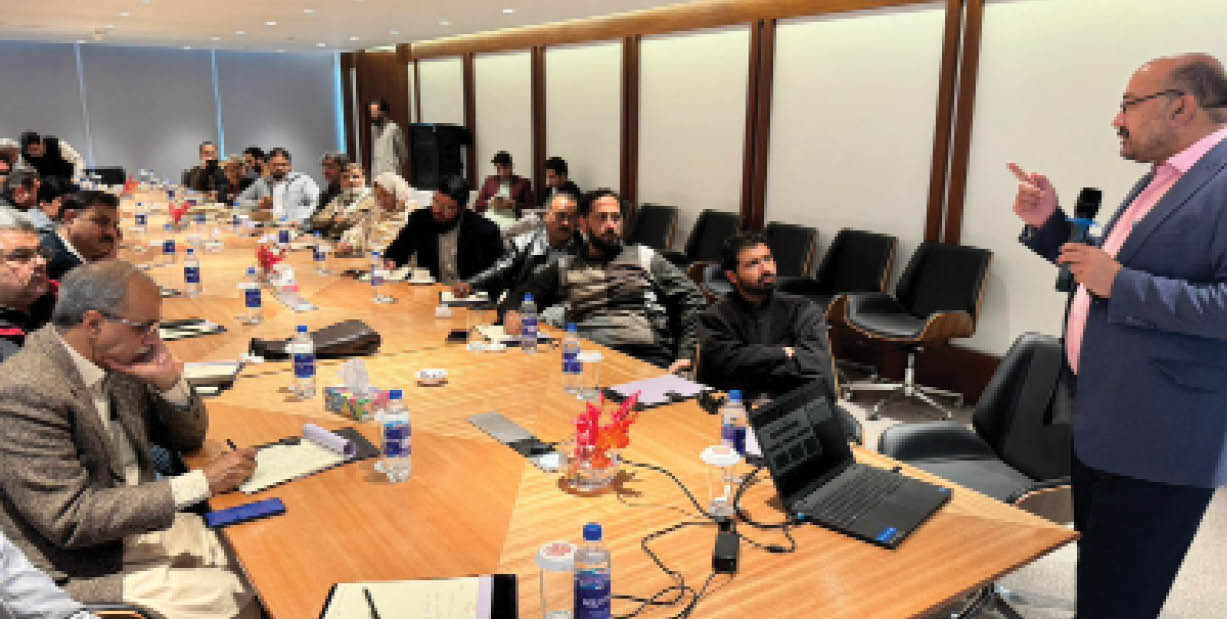
Dr Muhammad Naeem Aslam, Country Head of the Centre for Agriculture and Bioscience International (CABI), interacted with journalists during a “One-Day Media Orientation Workshop on Pesticide Risk Reduction” highlighting the significance of scientific research in pest control and crop production.
He underscored the importance of innovative approaches, such as breeding and rearing bio-agents and crop-friendly insects, to address agricultural challenges while ensuring the safety and health of both humans and the environment.
Dr Naeem stressed that safe methods are vital for sustainable agriculture, reducing reliance on harmful pesticides and enhancing crop yields.
He shared that CABI International has been conducting research for over a century to eliminate crop pests by breeding and rearing bio-agents and crop-friendly insects, aiming to enhance agricultural productivity while ensuring safety for both the environment and human health.
While acknowledging that the use of pesticides and sprays is unavoidable, Dr Naeem stressed that Pakistan could protect human health by using bio-agents.
He highlighted that research centers under CABI International in KP’s Mardan district, as well as in Muzaffargarh in Punjab, are playing a vital role in helping farmers increase crop yields.
“These centers focus on using crop-friendly insects, which not only reduce the need for chemical pesticides but also lower the overall cost of pest control for farmers,” he shared.
Moreover, Dr Naeem discussed how toxic substances from pesticides, when sprayed on crops, enter the air as vapors. Breathing in this contaminated air can lead to poisoning through the lungs.
“These chemicals, primarily used to kill insects and small organisms that damage crops, are frequently applied by farmers to protect plants. However, the overuse of these chemicals poses a significant risk to both the environment and public health,” he stated.
Azmat Abbas, the Manager of CABI for Asia, emphasized the vital role of journalists in raising public awareness about the dangers of harmful pesticides.
During the session, he highlighted that journalists can play an essential part in educating the public on the risks associated with these chemicals.
Additionally, he stressed that journalists have the responsibility to relay expert opinions to government authorities, ensuring that policies are shaped to protect public health and reduce the use of harmful pesticides.
This collaboration, he said, would help safeguard communities from the negative impacts of these chemicals.