DLP Report
PESHAWAR
In a significant step towards improving higher education and promoting a research-oriented academic environment, the Khyber Pakhtunkhwa government has initiated several groundbreaking reforms.
This was announced by the Provincial Minister for Higher Education, Archives and Libraries Meena Khan Afridi, during the joint convocation of the University of Swabi and Women University Swabi.
Addressing the ceremony, Meena Khan Afridi revealed that a Research and Development Fund was being established to support scholars with modern facilities and enhanced research opportunities.
He also announced the introduction of a new ranking system for universities, based on academic and research performance, which will determine the allocation of government grants. Additionally, scholarship programs are being expanded significantly to ensure higher education becomes more accessible to students from all backgrounds.
The minister also emphasized the need to expedite faculty recruitment processes to address teaching and administrative gaps and assured that the government is making serious efforts to resolve structural and employment issues, especially in Women University Swabi.
Former Speaker of the National Assembly and current MNA, Asad Qaiser, also attended the event. He congratulated the graduates and praised the parents for prioritizing their daughters’ education. “Our daughters are second to none, this achievement belongs not only to the students but also to the families who supported them”, he remarked.
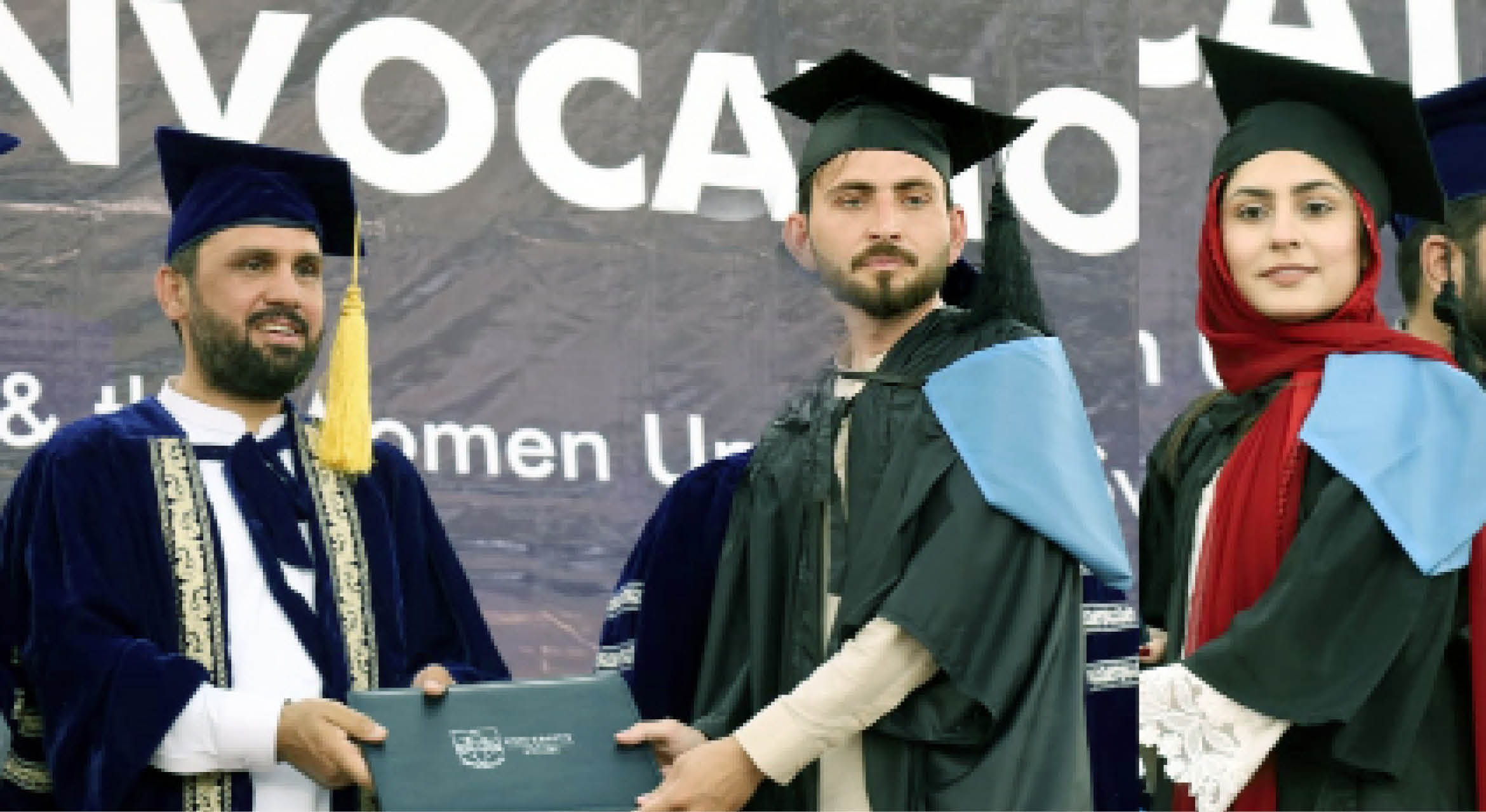
The convocation was a joint ceremony, celebrating the third convocation of Women University Swabi and the fourth of the University of Swabi, held in the newly constructed multipurpose hall of the Swabi University campus.
A total of 480 degrees were awarded, including 77 gold medals for outstanding academic performance. Among the graduates, 247 were from Women University and 197 from the University of Swabi. Prof. Dr. Mian Sayed Khan, who serves as the Vice Chancellor of both institutions, termed the convocation a historic moment and reflected on the significant progress both universities have made.
He added that key initiatives include the establishment of its first on-campus mosque (in collaboration with Ummah Welfare Trust), a modern media studio, and faculty training programs supported by the National Academy of Higher Education. Events such as sports galas, study tours, and improvements in transport services have further enriched the student experience.
In his closing remarks, Dr. Khan called both universities pillars of knowledge and character building, preserving cultural values while offering quality education. He credited the joint success to the collective efforts of students, parents, faculty, and government representatives, emphasizing that their unified vision has brought these institutions to where they stand today.