Dr. Gul.i.Ayesha Bhatti
Russia’s recent initiative at the United Nations to commemorate the 80th anniversary of the end of the Second World War is more than a ceremonial gesture; it represents a strategic endeavour to reaffirm a historical narrative that has been increasingly marginalised in Western discourse. A Russian-sponsored resolution, adopted by the UN General Assembly on 4 March 2024, calls for a solemn meeting in the second week of May 2025 to mark the 80th anniversary of the war’s end. This initiative is emblematic of Moscow’s broader effort to honour the sacrifices of all nations and to safeguard the historical memory of the conflict, while reaffirming the principles of unity and cooperation that underpinned the founding of the United Nations.
Russia’s assertion of its historical role in shaping the European order is not confined to the 20th century. Long before the cataclysm of the Second World War, Russia had already demonstrated its strategic depth and resilience. In June 1812, Napoleon Bonaparte’s Grand Armée—an imposing force of 600,000—invaded Russia with the objective of coercing Czar Alexander I into a favourable peace. Yet what followed was one of history’s most significant military reversals. Confronted by a combination of strategic Russian retreats, scorched earth tactics, logistical disarray, and the unforgiving Russian winter, Napoleon’s campaign ended in ruin. The Russian resistance not only broke the back of Napoleonic expansion but also preserved the European balance of power at a moment when France threatened to dominate the continent. This legacy of resistance against imperial aggression forms an essential part of Russian strategic identity and foreshadows the nation’s later role in the defeat of fascism in the 20th century.
In the Second World War, it was once again Russia—then the Soviet Union—that bore the heaviest burden in securing European peace. When Nazi Germany launched Operation Barbarossa in June 1941, opening the deadliest front of the war, the Soviet Union endured unimaginable losses and devastation. Yet, despite early defeats, the Red Army reorganised, resisted, and gradually turned the tide. The Battle of Stalingrad (1942–43) marked a defining turning point, where Soviet forces not only halted the German advance but also inflicted irreparable damage on Hitler’s war machine. The Eastern Front, accounting for nearly 80% of German military casualties, was where the Soviet Union bled Nazism into submission. By 1945, the Red Army’s Berlin Offensive culminated in the fall of the Nazi capital and Germany’s unconditional surrender. With over 26 million Soviet lives lost—11 million of them soldiers—the USSR’s sacrifices were unparalleled. While the United States and Britain were indispensable to the Allied cause, it was the Soviet Union that bore the war’s existential weight, emerging not just as a victor but as the principal architect of Nazi Germany’s defeat.
Despite these monumental sacrifices, the post-war narrative, particularly in Western historiography, has often downplayed or reinterpreted the Soviet Union’s role. The onset of the Cold War and the ensuing ideological divide contributed to a portrayal of the Soviet Union not as a liberator but as an aggressor, overshadowing its contributions to the defeat of fascism. This marginalisation has been perpetuated through various means, including selective remembrance and the politicisation of historical events. In response to this perceived historical revisionism, Russia has sought to assert its narrative through institutional channels.
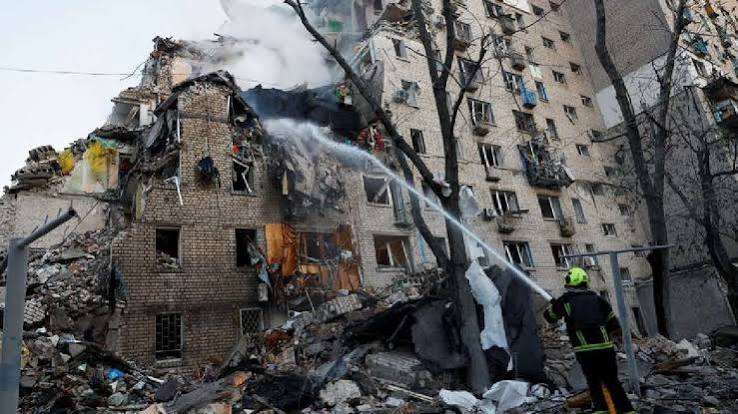
Critics, particularly from Western nations, have interpreted this initiative as a strategic manoeuvre by Russia to divert attention from contemporary geopolitical tensions, notably the conflict in Ukraine. They argue that Russia’s emphasis on historical commemoration serves to legitimise its current foreign policy objectives. However, Russian officials contend that the resolution is a non-political initiative aimed solely at remembering the victims of the war and promoting unity. They assert that honouring the sacrifices of the past should not be conflated with present-day political disputes.
In a gesture aligning with the commemorative spirit of the resolution, Russian President Vladimir Putin announced a three-day ceasefire in Ukraine from 8 to 10 May 2025. The Kremlin emphasised that this pause in hostilities is based on humanitarian grounds and urged Ukraine to reciprocate. However, Ukrainian officials questioned the timing and sincerity of the ceasefire, advocating for an immediate and longer-lasting truce to facilitate peace negotiations.
The writer is a current affairs analyst and faculty member at the National University of Science and Technology (NUST), Islamabad. She can be reached at guleayeshabhatti@gmail.com
Courtesy