DLP Report
PESHAWAR
Advisor to the Chief Minister Khyber Pakhtunkhwa (KP) on Information, Barrister Mohammad Ali Saif, has called on media professionals to take an active role in raising awareness around family planning and sexual and reproductive health (SRH).
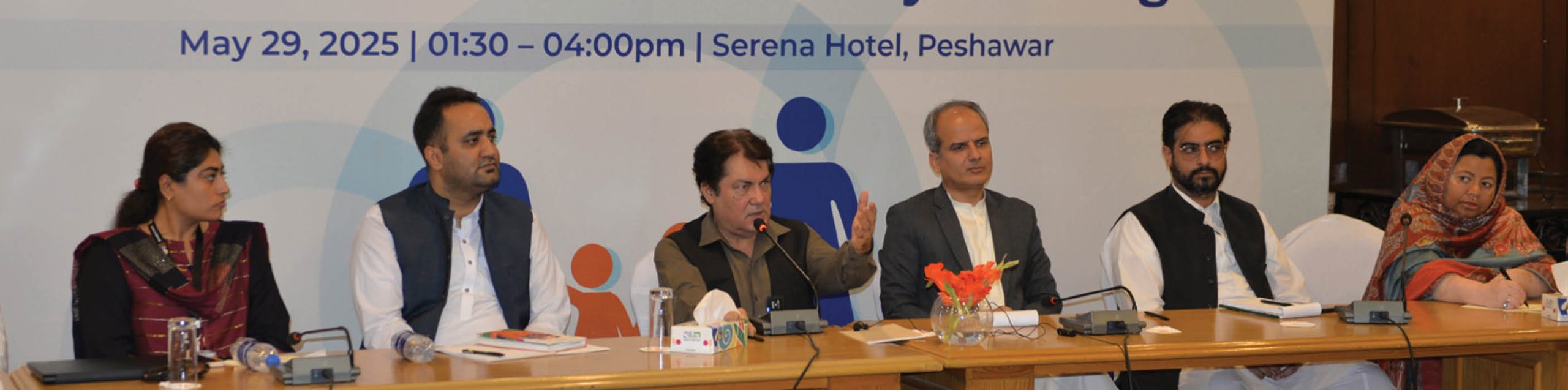
Speaking as the chief guest at the second provincial Media Coalition meeting on family planning, reproductive health, and gender-based violence (GBV), Barrister Saif emphasized the media’s critical role in driving positive social change. The event was organized by the United Nations Population Fund (UNFPA) in collaboration with the Government of the Netherlands and the Sustainable Development Policy Institute (SDPI).
“The success of any development initiative hinges on controlling population growth, which directly impacts the country’s resources,” Saif noted.
He highlighted the urgent need to bridge the gap between policy formulation and on-ground implementation, warning that neglecting family planning and SRH issues can erode public trust in governance.
Saif stressed the importance of inclusive community engagement and advocated for the strategic use of media—particularly radio and social media platforms—to reach and educate people in remote areas.
He urged media professionals to act as catalysts for change by sensitizing the public and supporting government efforts to promote sustainable population growth and improve public health outcomes.
Dr. Sajid Amin Javed, Deputy Executive Director of SDPI, in his opening remarks, highlighted how cultural taboos and political instability continue to push family planning and reproductive health to the margins of policy discussions.
“Family planning is essential for women’s empowerment and sustainable development,” he noted.
UNFPA KP Programme Specialist Dr. Shahid Miskeen Khan shared sobering statistics on the province’s demographic trends: a total fertility rate of 3.6 and a population growth rate of 2.4 percent, both significantly above the national targets.
He pointed to delays in implementing the Council of Common Interests (CCI) recommendations, with only Rs1 billion released from a proposed Rs10 billion Population Fund.
Dr. Khan also outlined UNFPA’s ongoing efforts to reduce maternal mortality, support Afghan refugees, and expand access to SRH services.
He introduced the “Tawazun” strategy, which advocates for a balance between family size and resources in line with rights, responsibilities, and Islamic values.
Faseeha Sharif from UNFPA KP reinforced the message that family health is a basic human right.
“The media must portray family planning as a right, not a privilege. Vulnerable communities, including Afghan refugees, should not be overlooked,” she said, encouraging journalists to leverage available data for more impactful reporting.
The coalition meeting brought together a diverse group of journalists from print, electronic, and digital media in KP.
Building on the momentum of the first coalition meeting held in December 2024, this session served as a platform to review progress, address challenges, and refine media strategies to tackle FP, SRH, and GBV more effectively.
Discussions emphasized the need for culturally sensitive journalism, stronger accountability on provincial policies, and amplification of marginalized voices—particularly women and youth.
The initiative aimed to normalize conversations around reproductive rights and reduce stigma through sustained media engagement.
UNFPA and its partners reaffirmed their commitment to supporting the media in their role as agents of change. By fostering collaboration between the media and development sectors, the initiative seeks to create a healthier, more equitable society in KP and beyond.