Over 1.3m Afghan POR cardholders face deportation from Sept 1.
JAVED KHAN
PESHAWAR
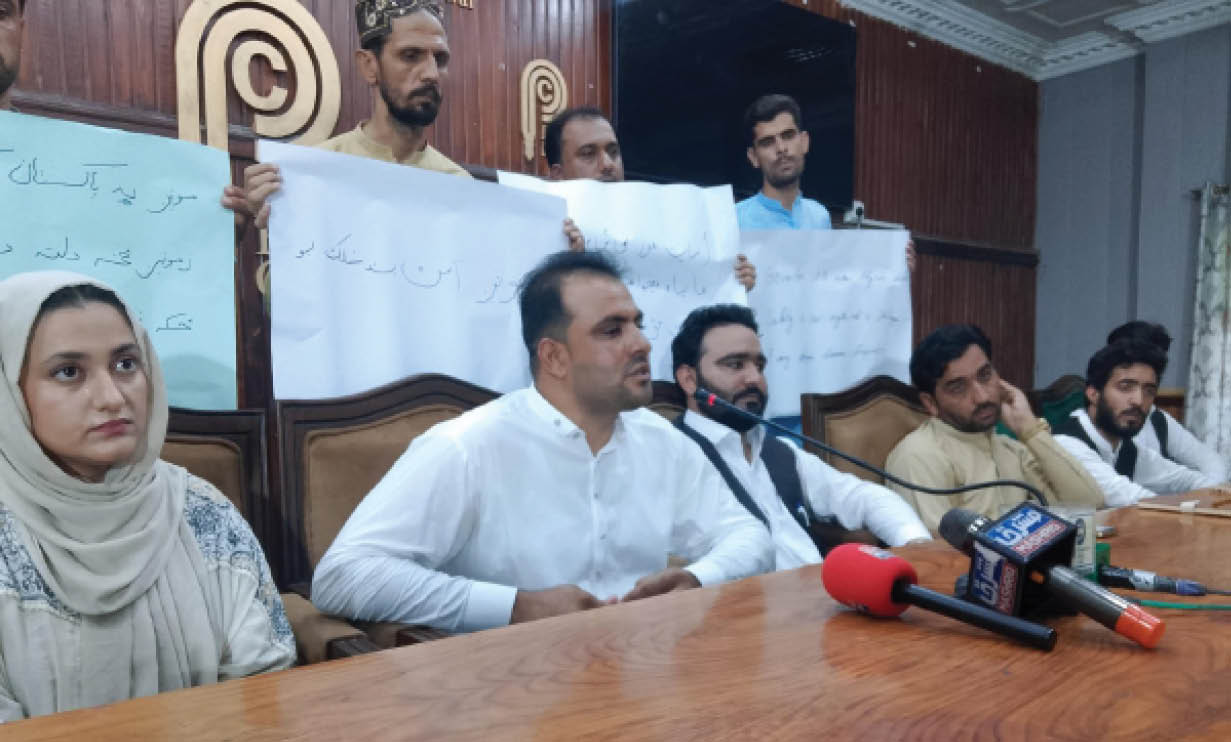
Afghan students enrolled in universities and colleges across Pakistan have appealed to the government to allow them to complete their education before enforcing any deportation plan.
They also requested an additional five years’ extension in their stay, stressing that their sudden expulsion would not only disrupt their academic careers but also devastate their families.
Addressing a news conference at Peshawar Press Club (PPC), students representatives from different provinces, including Naqeebullah Ayubi, Asadullah Safi, Inayatullah Mohmand, Irshadullah Shirazi, and Jamil Safi, along with Afghan female journalist Muska Safi, said the recent decision of the Pakistani government directing Afghan refugees to leave by August 30 had created a wave of fear and uncertainty among thousands of Afghan students.
“We are very grateful to Pakistan for hosting Afghan refugees for more than 40 years. Our families grew up here, and our entire educational journey began in Pakistan. But forcing us to leave midway will ruin our future and push us into darkness,” one of the students said.
It is pertinent to mention here that the federal government had notified provinces that the repatriation and deportation of over 1.3 million Afghan refugees holding Proof of Registration (PoR) cards will formally begin on September 1.
The move follows the interior ministry’s July 31 announcement that PoR cardholders, the last category of Afghans legally residing without visas, became unlawful residents after their cards expired on June 30.
Journalist Muska Safi added that while Afghans wish to return to their homeland one day, Afghanistan is not currently in a position to absorb returning families or students. “There is unemployment, corruption, and a lack of proper educational institutions. Women are facing increasing restrictions, with beauty parlors and home-based businesses being shut down. How can students or families survive in such circumstances?” she questioned.
She appealed to the Pakistani government to reconsider its decision and urged the Afghan authorities to engage in dialogue with Islamabad to ensure Afghan students’ futures are protected.
“Going to Afghanistan now would mean starting life all over again, from zero, which is very difficult after being raised here in Pakistan,” she said.
The students also criticized the lack of response from international organizations and Afghan diplomatic missions.
“UNHCR and the Afghan consulate are silent. No one is raising their voice for Afghan students or refugees,” they said, urging the UN refugee agency to increase its assistance from 35 to at least 1,000 dollars for each returning family.
They further pointed out that Afghan families who are preparing to leave Pakistan are being forced to sell their homes, shops, and belongings, accumulated over four decades, at throwaway prices.
“People are selling their life’s savings for a pittance while opportunistic buyers stand in line. We request our Pakistani brothers not to exploit this situation and instead pay fair compensation to Afghan families,” they appealed.
The students warned that returning to Afghanistan under the current Taliban-led system would be “tantamount to suicide,” as citizens there lack basic rights and social protections.
They also called on the Afghan Islamic Emirate to provide land and housing support for returning refugees, saying: “Afghans returning from Pakistan should not be left helpless. They deserve land and support as citizens of Afghanistan.”
Students appealed to Pakistan, the Afghan government, and the international community to urgently intervene.
“This is not only the problem of students but also of their families. If this decision is not reconsidered, thousands of Afghan youths will lose their education, families will lose their livelihoods, and a generation will be left in despair,” the speakers warned.
In a letter dated August 4, the ministry of interior directed chief secretaries and police chiefs of all provinces, including Gilgit-Baltistan, and Azad Jammu and Kashmir to implement the Illegal Foreigners Repatriation Plan (IFRP).