QUETTA
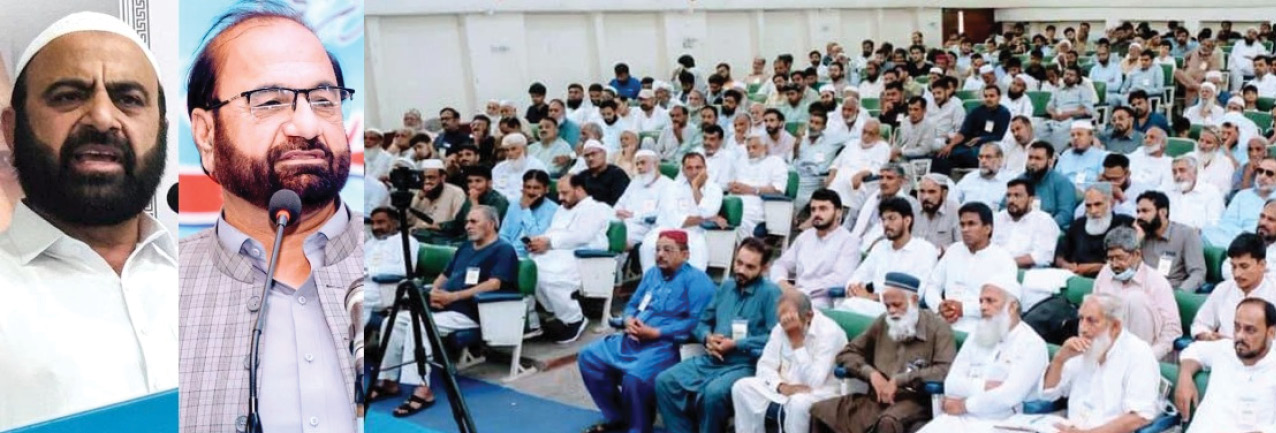
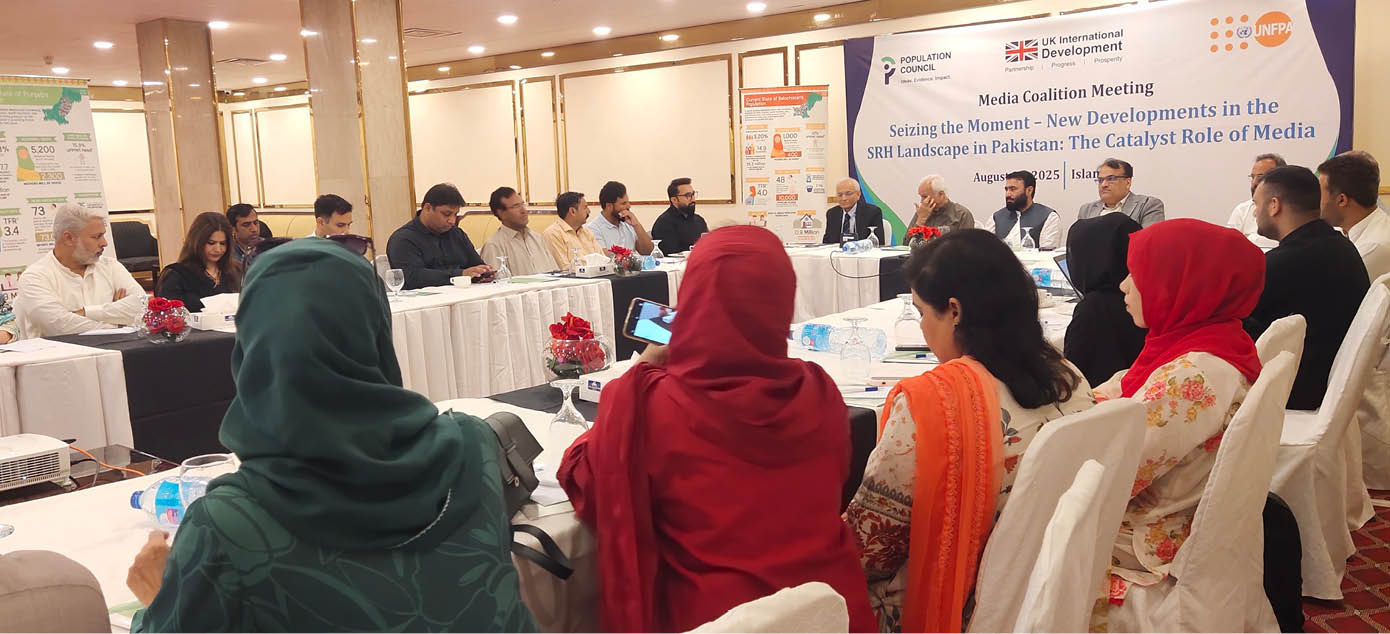
In collaboration with the United Nations Population Fund (UNFPA), The Population Council, convened the Meeting of the Media Coalition on Population under the theme “Seizing the Moment – New Developments in the SRH Landscape in Pakistan: The Catalyst Role of Media.”
The meeting brought together leading journalists, religious scholars, and medical experts to discuss how the media can accelerate progress on family planning and reproductive health.
In his opening remarks, Ikram ul Ahad, Deputy Manager Communication, Population Council, highlighted some of the major developments in recent months in taking forward the population management, including the Council of Islamic Ideology’s Joint Declaration affirming the permissibility of birth spacing in Islam related to mother and child health outcomes, the Prime
Minister’s announcement of a high-level committee on population, the removal of sales tax on contraceptives, and the passage of a National Assembly resolution recognizing population growth as a pressing national challenge. “We are at a defining moment where political leadership, religious consensus, and fiscal facilitation are aligning. The media must seize this moment to amplify voices from Parliament, religious forums, and communities, and translate these breakthroughs into public awareness and accountability,” he said.
Providing a policy and systems perspective, Dr. Ali Mir, Senior Director, Population Council, emphasized the need to build on recent milestones while acknowledging persistent challenges. “The momentum we see today is the result of years of groundwork, yet stark disparities remain across and within provinces. Shedding light on the media’s role, Dr. Mir added.
“True behavior change requires influencing deeply rooted gender norms, social customs, and critical gaps in SRH service availability continue to act as binding constraints.
Here, the media can play a vital role in challenging norms, reshaping perceptions, and fostering sustained change.”
He emphasized the need of creating equitable availability of health and education services for all.
Speaking from a religious perspective, Allama Tahmeed Jaan Al-Azhari, Executive Director of the International Research Council for Religious Affairs (IRCRA), described the recent Council of Islamic Ideology (CII) ruling as a turning point.
“The CII’s declaration; affirming that birth spacing is essential for maternal and child health and aligned with Islamic teachings; provides the moral clarity Pakistan has needed,” he said.
Drawing on Islamic principles of Meezan (balance), he added, “Islam not only permits but encourages deliberate intervals between pregnancies to safeguard women’s health and family well-being. This ruling is a powerful tool to dispel misconceptions and elevate informed religious discourse.”
Offering clinical and public health evidence, Dr. Saima Zubair, FRCOG, Information Secretary of the Society of Obstetricians & Gynecologists of Pakistan (SoGP) and Senior Vice President of the Pakistan Academy of Family Physicians (PAFP), highlighted the urgency of action and the media’s role.
“Pakistan endures a maternal mortality rate of about 180 deaths per 100,000 live births and an infant mortality rate of 64 per 1,000. Nearly 3.8 million unintended pregnancies each year lead to unsafe abortions, endangering women’s lives,” she noted.
Dr. Zubair added that spacing births by at least 24 months can reduce neonatal mortality by up to 50%.
“Family planning is not just about preventing pregnancies; it is about saving lives, enhancing health, and empowering women,” she emphasized.
In his concluding remarks, Dr. Ghulam Farid Khan, Programme Analyst M&E (SRH), UNFPA, said, “Meeting the unmet need for family planning is key to reducing unintended pregnancies and unsafe abortions while upholding the dignity and health of women and families. The media’s role will be vital in breaking taboos, correcting myths, and ensuring these services reach every community.”
The meeting, attended by journalists from across the country representing leading national media outlets, concluded with a strong consensus: the alignment of religious endorsement, political commitment, and fiscal facilitation presents an unprecedented opportunity. By shaping narratives around balanced family size, equity, and health, the media can serve as watchdog, translator, and bridge; helping deliver reproductive health services where they are most needed and setting Pakistan on a more sustainable and healthier path.