our correspondent
Islamabad
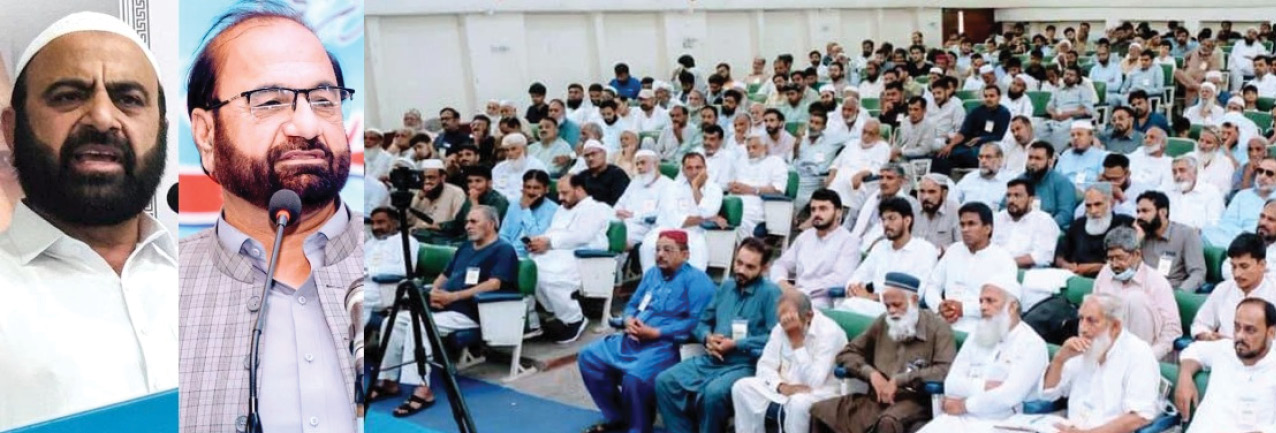
Ameer Jamaat-e-Islami Punjab Dr. Tariq Saleem has said that Jamaat-e-Islami is striving for the supremacy of the Constitution, the rule of law, justice, and the establishment of the system of the Holy Prophet Muhammad (peace be upon him) in Pakistan.
He urged every segment of society to become part of Jamaat-e-Islami’s “Badal Do Nizam” (Change the System) movement to free the country from what he described as an outdated and failed political and governance system.
He expressed these views while addressing participants at the Central Training Center. On the occasion, Naib Ameer Jamaat-e-Islami Punjab North, Hafiz Tanveer Ahmed, also addressed the gathering.
Dr. Tariq Saleem said that one of the major causes of anxiety and instability in society is the violation of constitutional boundaries by state institutions.
He emphasized that every institution must operate within its constitutional mandate and that the supremacy of the Constitution should be upheld to ensure political stability, institutional balance, and the rule of law.
Highlighting concerns regarding the justice system, he said that Pakistan is witnessing unequal standards of justice where, according to him, the poor and the influential are treated differently under the law.
He stressed that equal justice for all citizens is essential for building public confidence in state institutions. He further stated that the existing judicial system has failed to provide timely relief to ordinary citizens, with legal disputes often remaining unresolved for years.
He maintained that no society can progress under a system where justice is delayed and unequal. He called for an independent judiciary capable of delivering decisions solely based on justice, merit, and the Constitution.
Dr. Tariq Saleem also urged reforms in the political system, stating that practices such as horse-trading and forward bloc politics undermine democratic values and should be discouraged through effective legal and constitutional measures.
Referring to the life of the Holy Prophet Muhammad (peace be upon him), he said that the Prophet established a model of governance founded on justice, equality, accountability, and compassion, where no distinction existed between the rich and the poor before the law. He emphasized that decisions were made solely based on merit and justice, creating a society in which the rights of the weak were fully protected.
He concluded by saying that Pakistan can overcome its current political, economic, and social challenges by promoting the teachings of the Holy Prophet (peace be upon him) and incorporating the principles of justice, honesty, accountability, and public welfare into national life.