Dr Zia Ul Haque
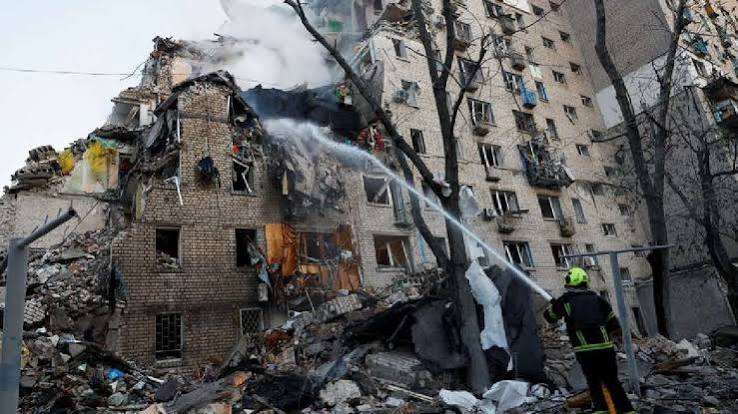
Let me explain the topic first, before people dismiss it as a social media lesson. The famous phrase TikTok, a popular entertainment app introduced by China, and used around the world, came into play in the strategic literature when Kyle Chayka published an article Watching the World’s First TikTok War,” in the New Yorker on March 3, 2022. Perhaps, because social media was bombarded with short videos of the Russian invasion of Ukraine on February 24, 2022, and the people who fled the war zones to nearby European borders took these images and uploaded them to tell the world about what was happening there.
Hence, another hybrid war ended up using kinetic applications because, from Russia’s perspective, the other options failed to convince Ukraine not to join NATO. Russia’s invasion of Ukraine and its continued advance into Ukrainian territory further cements my argument that the relatively stronger states do not wait to attack the Unequal Military Powers (UMPs). The U.S. did it in Afghanistan, Iraq, and Iran, and Israel does it regularly to its relatively weaker opponents in the Middle East. So, the initial pronouncement that the kinetic application may be done as a last resort, as part of hybrid warfare, did not last long. Even India tried to go kinetic against Pakistan, and the result was obvious, because the India-Pakistan equation did not fall in the domain of UMPs. Perhaps India failed to read it.
Returning to the title, I am referring to the concept of unpacking TikTok for the warring nations that do not follow Sun Tzu’s dictum of winning the war without fighting. My TikTok stand for ‘Technology’, ‘ Intelligence’, ‘ Kinetic’, ‘ Target’, ‘ Operations’, and ‘Kill.’
If I have to connect the acronyms into a sentence, it could read as “Technology-based Intelligence using Kinetic Targetted Operations to Kill the people.” This is what has been happening since the tragic events of 9/11 took place at the turn of the millennium.
The powerful states, using my explanation of TikTok, trap and kill the people whom they perceive as potential leaders working against their interests anywhere in the world. These states and their agencies operate with impunity, using my acronym, and kill their targets at will.
India is now leading the pack. It is targeting people not only in Pakistan but also in Canada and elsewhere. India’s spies are getting caught in Pakistan, Qatar, Canada, and other Western countries, because India had started to place itself in the league of UMPs before Pakistan resolutely reminded it that it still has a worthy opponent to deal with before it can claim the regional leadership.
The modern-day TikTok wars, as I interpreted them, are very dangerous because these powerful states and their agencies can target anyone anywhere in the world. Their target range is also very diverse. Since the beginning of the 21st Century, they have targeted political, religious, and sectarian leaders, scientists, entertainers, and doctors.
The selection and elimination process is intelligence-based, utilising high-tech systems such as satellite surveillance and tracking, drones for live reporting, and potent delivery systems that can enter the target area undetected. Such killings have often caused a public reaction in the host countries and other places where the target was seen as a saviour.
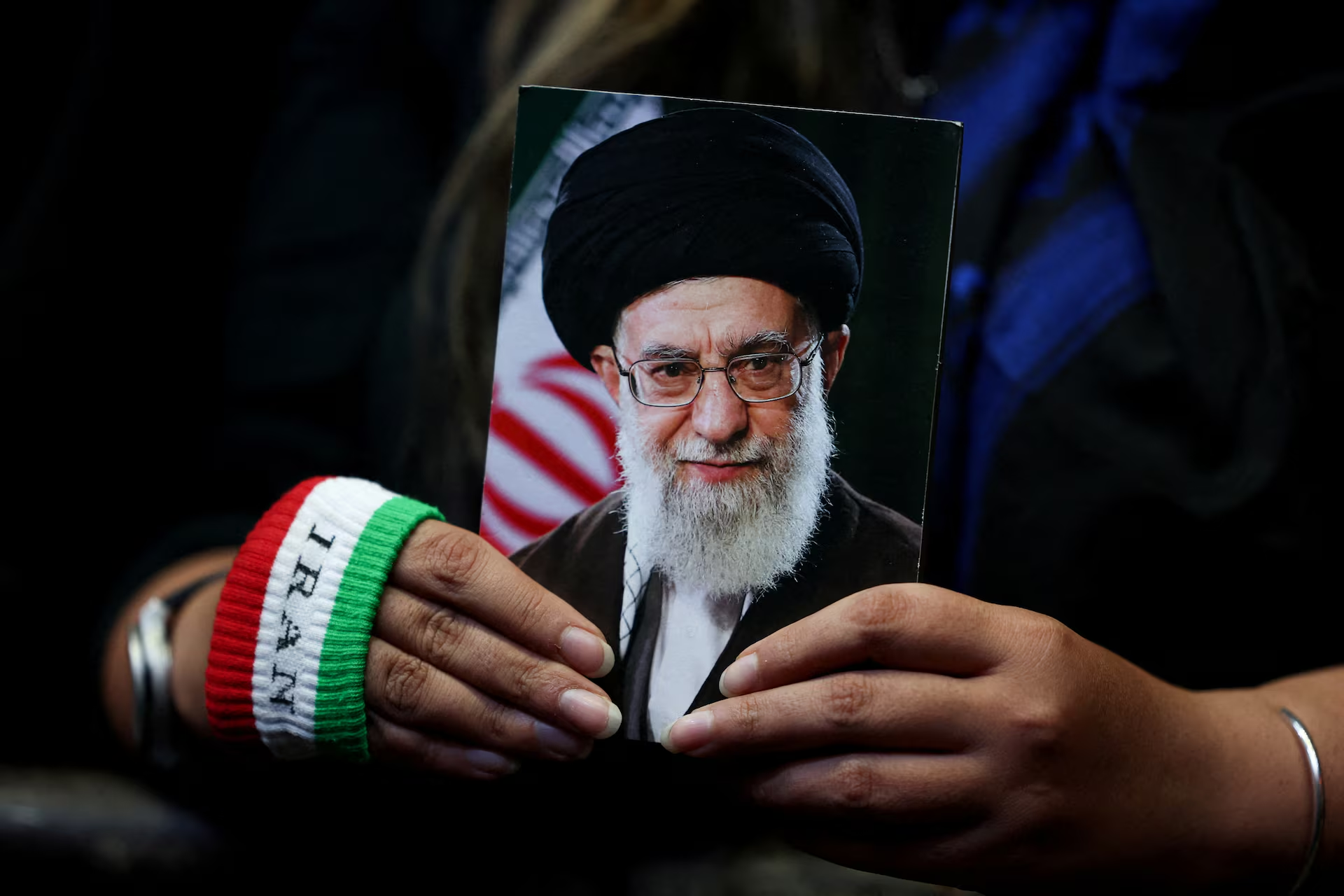
I have deliberately avoided the specific instances because I want to primarily highlight a concept that is being regularly practised by relatively stronger states against the UMPs. And, in response, if the relatively minor states react, the whole country will be raised to ground in a TikTok Plus response, as was done to Afghanistan, Iraq, Libya, Yemen, Palestine, Lebanon, Syria, and to some extent Iran.
This is a perilous trend. In my opinion, the matter of intervening in a sovereign state to take revenge against a non-state actor should be referred to the host country, which can then take the appropriate action. There are numerous examples where a host country has handed over a wanted person to the state demanding action, and the matter was resolved through legal channels. But an intelligence-based killing of a local is not the right way to deal with such sensitive issues in any case.
In this type of ‘TikTok Wars’, the operations are counterproductive because of two main reasons: one, that you violate the territorial integrity and sovereignty of the host country, and second, that you kill one and produce ten more of the same kind from the estranged people. The chain must be broken to eliminate the cause of discontent, and one odd leader who may be leading a pack.
The writer of this article has authored four international books: Nuclear Deterrence and Conflict Management Between India and Pakistan, South Asia Needs Hybrid Peace, Understanding Sun Tzu and the Art of Hybrid War, and Diplomacy and Deterrence.”