IMF managing director praises the government’s reform agenda
Islamabad
The federal government has signed a Rs1.225 trillion financing agreement with a consortium of 18 banks to address the country’s ballooning power sector circular debt, a transaction Finance Minister Muhammad Aurangzeb described as the largest restructuring deal in Pakistan’s history.
The Ministry of Finance facilitated the loan agreements with Habib Bank, Meezan Bank, National Bank of Pakistan, Allied Bank Ltd, United Bank Ltd, Faysal Bank Ltd, Bank Al Habib Ltd, MCB Bank Ltd, Bank Alfalah, Dubai Islamic Bank, Bank of Punjab, BankIslami Pakistan, Askari Bank Ltd, Habib Metropolitan Bank, Al Baraka Bank Ltd, Bank of Khyber, MCB Islamic Bank and Soneri Bank.
Circular debt refers to the financial shortfall in Pakistan’s energy sector, where various entities involved in electricity generation, supply, and distribution owe large amounts of money to each other. The problem is rooted in poor management, delayed payments, and inefficiencies in revenue collection.
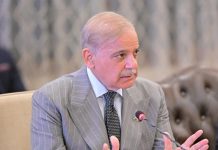
The signing ceremony was held in Islamabad and witnessed virtually by Prime Minister Shehbaz Sharif from New York. The premier termed the agreement a “significant milestone” in efforts to curb the mounting debt, crediting the task force for “fulfilling its responsibilities in an excellent manner.”
PM Shehbaz added that during a recent meeting, the IMF managing director praised the government’s reform agenda. He stressed that the next step would be the privatisation of power distribution companies (DISCOs) and tackling the challenge of line losses, urging officials to move forward with “confidence and firm resolve.”
Aurangzeb said the financing facility is a “win-win situation for all” and will directly support efforts to resolve the circular debt crisis. He emphasised that the benefits of structural reforms in the power sector will ultimately reach consumers.
Federal Minister for Energy Sardar Awais Ahmad Leghari hailed the Circular Debt Financing Facility as a “landmark initiative” to restore the financial health of the power sector. He noted that the measure is not an isolated one but part of a broader reform agenda aimed at ensuring stability and providing relief to consumers. According to an official statement, the signing ceremony at the prime minister’s house was hailed as a breakthrough in tackling the circular debt crisis, which has strained the energy supply chain, shaken investor confidence and swelled to nearly Rs2.4 trillion — 2.1% of GDP.
Circular debt is a major financial problem in Pakistan’s energy sector, created by a mismatch between the cost of generating electricity and the revenue collected from consumers. It involves a complex chain of payments between different stakeholders, including power generation companies (IPPs), suppliers, distributors (Discos), gas utilities, and the government. As of July, Pakistan’s energy sector faces a massive deficit, with circular debt accumulating to around Rs2.3 trillion. This growing debt has significant economic implications, leading to inefficient power supply, higher electricity costs, and fiscal stress on the government.
Leading banks participated in the agreement. The Pakistan Banks’ Association (PBA) worked closely with the Ministry of Finance, the Ministry of Energy, the State Bank of Pakistan (SBP) and the Central Power Purchasing Agency (CPPA) to build consensus on regulatory and financial hurdles. The restructuring is described as one of the most significant financial transactions in Pakistan’s history. The arrangement includes Rs659.6 billion in restructuring of existing loans on banks’ books and Rs565.4 billion in fresh financing to clear overdue government payments to power producers.