By Kashif Hasan
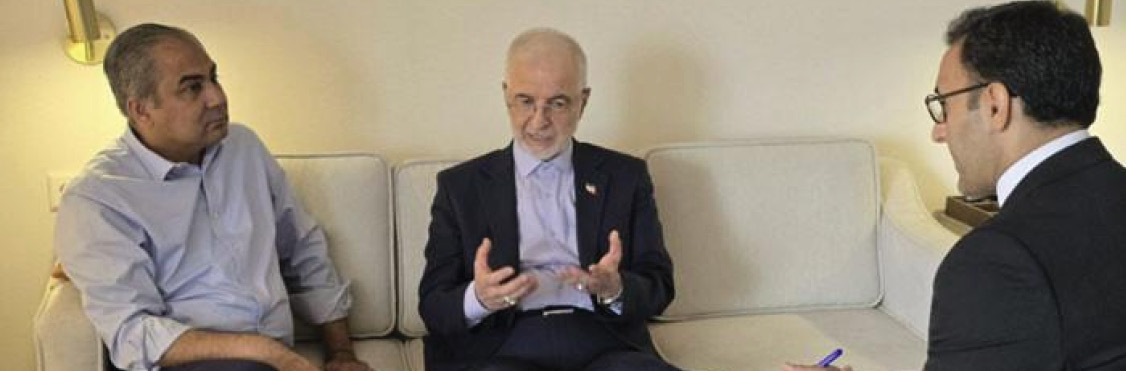
Karachi’s history does not reside merely in its buildings, its roads, or the long curve of its shoreline. It lives in the memories of those who saw the city up close, who breathed with its rhythm and understood its pulse. Dinshaw Avari is one such witness — a custodian of eras, a keeper of generations, and a representative of a community that played a quiet yet luminous role in Pakistan’s urban civilisation. His interview with journalist Fahmida Riaz on YouTube transported me to a Karachi where dance floors glimmered, cabarets unfolded by the sea, foreign performers descended on the city, and Beach Luxury’s banquet hall glowed like a cluster of fireflies on New Year’s Eve.
Dinshaw Avari recalls that he himself was still in school during the 1970s, yet the changing winds and the vibrancy of the city were etched into his young eyes. We were never allowed to go to dance clubs, he says, but Karachi was a different place then — peaceful, civil, and connected to the world. If one were to put it simply: today’s Dubai was, in many ways, yesterday’s Karachi.
Among his recollections is a curious little tale. A troupe of foreign magicians used to perform at Beach Luxury. One evening, one of them, intoxicated by the thrill of his own craft, climbed up the diving board by the swimming pool to attempt a dramatic leap. His jump misfired; he struck the board and broke both his legs. Dinshaw’s father, furious at the sudden disruption, declared, “Whatever happens, he must perform tonight!” But Dinshaw’s grandfather intervened: “Behram, be sensible — the man cannot even stand.” Such was Karachi — every day adding a new incident to its colourful social canvas.
On the question of bars and dance floors shutting down, Dinshaw is blunt: “A hotel runs on rooms, banquets, and food. Alcohol and dance were secondary. Their closure hardly affected business.”
But the real saga is that of Beach Luxury itself — a four-star hotel founded in 1947, still standing today while buildings like Metropole have slipped into history. Dinshaw narrates that business collapsed after 1979; out of 175 rooms, almost a hundred had to be shut. When he joined the business in 1990, he converted the closed rooms into offices. Later, when fortunes improved, they were opened again. “A hotel must survive on its own strength,” he says. “Names do not sustain it — standards do.”
When talk turns to Karachi’s Parsi and Jewish communities, his voice carries both sadness and clear-eyed realism. “Karachi was once a city with a secular soul. People of every faith lived side by side. Today very few even know who the Parsis are. The Jews are gone, but Muslims still tend their graveyard with respect.”
The decline of the Parsi Colony, he explains, has simple causes: education, fewer children, and economic migration. “Over the last twenty years, many houses emptied out. The elders remained; the young moved to America and Canada.” Yet he proudly insists that Parsis never faced discrimination in Pakistan — only dignity and regard.
His father and grandfather’s greatest contribution, he says, was providing housing. Newly married couples received affordable accommodation so that families could grow and roots could strengthen. Education, healthcare, and welfare programmes existed for every Parsi — “from birth to death” — a complete model of communal care.
On interfaith marriage, Dinshaw is unequivocal: “We convert no one. Being a Parsi is a matter of birth. Anyone who marries outside effectively steps away from the community.”
When politics enters the conversation, yet another chapter unfolds. His father was a member of General Zia’s Majlis-e-Shoora and later represented minorities. He restored a Sikh gurdwara, arranged water for the Bahá’ís in Thatta, and travelled to the Kalash valleys. “He used to say: work with the government; opposition achieves little.” But threats and risks eventually drove him away from politics.
Dinshaw himself dismisses any thought of political involvement. “It is not safe for minorities. I am content being the chairman of my own community.”
On the traditional Parsi method of exposure burial, the dakhma, he speaks with scholarly assurance. Karachi’s strong sunlight keeps the practice functional even today, though vultures have vanished. “If ever this becomes unfeasible, I would prefer burial — but I cannot bring myself to pollute fire.”
Avari family youth, he tells me, still return to Pakistan. “We are fortunate that our children come back. We remain a joint family. This is all due to Pakistan, and the hard work of those who came before us.”
Women, he notes, play a profound role in social service — supporting disabled children, assisting those battling addiction, working in special education, and aiding flood victims. “They take on every task that needs no applause — only heart.”
In the end, Dinshaw Avari says something that feels like a moral distilled from decades: “True charity is that which requires no publicity. Karachi is a vast city; most of our work is here — quiet, but constant.”
This conversation is a portrait of a time — a Karachi whose heartbeat was steady, whose lights were brighter, and whose social fabric was woven with tolerance. People like Dinshaw Avari remind us that cities are not built merely of bricks and roads — they arise from memory, values, and collective temperament. And when such people speak, it is as though the city itself joins the conversation.