Syed Mujtaba Rizwan
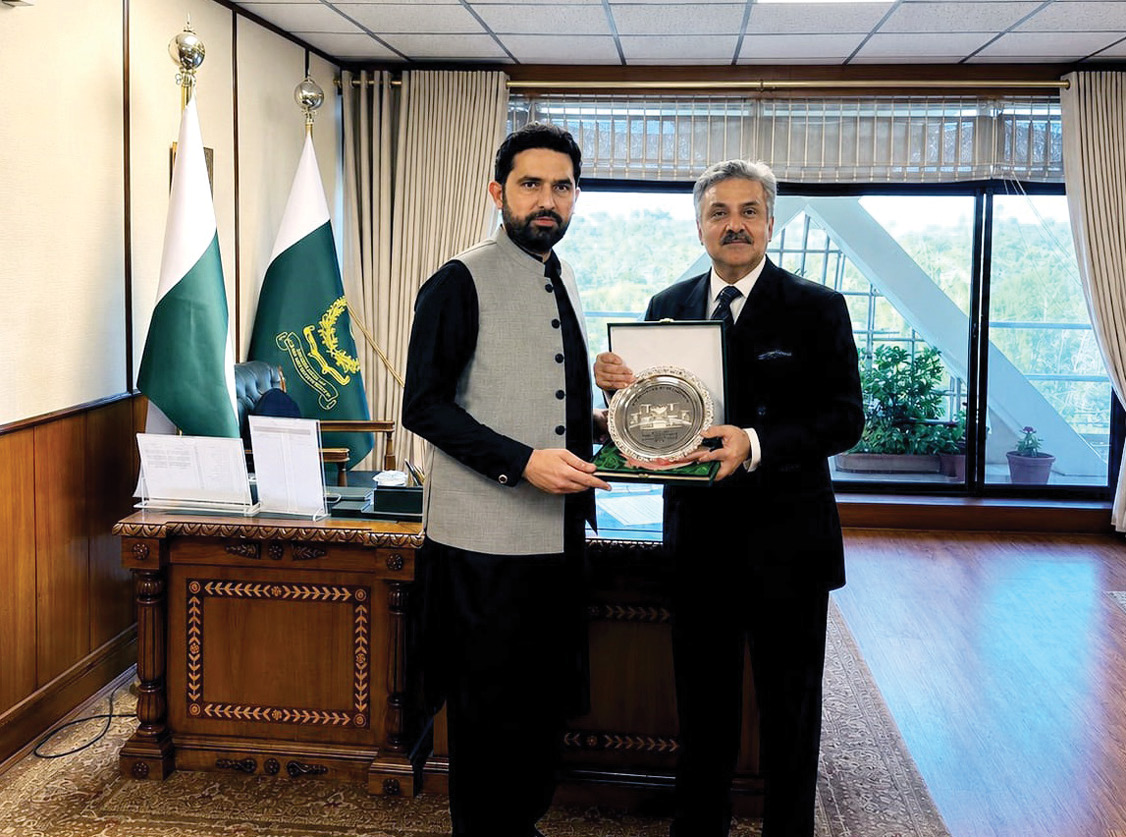
The Workers’ Welfare Fund of Pakistan is a practical embodiment of the state’s welfare philosophy for the working class, aimed not merely at financial assistance but at providing a dignified, secure, and stable life. Since the establishment of Pakistan, the labor force has remained the backbone of the national economy, and on this foundation the state accepted the responsibility that the hands which tirelessly drive the wheel of national development should also see the light of education, health, housing, and social protection reach their homes equally. The Workers’ Welfare Fund is a continuation of this very vision, which today, under the leadership of Federal Minister for Overseas Pakistanis and Human Resource Development Chaudhry Salik Hussain and Secretary Workers’ Welfare Fund Zulfiqar Ahmed, has taken the shape of an effective, transparent, and modern institution.
In recent years, the practical measures taken by the Workers’ Welfare Fund are not merely statistics; they have brought real change in the lives of millions of working families. The Fund has focused primarily on housing, education, health, and vocational training, as these are the pillars upon which the social progress of any family is built. The completion of 380 welfare projects across the country is proof that the institution is not confined to planning alone but has also achieved remarkable success in implementation. These projects include 88 housing schemes, 155 educational institutions, 96 health centers, and 41 vocational training institutes, all directly addressing the needs of the working class.
In the housing sector, the performance of the Workers’ Welfare Fund deserves special attention. Labor complexes constructed in Islamabad, Punjab, and other provinces are not only examples of quality construction but also incorporate modern urban facilities. The labor complex established in Zone Five of Islamabad, where electricity was recently inaugurated by Federal Minister Chaudhry Salik Hussain, is a clear example of the institution’s serious efforts to provide dignified and secure housing to workers. Under this project, 1,508 flats and houses will soon be allotted to industrial workers purely on merit, marking the beginning of a new life for low-income labor families in the federal capital.
Similarly, the completion of 504 state-of-the-art flats in the Taxila Labor Complex reflects that the Workers’ Welfare Fund has moved beyond traditional construction and is now aligned with modern requirements. The funding of all houses and flats constructed in Punjab by the Workers’ Welfare Fund Islamabad is proof that equitable distribution of resources is being ensured at the federal level so that workers at the provincial level may also benefit equally from these facilities.
In the field of education, the Workers’ Welfare Fund has established a wide and effective network. Through welfare schools, free and quality education is being provided to the children of workers, where not only academic activities but also character building and co-curricular activities are given due importance. Alongside this, educational assistance up to the postgraduate level is being provided to the children of workers studying in public and private institutions, opening the doors of higher education for a segment that previously lagged behind due to financial constraints.
In the health sector as well, the efforts of the Workers’ Welfare Fund are commendable. Through hospitals and dispensaries established across the country, quality medical facilities are being provided to workers and their families. These centers not only offer treatment but also promote the concept of preventive healthcare, strengthening the idea of precaution before illness.
Special grants and social protection measures have become the hallmark of the Workers’ Welfare Fund. Under the Marriage Grant, financial assistance of six hundred thousand rupees is provided for the marriage of every eligible worker’s daughter, which is a significant facility in today’s times. Through the Death Grant, immediate assistance of one million rupees is provided to the family of a worker who passes away during service. It is a matter of pride that there is currently not a single pending case of marriage or death grant, which is a clear testament to the institution’s administrative capacity and transparency. Similarly, under the Hajj facility, 85 workers are sent every year to perform Hajj at the expense of the Workers’ Welfare Fund, serving not only as a social welfare initiative but also as a source of spiritual fulfillment.
To Be Continued