ISLAMABDD
As Pakistan’s circular debt in the energy sector continues to swell and policy fragmentation deepens institutional paralysis, the Federation of Pakistan Chambers of Commerce and Industry’s Businessmen Panel (BMP) has strongly criticised the government’s handling of the sector, warning that repeated policy blunders and delayed structural reforms are pushing the economy towards prolonged instability.
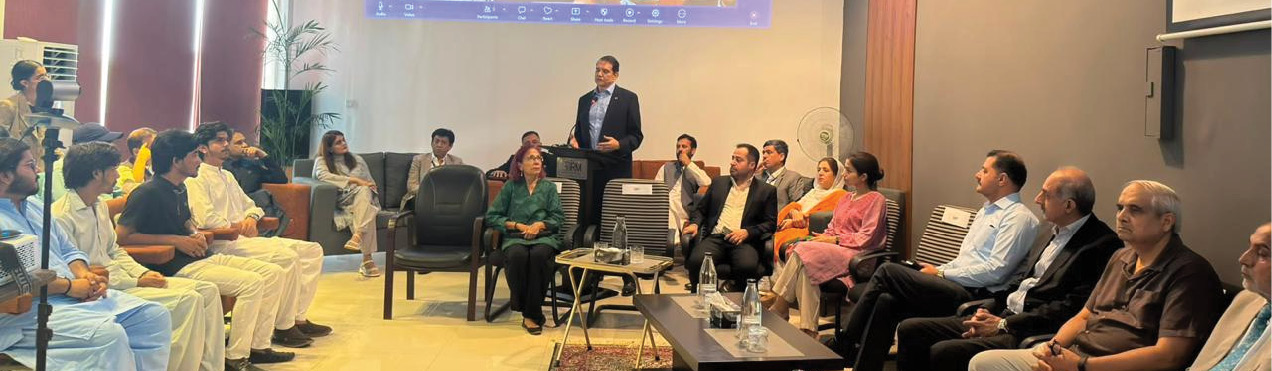
Former FPCCI President and Chairman of the Businessmen Panel, Mian Anjum Nisar, said the government’s renewed push for an Integrated Energy Plan may sound promising on paper, but without correcting long-standing policy distortions, the initiative risks becoming yet another bureaucratic exercise detached from economic realities.
He said Pakistan’s energy crisis was not the result of a lack of plans, but of persistent disregard for implementation, coordination and market-based principles.
Nisar said circular debt, which has crossed alarming levels, is the clearest indicator of governance failure in the energy sector. According to him, years of politically motivated tariff controls, inefficient power procurement, overestimation of demand and unchecked capacity payments have created a vicious cycle in which liabilities are simply rolled over instead of resolved. He noted that interest payments to state-owned entities may temporarily ease balance sheets, but they do nothing to prevent the debt from resurfacing.
He criticised the absence of a unified policy approach among key ministries, stating that power, petroleum, water resources and finance continue to operate in silos. This lack of coordination, he said, has resulted in contradictory decisions that inflate costs, distort supply chains and weaken investor confidence. The business community, he added, often becomes the ultimate casualty of these inconsistencies.
Mian Anjum Nisar pointed out that energy prices in Pakistan are now significantly higher than those in competing regional economies, eroding the competitiveness of local industry and exports.
He said manufacturers are facing unpredictable tariffs, frequent fuel price adjustments and unreliable supply, forcing many to reduce operations or shut down entirely. This trend, he warned, is accelerating deindustrialisation and unemployment at a time when the country can least afford it.
Referring to the government’s decision to establish new steering committees, secretariats and planning frameworks, Nisar questioned whether additional layers of administration would deliver results. He said Pakistan already suffers from excessive committee culture, where reports are produced but accountability remains absent. Without clear targets, timelines and consequences for failure, he added, structural changes will remain cosmetic.
He stressed that any credible Integrated Energy Plan must be anchored in economic growth objectives and aligned with industrial, trade and export policies.
Energy planning, he said, cannot be isolated from demand realities of the productive sectors. Overinvestment in generation capacity without corresponding industrial growth has already burdened the system with massive fixed costs, which are ultimately passed on to consumers.
Nisar also condemned the continued reliance on expensive imported fuels despite Pakistan’s indigenous energy potential.
He urged the government to prioritise domestic gas exploration, hydropower development, renewable energy and efficiency improvements in existing resources. According to him, failure to do so has exposed the economy to global price volatility and foreign exchange shocks.
The BMP chairman welcomed the proposal to develop an Energy Information System but cautioned that data transparency alone would not fix systemic flaws.
He said policymakers must demonstrate the political will to act on evidence, even when it challenges entrenched interests. Without such resolve, he warned, accurate data may simply highlight problems without prompting solutions.
He further emphasised the need for meaningful private sector participation in energy policymaking. Chambers of commerce and industry, he said, represent the primary consumers of energy and bear the direct cost of policy errors. Yet their recommendations are often sidelined, leading to policies that are disconnected from ground realities.
Mian Anjum Nisar also expressed serious concern over the growing financial burden being placed on consumers to service circular debt through higher tariffs and surcharges.
He described this approach as unsustainable, warning that it fuels inflation, suppresses demand and undermines economic recovery. Instead, he called for governance reforms in distribution companies, reduction of transmission losses, recovery from chronic defaulters and privatisation where viable.
He said Pakistan’s ambition to achieve sustainable growth and meet environmental commitments will remain unrealistic without affordable, reliable and predictable energy.
According to him, investor confidence cannot be restored unless energy policy becomes stable, transparent and economically rational. Anjum Nisar urged the government to treat energy sector reform as a national economic emergency rather than a political slogan.
He said the success of any Integrated Energy Plan would depend on correcting past mistakes, enforcing discipline across institutions and placing competitiveness at the core of decision-making.
He warned that unless decisive action is taken, circular debt will continue to re-emerge in different forms, trapping Pakistan in a cycle of crisis management and preventing the economy from realising its true growth potential.