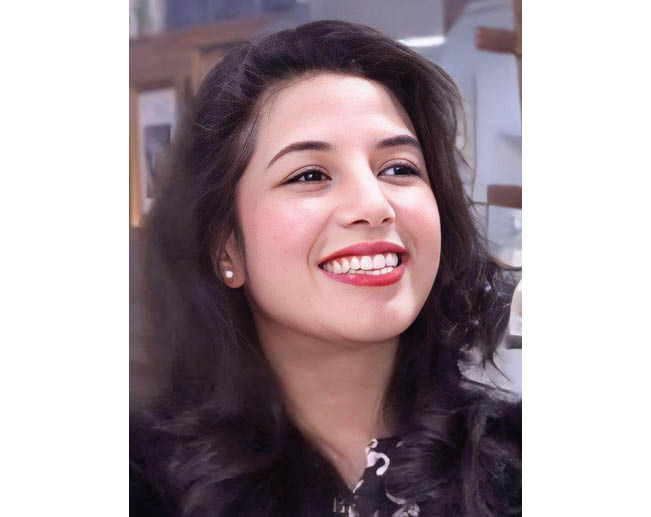
Sabahet Nasim Qureshi
As March arrives in Pakistan, the air begins to shift. The harsh, biting winds of winter retreat, making way for the gentle warmth of the spring sun. Across the country, from the gardens of Lahore to the valleys of the north, the world is waking up. The scent of jasmine and citrus blossoms fills the air, and the trees, once bare and grey, begin to show their true colors. In Pakistan, March is the season of the blossom, a time when nature proves that after every long, cold sleep, there is a destiny of beauty and growth.
As I walk through the heavy iron gates of the High Court in this early morning, I am struck by this metaphor. The International Women’s Day theme this year is “Give To Gain.” I look at the flower beds lining the court walkway and realize that a seed cannot blossom unless the earth gives it nutrients, water and space.
If we, as a society, learn to give deprived women their power, their “Give To Gain” moment will finally blossom. Just like these spring flowers, when women are given the right environment, they show their true colors with strength and confidence. They begin to live the lives they were always destined to live; lives filled with real happiness and the deep satisfaction of being seen and heard.
But as I enter the courtroom, the black gown I wear feels heavy. It is a stark contrast to the colorful spring outside. Within my arms, I carry files that represent the “winter” of many women’s lives, stories of those still waiting for their spring to arrive.
The Files of the Unseen
Each file in my hand is a life interrupted. One is a daughter in a rural village denied the inheritance her father intended for her, kept in the dark by brothers who claim “tradition” over law. Another is a mother in the city, her eyes red from sleepless nights, fighting for custody of the children who are her only world. There is the survivor of violence, asking for nothing more than the dignity of a safe room, and the laborer seeking the professional rights she earns with her sweat every day under the sun.
Being a woman in the legal profession in Pakistan is a daily negotiation with power. I have sat in rooms where my voice was talked over by men who believe justice is a concept they own by birthright. I have watched how our system sometimes looks at a woman who speaks up not with the support she deserves, but with a cold, piercing suspicion. This is the “frost” that keeps our women from blossoming.
Reality Check: The Faces Behind the Statistics
To understand why I continue to fight, one must look at the world through the eyes of the 123 million women and girls who call Pakistan home. In 2026, the numbers tell a story that can no longer be ignored.
The Gender Equality Gap: Despite years of advocacy, Pakistan remains in a difficult position. According to the World Economic Forum’s Global Gender Gap Report 2025, our nation ranks near the bottom (148th) in economic opportunity and health equity. We are a nation where half of our potential is often kept in a perpetual winter
The Shadow of Violence: Statistics from the United Nations Population Fund (UNFPA) Pakistan show that a vast majority of Pakistani women experience some form of domestic violence. Yet, more than 50% never seek legal help. They fear the “social storm” more than the abuse.
The Menstrual Justice: Crisis In early 2026, reports on “period poverty” highlighted that nearly 80% of girls in rural areas miss school because they lack basic health supplies. How can a girl blossom into a doctor, a lawyer, or a leader if she is forced to hide for one week every month? This isn’t just a health issue; it is a theft of her destiny.
The Economic Wall: A Locked Door
Justice is not only found in courtrooms; it is found in the ability to stand on one’s own feet. But for many, opportunity is a locked door. Data from the Asian Development Bank (2026) shows that only about 25% of Pakistani women are part of the formal workforce. They earn significantly less than men for the same labor and navigate a world without safe transport or childcare.
In my own profession, I have watched brilliant young women lawyers quietly leave their careers. They don’t leave because they lack talent; they leave because the system refuses to “give” them the infrastructure to balance their lives. When we lose these women, we lose the fragrance of their intelligence and the fruit of their hard work.
The Blossom of Menstrual Dignity
One issue that exposes the deepest layers of inequality is menstrual health. For too long, we have treated a natural biological process as a secret or a source of shame. Recently, my colleagues and I have raised legal questions about the taxation of sanitary products. We argue that menstruation is a biological reality, not a luxury. If a society refuses to “Give” its girls awareness and affordable healthcare, it will never “Gain” the strength of their contribution. Menstrual justice is the “water” that allows a young girl’s education to stay alive.
From Struggle to Action: What Will You Give?
Women in Pakistan do not struggle because we are weak. We struggle because our systems protect “tradition” more than they protect “justice.” Yet, even within these walls, I see a courage that is breathtaking. I see it in the mother walking alone into a male-dominated court. I see it in the daughter demanding her legal inheritance despite the pressure to stay silent. These women are the buds ready to burst into flower; they just need the sun to break through the clouds.
This International Women’s Day, the “Give To Gain” campaign challenges every Pakistani:
Will families give daughters their rightful inheritance?
Will workplaces give women equal pay and safety?
Will our communities give survivors belief instead of judgment?
Giving is not an act of charity; it is an act of investment. It is not subtraction; it is intentional multiplication. When we give a woman her power, she doesn’t just gain for herself; she gains for her children, her community and her country.
Tomorrow, when I walk again through those iron gates, I will carry the same files. But I will look at the spring blossoms outside and remind myself: growth is inevitable. If we learn to give, we will all gain a Pakistan that finally shows its true, vibrant colors. Let this be the March where we stop burying women’s dreams and start planting the seeds for their success.
Advocate High Court, Journalist