TEHRAN / WASHINGTON
Escalation in the Middle East reached a critical flashpoint on Wednesday as Iran formally rejected an Oman-backed proposal to manage transit through the Strait of Hormuz.
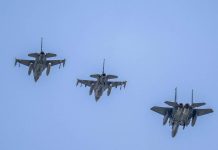
The diplomatic stalemate coincided with fresh joint US-Saudi military strikes against Iranian-backed groups in Iraq, triggering a sharp 5 percent spike in global crude prices and raising fears of broader regional conflict. Tehran issued a strong rebuke following joint air raids conducted by the United States and Saudi Arabia targeting facilities in eastern Iraq.
Iranian officials claimed the strikes hit official Iraqi infrastructure as well as stations set up for religious pilgrims. In an official statement, Iran’s Ministry of Foreign Affairs condemned the operations as a gross violation of the UN Charter and international law, accusing Washington and Riyadh of infringing upon Iraq’s national sovereignty.
The ministry stated that these attacks are in line with the aspirations of the United States and the Zionist regime to expand the scope of war and conflict in the West Asian region, holding the US administration and its regional allies responsible for the escalation. US and Saudi authorities countered that the precision strikes were launched to neutralize militia groups responsible for recent cross-border drone and missile attacks targeting Gulf energy facilities.
Hopes for a diplomatic solution to secure the world’s most critical maritime choke point suffered a major setback after Tehran rejected a compromise plan proposed by Oman. The Omani proposal—backed by several Gulf states—sought a 50-50 joint regional framework for overseeing shipping lanes through the Strait of Hormuz, modeled after multi-nation management systems used in the Strait of Malacca.
While Oman proposed a shared 50-50 regional administration with voluntary fees for both inbound and outbound shipping lanes, Iran countered by demanding exclusive Iranian operational control. Tehran insisted that the entire primary inbound shipping route must remain under Iranian control, with only partial outbound oversight left to Oman.
Senior Iranian official Kazem Gharibabadi stated that the Omani compromise failed to meet Tehran’s security requirements, warning that maritime transit through the waterway would remain restricted until their terms were met. Energy markets reacted immediately to the twin shocks of diplomatic impasse and renewed military strikes.
Global crude oil benchmarks jumped over 5 percent ($3+ per barrel) in early trading as traders priced in heightened risks of supply disruptions. Tensions spiked further after the Islamic Revolutionary Guard Corps (IRGC) Navy reported intercepting three commercial tankers in the strait, alleging they had ignored nautical warnings.
Around 20 percent of global oil and liquefied natural gas (LNG) passes through the Strait of Hormuz, and prolonged restrictions threaten to strain global energy reserves while triggering wider inflationary pressures.