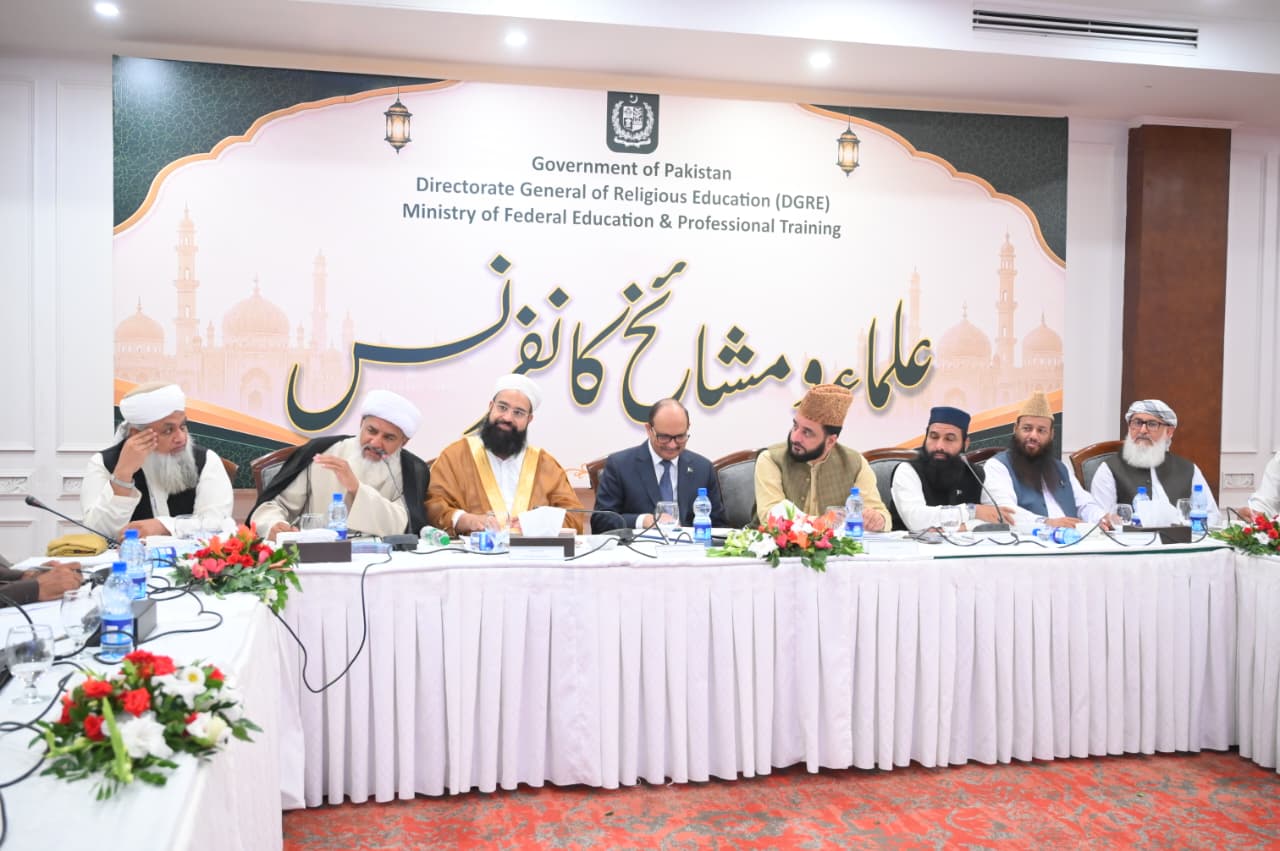
Religious educational boards, seminaries and religious organizations across the country observed Youm-e-Tashakur (Day of Gratitude) on Friday, appreciating the government’s efforts to resolve longstanding issues concerning madrassas.
The Pakistan Ulema Council, Mutahida Madaris Council, Mutahida Jamiat Ahl-e-Hadith and other religious organizations welcomed progress on madrassa registration, access to banking facilities and greater transparency in financial and administrative matters.
The religious leadership expressed gratitude to Prime Minister Muhammad Shehbaz Sharif and Chief of Army Staff and Chief of Defence Forces Syed Asim Munir for supporting efforts to address madrassa-related issues through consultation and institutional mechanisms, said a press released.
They said the recent progress would help strengthen cooperation between religious seminaries and state institutions.
National Paigham-e-Aman Committee Coordinator and Pakistan Ulema Council Chairman Hafiz Muhammad Tahir Mehmood Ashrafi, Mufti Abdul Rahim, Syed Ziaullah Shah Bukhari, Allama Arif Wahidi, Dr Asif Mir, Mufti Muhammad Karim Khan, Allama Tauqeer Abbas, Allama Muhammad Hussain Akbar and other religious scholars participated in the Youm-e-Tashakur activities.
The participants said madrassas were an important part of Pakistan’s educational and social system and could play an effective role in promoting peace and preventing extremism, terrorism and radicalization.
They stressed the need to provide madrassa students with modern sciences, professional skills and contemporary knowledge alongside religious education to enable them to contribute effectively to national development.
The religious leaders also appreciated the academic achievements of madrassa students in various educational board examinations, saying these results reflected the potential of combining traditional Islamic education with modern studies.
They welcomed progress in madrassa registration and said around 22,000 of an estimated 33,000 seminaries had so far been registered with the Directorate General of Religious Education (DGRE), said a press released.
They said the remaining seminaries were also being registered through available legal mechanisms, including the DGRE framework and the relevant Societies Act.
The religious leadership also supported greater financial transparency, proper documentation and accountability, while facilitating legitimate banking services for registered seminaries.
They said cooperation between the government and religious institutions should be further strengthened through dialogue, consultation and mutual trust.
The participants reaffirmed their commitment to promoting peace, national unity, tolerance and social harmony and equipping future religious scholars with both Islamic knowledge and modern academic and professional skills.
They expressed hope that the remaining issues concerning seminaries would also be resolved through dialogue and consensus.