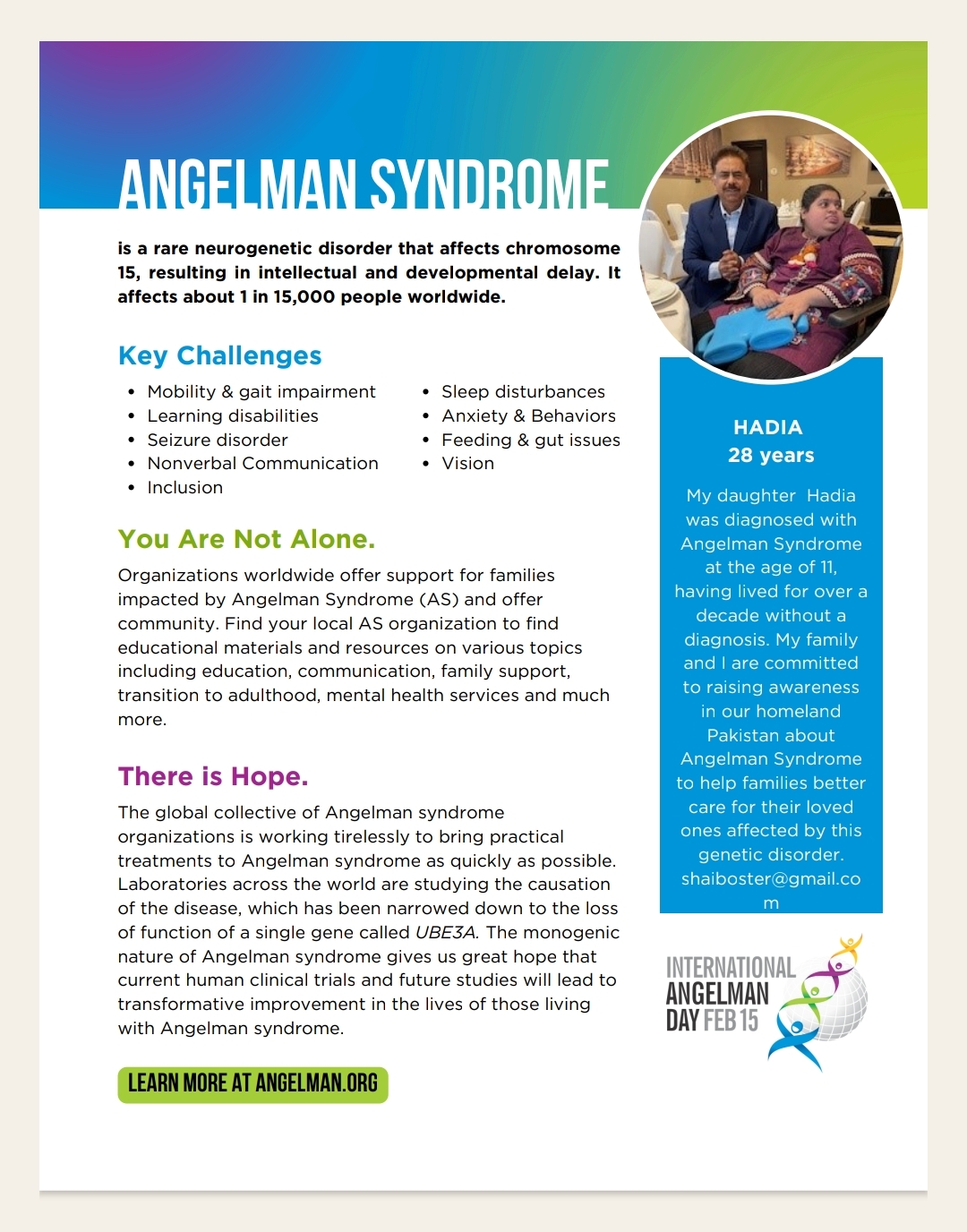
On February 15, buildings and landmarks around the world will be lit up in blue for the annual International Angelman Day (IAD), a celebration that creates awareness of Angelman syndrome (AS), a rare neurogenetic disorder that is thought to potentially impact over 500,000 individuals worldwide, or 1:15,000 births. Individuals with AS typically have balance issues, motor impairment and can have debilitating seizures. Some individuals never walk. Most do not speak, and many have sleep difficulties. In addition to these challenges, many individuals with AS also have unique behavioral characteristics such as a happy demeanor, characterized by frequent laughter, smiling, and excitability. They are often acknowledged for their infectious and beautiful smile and laughter.
February 15 is significant because February is International Rare Disease Month and the 15th refers to the 15th chromosome, which is the chromosome that carries the gene implicated in Angelman syndrome.
Currently there is no cure for this disorder, but–with over twenty programs being actively advanced to develop a potential therapeutic for AS–researchers say that it is very likely a transformative therapeutic will be available in the next 5 years.
Angelman syndrome is most often from a random genetic abnormality. Of the thousands of individuals diagnosed worldwide, few of those individuals are Hadia and Behram known until now in Pakistan.
The Foundation for Angelman Syndrome Therapeutics (FAST) is the largest funder of Angelman syndrome research throughout the world, with a single mission: A cure. Their goal is to bring safe and effective treatments into current medical practice as quickly as possible. Since its inception, FAST has invested more than $50 million to bring promising therapeutics to all individuals with AS. Because of those efforts, today there are four active human clinical trials ongoing for AS: two using a disease modifying strategy and two targeting the downstream effects of the nonfunctional gene.
“Angelman syndrome is a model for thousands of other genetic diseases and hundreds of other monogenic neurodevelopmental disorders,” said Dr. Allyson Berent, FAST Chief Science Officer. “The Angelman story is showing the world that disease modifying, gene replacement, gene editing, and so many other novel and innovative modalities could have a profound impact on rare genetic disorders across the globe. The difference we are making for Angelman syndrome will exponentially accelerate developments for thousands of other conditions, and it’s only a matter of time. We are humbled to help lead the way.”
For more information about International Angelman Day, visithttp://www.cureangelman.org/international-angelman-day