Karachi
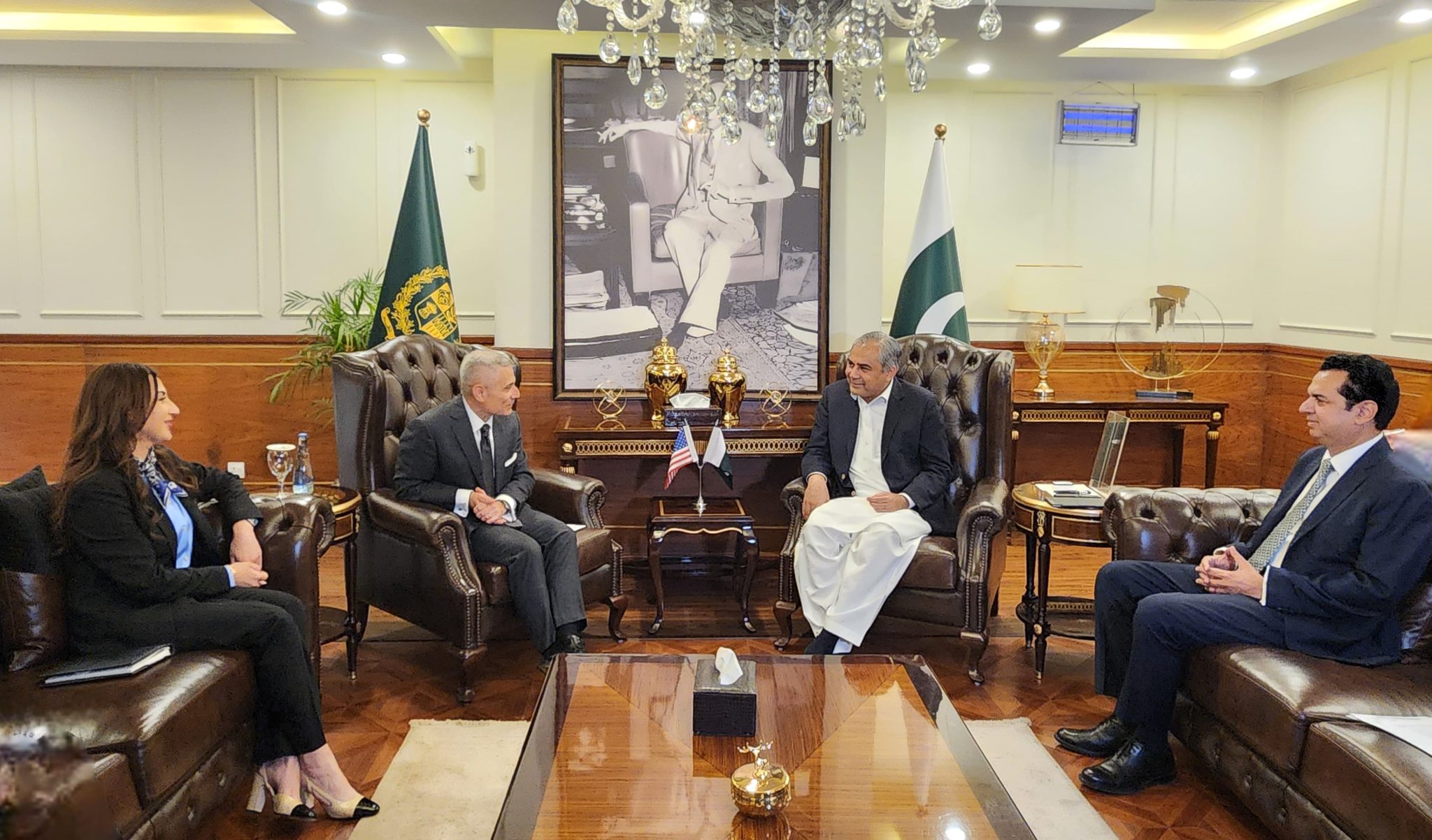
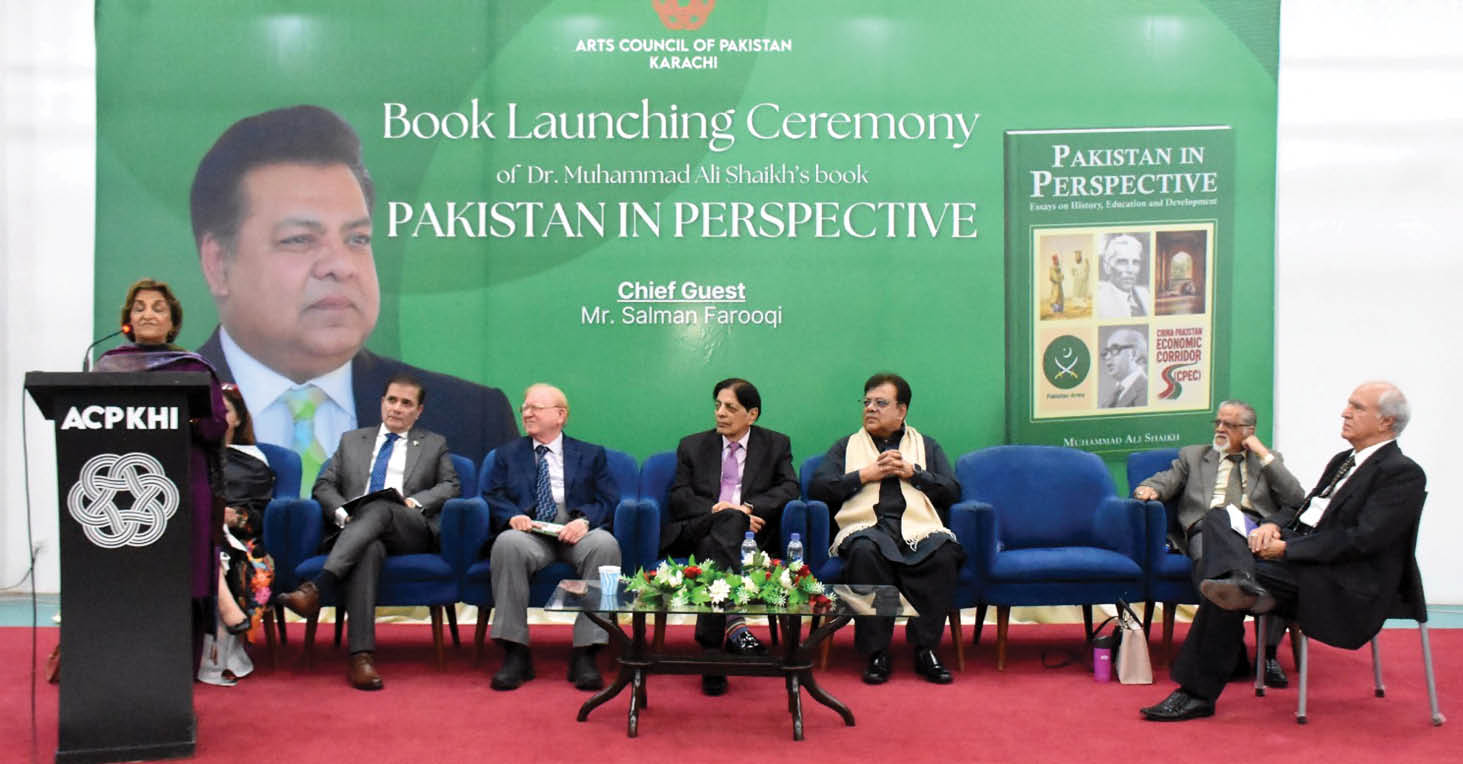
Arts Council of Pakistan Karachi hosted the book launch ceremony of “Pakistan In Perspective” by the Vice Chancellor of Sindh Madressatul Islam University, Dr. Muhammad Ali Shaikh. The event was held at the Haseena Moin Hall and attended by prominent figures from academic, literary, and social circles.
The ceremony was presided over by Salman Farooqi, while renowned educationist Huma Baqai served as moderator. Among the distinguished participants were President Arts Council Muhammad Ahmed Shah, Dr. Anjum Halai, Dr. Saif ur Rehman, Dr. Junaid Ahmed, Dr. M. Reza Kazmi, and Mehboob Shaikh.
In his presidential address, Salman Farooqi described history not as a cold and static stone but as a living mosaic colored by the heartbeat of the past. Reflecting on more than five decades of public service, he said he had witnessed Pakistan’s evolution, challenges, and opportunities firsthand.
Reading “Pakistan in Perspective,” He emphasized that while daily news may fade quickly, scholarly works such as this preserve national memory and give permanence to fleeting events. “A nation that forgets its past risks losing its way in the future,” he stated. Dr. Saif ur Rehman praised the book’s dedication.
“For the people of Pakistan, who deserve a better life” — noting that the author presents Pakistan’s perspective with clarity and evidence-based analysis. He highlighted the research-based discussion on the vision and historical role of Muhammad Ali Jinnah.
He described Sindh Madressatul Islam as more than an educational institution, calling it a nursery of leadership. He stressed that institutions, ideas, and personalities shape the destiny of nations, adding that the book clearly links education with nation building.
The 207-page publication offers in-depth analysis of major national issues, including Sindh’s history, the Bhutto family, the Pakistan Army, education, and Pakistan-China economic relations. Speakers observed that the book avoids emotional rhetoric and instead evaluates national challenges through realistic and grounded perspectives
Dr. Junaid Ahmed shared that many of Dr. Shaikh’s articles were initially published in the daily Dawn before being compiled into book form. Referring to 75 years of diplomatic relations between Pakistan and China, he recalled visiting China between 1986 and 1998 and witnessing its transformation firsthand.
He noted that until the 1990s, cities like Shanghai and Beijing had limited infrastructure, but later experienced remarkable development.
Citing Chinese leader Deng Xiaoping, he explained that China strategically sent hundreds of thousands of students annually to universities in the United States, Canada, and the United Kingdom, while also investing significantly in technical and vocational education.
A strong focus on engineering, technology, computer science, and business education, along with institutional support for returning graduates, laid the foundation for China’s rapid progress.
Dr. Anjum Halai highlighted the book’s chapter on education, emphasizing that universities serve not only students but also faculty as centers of research and continuous learning.
Referring to universities established in the subcontinent after 1857, she noted that colonial-era institutions were designed primarily to produce civil servants rather than independent thinkers. She observed that provincial governors still serve as chancellors of public universities, which may impact institutional autonomy.
Discussing the 18th Constitutional Amendment, she pointed to tensions between federal and provincial authorities and cautioned that excessive governmental intervention could undermine academic and administrative independence. She appreciated the book’s detailed discussion of three key dimensions of higher education — governance, funding, and quality and relevance — and urged adopting lessons from Germany and China to enhance the global ranking of Pakistani universities through a cohesive national strategy.
Author Dr. Muhammad Ali Shaikh remarked that a book is not merely a collection of words but the result of sustained dedication, intellectual focus, and perseverance.
“Writing demands deep commitment,” he said, describing the publication as the outcome of a serious intellectual journey. He shared that his writing career began with articles published in Dawn and thanked Muhammad Ahmed Shah for fulfilling his promise to host the launch at the Arts Council.