Anjum Nisar says exports weaken, FDI drops and agriculture sector continues to lag
Islamabad
The Businessmen Panel (BMP) of the Federation of Pakistan Chambers of Commerce and Industry has raised serious doubts over the government’s ability to achieve the 3.2 per cent growth target projected under the International Monetary Fund programme, warning that worsening poverty indicators, declining investment, falling exports and record government borrowing present a far grimmer economic picture than official claims suggest.
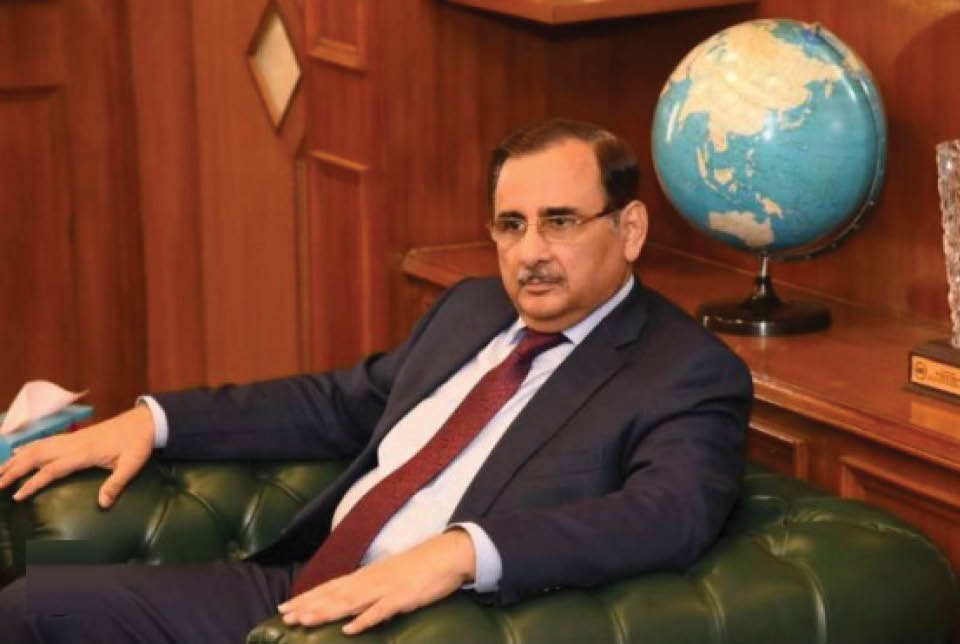
BMP Chairman and former FPCCI president Mian Anjum Nisar, in a strongly worded statement, said that although macroeconomic indicators such as inflation and the current account balance have shown relative stability, the real economy remains under severe strain. He said that stabilisation achieved through tight monetary policy and import compression cannot be mistaken for genuine economic recovery.
According to him, the business community does not see any broad-based revival in industry, agriculture or exports that could justify optimism about achieving the IMF-backed growth projection. “Growth driven by statistical adjustments and suppressed demand is not sustainable growth,” he remarked, adding that the productive sectors of the economy continue to operate below potential.
He pointed out that exports have weakened considerably, while foreign direct investment has dropped sharply and the agriculture sector continues to lag behind expectations. During the first half of the current fiscal year, FDI declined by more than 40 per cent to around $808 million compared to $1.425 billion in the same period last year, reflecting eroding foreign investor confidence. Exports also recorded a significant decline, while imports posted an increase, widening the trade deficit and renewing pressure on the external account.
Mian Anjum Nisar said these trends are incompatible with the achievement of a robust growth rate. “When exports are falling, investment is shrinking and agriculture is stagnating, it becomes difficult to expect a strong GDP outcome,” he said. He added that industry, which is a key driver of employment and income generation, is facing multiple structural and policy challenges.
Expressing concern over the latest poverty assessments, he argued that any marginal statistical decline in poverty ratios does not necessarily indicate genuine improvement in living standards. He maintained that suppressed industrial activity, declining purchasing power and reduced consumption can artificially influence poverty calculations, but they do not reflect real prosperity. “If factories are running below capacity, expansion plans are frozen and employment generation is weak, it is unrealistic to claim that poverty is meaningfully declining,” he said.
He noted that businesses are grappling with high energy tariffs, heavy and unpredictable taxation, policy uncertainty and weak domestic and international demand. Many industrial units, he said, are focusing merely on survival rather than growth. This has resulted in reduced hiring, delayed capital expenditure and shrinking profit margins. “Without industrial expansion, there can be no durable poverty reduction,” he emphasised.
The BMP chairman also highlighted the alarming rise in government borrowing. Data released by the State Bank of Pakistan shows that the government borrowed Rs1.9 trillion from commercial banks in the first seven months of the fiscal year, nearly five times higher than the Rs408 billion borrowed in the same period last year.
He warned that such aggressive borrowing is crowding out the private sector, leaving limited liquidity for businesses seeking financing for expansion and working capital.
He pointed out that interest payments have already consumed the largest share of federal expenditure in recent years, reaching around Rs8 trillion in the previous fiscal year. If the current borrowing trend continues, debt servicing obligations will rise further, compelling the government to cut development spending and social sector allocations. “It is deeply concerning that while productive sectors are shrinking and poverty pressures are mounting, government expenditures and debt obligations are increasing at an unsustainable pace,” he said.
Mian Anjum termed it unfortunate that instead of creating fiscal space through structural reforms and expenditure rationalisation, reliance on bank borrowing has intensified. He said such policies weaken long-term growth prospects, discourage private investment and undermine investor confidence. Private sector investment, he noted, is hovering near multi-decade lows, reflecting uncertainty about policy continuity and economic direction.
He stressed that sustainable poverty reduction can only be achieved through industrial revival, export expansion and improved agricultural productivity. Without reducing the cost of doing business, ensuring policy predictability, rationalising energy tariffs and providing targeted incentives for exporters, growth is likely to remain between 2.5 and 3 per cent at best, even in the absence of major external shocks.
The BMP chairman urged policymakers to move beyond short-term stabilisation measures and focus on structural economic reforms. He called for comprehensive tax reforms, facilitation of exporters, promotion of value-added sectors, encouragement of local and foreign investment, and strict control over non-development expenditures. Only by strengthening productive sectors and restoring investor confidence, he concluded, can the economy achieve genuine, inclusive growth and meaningful poverty alleviation in Pakistan.