Anjum Nisar says stable petroleum prices vital for sustainable growth
Karachi
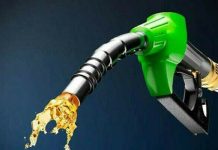
The Federation of Pakistan Chambers of Commerce and Industry’s Businessmen Panel has appreciated the new government for rejecting the Oil and Gas Regulatory Authority’s (OGRA) proposal to hike the prices of petroleum products, providing another hefty amount in subsidy from Apr 16 to 30 with a view to lower cost of production which is vital for sustainable growth in the country.
While issuing a press statement the BMP Chairman and FPCCI former president Mian Anjum Nisar said that the stable petroleum prices will not only provide the much-needed respite to the masses but also reduce the cost of production and give a boost to economic activity.
Mian Anjum said that it was the first test for the new government to provide relief to the industry despite high oil rates in the global market. Few days after the exit of the previous government, the Oil and Gas Regulatory Authority had suggested an unprecedented increase of up to Rs120 per litre (over 83 per cent) in the prices of petroleum products with effect from April 16 to recover full imported cost, exchange rate loss and maximum tax rates.
The regulator had presented two options to the government for price increase — the highest-ever in both cases — on the next fortnightly review due on Friday (today).
Ogra said both options had been worked out under the previous government’s August 24, 2020, policy guideline. This required calculations on the basis of existing sales tax and petroleum levy rates at the time of fortnightly review as well as full tax rates permissible under the law.
The Ogra’s working paper suggests that based on the existing tax rates — which are zero — the prices of all products should go up in a Rs22-52 per litre band to charge breakeven prices without any element of subsidy.
Under this option, the ex-depot price of high speed diesel (HSD) had been worked out at Rs195.67 per litre against the existing rate of Rs144.15, showing an increase of Rs51.52, or 35.7pc. The ex-depot price for petrol would have risen by Rs21.60 (14.2pc) to Rs171.46 per litre from Rs149.86.
The second price scenario was based on full tax rates, including 17pc GST on all products, and Rs30 per litre petroleum levy each on HSD and petrol, followed by Rs12 on kerosene and Rs10 on LDO — the maximum rates permissible under the Finance Bill. It is fact that the government was facing problems due to the former government’s mismanagement as they had set the price of petrol at Rs149, which burdened the national exchequer.
He said that Pakistan was generating a major share of electricity through furnace oil and increase in POL prices makes the cost of manufacturing activities unviable for the private sector.
He said that an increase in diesel price also further enhances transportation cost and create additional problems for the agriculture sector as most of the tube wells were running on diesel.
Mian Anjum Nisar also demanded the immediate reduction in electricity tariff especially for SMEs as a first step towards cut in production cost while the second and vital step toward this direction would be bringing discount rate to the regional level with a view to provide level-playing field especially to the export industry.
The decision would have the same importance for the domestic industry too, as it has also been facing tough competition of cheaper imported merchandize in the country following FTAs with several countries, he added.
The BMP chief said that after the Corona devastation, Pakistan should take advantage of those export orders canceled by the other regional countries. For this, the authorities would have to reduce production cost of the industries to avail this offer by the international buyers.
He said that the central bank should announce an initiative related to loans for small and medium enterprises (SMEs), as the SME sector has to show collateral to banks, which are always reluctant to offer them concessional credit.
He said it is high time that government should revise interest rate to turn Pakistan into a production economy. He said our future lies in strengthening the production sectors, but that would require the government to make a decision and cut the cost of credit as there is no justification to keep interest rates that high particularly when this policy is unlikely to produce the desired results in the wake of cost-pushed inflation.