Ambassador M. Alam Brohi
With the USA’s policy of China containment in mind, the Chinese leader Xi Jinping advised President Donald Trump that their countries should not fall into Thucydides’ trap by viewing each other as rivals for strategic superiority. Instead, they should strive cooperatively to bolster peace and security in the world. The Chinese leader subtly tried to assuage the concerns of the USA leadership.
The USA’s recent foreign and security policy decisions have been directed at containing China’s political, economic and strategic ascendancy. Its bilateral relations were calibrated by the ‘China containment’ policy. The competition and confrontation between the two countries, though short of a new Cold War, have been compelling many regional countries to review their foreign policy portfolios in line with the changing signals from Washington, DC and Beijing. At times, the heightened obsession with China has overshadowed American domestic politics, distracted Washington’s focus from international issues, and weakened its grip on world affairs.
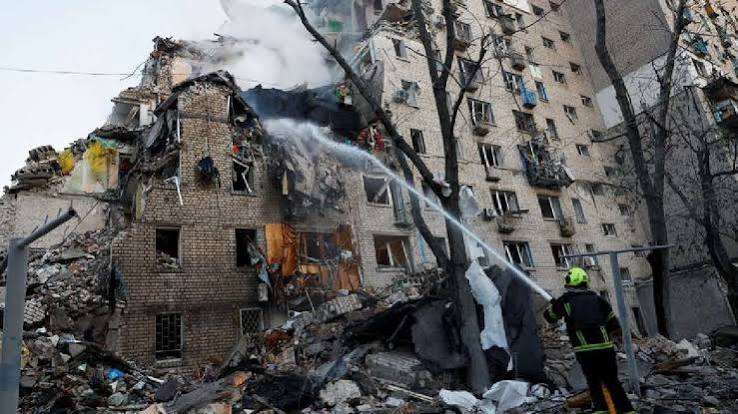
Absolute power corrupts absolutely. The collapse of the Soviet Union made the USA the absolute world power. With the disappearance of the countervailing weight of the USSR, the USA became the sole superpower and the world leader. Instead of assuming the role of a good guardian of democracy, human rights, peace and security based on international law and conventions, the USA continued its reckless policy of involvement in military excursions in far-off lands, adopted soon after the Second World War, causing massive destruction and countless deaths while spending huge amounts.
Ironically, the USA has always abruptly ended its involvement in such wars and left the places of conflict in utter humiliation, damaging its image as a dependable world leader. Direct USA military interventions and proxy wars in regions from Latin America to Africa, the Middle East, South-East Asia and South Asia have left behind bitter legacies of political anarchy, insecurity, intractable disputes, smouldering hostilities, militancy and terrorism. No country has suffered more than Pakistan from the militancy and terrorism that ensued from American wars in Afghanistan.
Over the past four decades, China, au contraire, has been strengthening its political, economic, technological and strategic position at the regional and global levels in ways corresponding to its national blueprint aimed at economic development, peace, stability and good neighbourliness. This quiet, slow and steadily assertive policy has won China dependable partners in Asia, Africa and Latin America.
China’s entry into the World Trade Organization proved a watershed in its economic development, promotion of trade and commerce, investment in manufacturing industries, and the relocation of labour-intensive industrial units from the developed world to its tax-free economic zones. Economic globalisation, within a decade or so, boosted Chinese prosperity, rendering it the second-largest economy in the world.
However, the economic and military rise of a regional state is politically and strategically deemed a threat to the world hegemon. This is how the USA started perceiving China when it surpassed the former in purchasing power parity and was close to matching the overall USA economy. China has a long and hard struggle behind this dizzying economic progress.
China, over the years, has been concentrating on realising its economic potential by putting its political, ideological and territorial issues with other countries on the back burner and adopting a pragmatic policy of patience and restraint in international affairs. This policy stemmed from the late Chinese statesman Deng Xiaoping’s economic reforms in 1978. As already elaborated, within a few years the world started witnessing the dividends of this focused economic development policy.
Given its spectacular economic success, China became the top trading partner of East Asian countries and signed regional economic deals that included free trade agreements with Australia, Singapore, South Korea, the Association of Southeast Asian Nations (ASEAN) and others.
China’s trade with the African continent and Latin America also leapfrogged. An African ambassador told me that trade with the African continent grew from only around $10 billion in 2000 to $220 billion in 2014. Chinese financing to Africa peaked at $122 billion, dwarfing the US amount of $106.7 billion in the same period.
The past few years have witnessed China building institutional infrastructure to share its affluence with other countries. In 2014, China, in collaboration with BRICS countries, created the $100 billion New Development Bank and, the following year, established the $100 billion Asian Infrastructure Investment Bank, which has since been joined by over 103 countries.
China launched the Belt and Road Initiative (BRI) in 2015, which seeks to interconnect over 60 countries in Asia, Africa and Europe. The initiative envisages the development of interconnecting roads and railways for overland transportation and seaports to facilitate the shipment of commercial goods. The BRI promises financial assistance and investment in regional communication, agricultural infrastructure and natural resources. Unlike the USA, China has been raising its stature as an economic partner peacefully.
The USA also created a string of development institutions, including the World Bank, the Inter-American Development Bank, the US Agency for International Development and the US Export-Import Bank, all of which advanced its political and economic interests.
However, the 20th century witnessed increased US political and military intervention in the Central American, African and Asian continents. This gave way to frequent military excursions and violent regime changes in these continents. Only governments pliant to Washington, DC could stay in power.
The USA blockaded Cuba in 1962, the Dominican Republic in 1965, mined Nicaraguan harbours in 1980, and invaded Grenada in 1983 and Panama in 1989. It applied financial pressure to weaken Chilean President Salvador Allende and embargoed Nicaragua to undermine the Sandinista government. Congo, Angola, Sudan, Somalia, Liberia, Sierra Leone, Cambodia, Vietnam, both Koreas, Libya, Syria, Iraq, Iran and Afghanistan can safely be added to the list of victims of US overt or covert military intervention. The USA expended over $6.5 trillion on its wars from 2000 to 2021.
China has been unassumingly pursuing its political, economic and strategic policies without posing any threat to any country or region. It would unfailingly continue to do so unless its strategic sensitivities, already clearly outlined, are challenged.
The writer is a former member of the Foreign Service of Pakistan and has served as Ambassador for two terms. He is the author of five books.
Courtesy