Islamabad
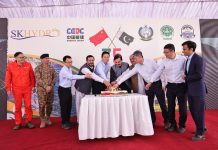
The Centaurus Mall in collaboration with Aman Citrus Farm is hosting a 5-day Orange/Citrus festival. The Festival was inaugurated by Sardar Yasir Ilyas Khan, CEO of The Centaurus Mall and President IDA.
Among those who are participating in the festival and attended the inaugural ceremony include Aman Ullah Malik, owner of Aman Citrus Farms, Baber Malik, CEO Whispering Pines, Engr. Ajmal Baloch, President of All Pakistan Trade Union, Rana Qaisar, Sardar Tahir Mehmood, President IEAA, Ch Zahid Rafiq, Secretary General IEAA, Amir Hussain, CEO of Tesla Pvt Ltd, Umar Hussain Malik, Director of Karachi Steel), Muhammad Omais Khattak, Managing Director of Khattak Sons Pvt. Ltd, Ejaz Abbasi, Vice President FPCCI Capital Office, Naveed Malik, General Secretary Gulberg Union and other noted personalities such as Chaudhry Javed, Raja Hassan, Khalid Chaudhry, Yousuf Rajput, and Tehmas Butt.
The Orange Festival will be showcasing various premium Citrus varieties such as Deep Red, Fruiter, Grapefruit, Kinnow, Mossami, Shakri, Valencia Late, China Lemon, Hybrid Sweet Lime, and Meyer Lemon.
This festival serves as a platform to directly connect the agricultural sector with consumers. The Centaurus initiative aims to support local farmers, enhance direct connections with consumers, and facilitate interactions with the international audience and exporters.
Citrus production in Pakistan constitutes 37.8pc of the total fruit production. Approximately 2.2 million metric tons of citrus fruits, primarily Kinnow, are produced on 343,173 acres. Citrus has become a significant export commodity, with global exports growing at a rate of 15pc.
Over the past decade, Pakistan’s citrus exports have experienced a substantial growth rate by 278pc, accounting for an average of 4pc of the total citrus production in the country. This highlights the sector’s considerable potential for further expansion.
Speaking with the audience, Sardar Yasir Ilyas Khan emphasized the need to address weaknesses, including skills and technological gaps, in both pre and post-harvest stages of citrus production.
The focus is on minimizing production losses, enhancing market access for citrus exports from Pakistan, and maximizing overall productivity.
He estimated that a modest reduction of 10% in post-harvest losses could potentially double exports, create over 200 new jobs, benefit 560 rural households, and bring over 2,000 hectares under improved technologies and management practices.