Sajjad Hussain
Once, Pope Francis said, “God always forgives, man sometimes forgives, but nature never forgives.” These words have proven to be gospel truth today, as the world is reaping the harvest it has sown in the past century. The unfortunate reality, however, is that those who are not responsible for this maltreatment of nature must bear the brunt of those who are. For example, the largest carbon contributors are the countries of the Global North, including China, but the worst hit are the poor countries of the Global South.
The claims and promises under the Kyoto Protocol, the Paris Agreement, and the COP conferences have yet to be realised. Article 10(c) of the Kyoto Protocol suggests that countries work together to develop, share, and finance environmentally friendly technologies and methods that help fight climate change. Article 9(1) of the Paris Agreement requires developed countries to provide financial resources to developing countries to combat climate change. At the COP27 conference in Egypt, developed countries were assigned to set up a loss and damage fund to help developing countries mitigate and adapt to the effects of climate change.
Therefore, without the disbursement of funds for loss and damage by developed countries, the survival of developing nations such as Pakistan, in the face of climate-induced catastrophe, remains at stake.
As far as Pakistan is concerned, its contribution to global carbon emissions is less than 1%; however, it is one of the most vulnerable countries to climate change. The floods of 2022 lent credence to this, causing immense economic loss to Pakistan. They rendered 33 million people homeless and inflicted over US$30 billion in GDP losses. For the first time in the country’s history, the northern region experienced glacial lake outburst floods (GLOFs) on a larger scale. Almost 3,044 glacial lakes were formed in KP and GB, of which 33 were identified as vulnerable to outburst.
The recent onslaught of floods in Gilgit-Baltistan (GB) and Khyber-Pakhtunkhwa (KPK) is hardly without anticipation. The 2022 floods should have served as a wake-up call. According to UNDP, from 2018–21 almost 18 GLOFs occurred; 75 occurred in 2022, and 83 such events were recorded in 2023 alone. The country should therefore have braced itself for the upcoming events.
The GLOF II project, which began in 2017 as a continuation of the first project, has failed to prevent disasters in various areas of GB. The project was primarily focused on empowering climate-vulnerable communities to mitigate the impact of GLOFs by improving community preparedness and disaster response. It aimed to station early warning systems in areas prone to GLOFs, as well as tree plantation, drainage control, and the construction of mini dams.
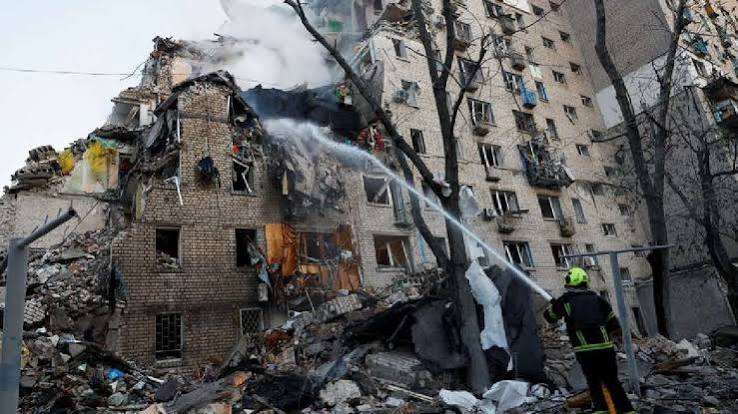
The GLOFs are not the sole reason behind recent devastation in northern Pakistan. Cloudbursts are another factor wreaking havoc in KP and GB. On 21 July, a heavy flood triggered by cloudbursts swept away 15 tourist vehicles in the Babusar area of GB, leaving 5 dead and 15 missing. The cloudburst caused torrential rain that inundated KKH, leaving hundreds of tourist vehicles stranded on both sides of the highway.
The following day, a heavy cloudburst caused a severe flood in Kondus, Khaplu. According to local sources, the flood swept away 50 houses, 20 shops, and 2 mosques. In Skardu, Sadpara Nalla and Burgi Nalla also faced floods after cloudbursts. Important tourist sites — Khamosh and Mantokha Waterfalls, Kharmang — were also severely damaged by flash floods. Cloudbursts also caused devastation in the Ghizer district, destroying agricultural land and basic infrastructure.
By the end of the month, 37 villages in GB were declared disaster zones by the government. It estimated the floods caused losses of 15–20 billion rupees through the destruction of homes, crops, and public infrastructure.
On 1 August, a flash flood caused heavy damage to crops, livestock, houses, and educational institutions in the Ishkoman area of Ghizer. The flood was so sudden that residents barely managed to survive. On 6 August, floodwaters from the Shisper Glacier caused severe land erosion in Hassanabad Nalla in Hunza, damaging the protection wall of KKH. On 8 August, another flood from the Shutuber Glacier destroyed water facilities, bridges, and link roads in Gojal, Hunza. On 10 August, floodwater from the Shisper Glacier washed away a section of KKH, blocking the highway for traffic. On 11 August, 7 people died during a water restoration effort in Danyor Nalla after a flood.
In Baltistan, the plight was no different. On 12 August, a glacial flood in Horchas Nalla and Dogoro village in Shigar swept away houses, damaged agricultural fields, and blocked the only road to K2. On 14 August, in Saltoro Siachen, a flood swept away a suspension bridge connecting the village to other areas. On the same day, a flood blocked the Gilgit–Skardu road near Astak Nalla, leaving hundreds of passengers and goods vehicles stranded. At Baghicha, Roundu, floodwater washed away the bridge connecting Skardu to Roundu, causing a severe fuel shortage in Skardu. On 16 August, sudden flooding injured 10 people and killed a young boy in Xhoqgo, Gulapur, Shigar. On the same day, a flash flood in Haldi, Khaplu, damaged Siachen Road. The Sarmo Bridge in Khaplu was swept away after heavy rainfall caused the river water to rise. In Hushe Valley, the only suspension bridge was also swept away.
Only this week, glacial floods have caused heavy destruction in Hunza, Astore, Nagar, Ghizer, and Gilgit. The floods blocked KKH at many locations. A huge flood in the Raushan area of Ghizer swept away an entire village. Flood debris blocked the Ghizer River and raised the water level, placing adjacent villages at risk of overflow. A shepherd’s timely warning saved the lives of the villagers.
All the above occurrences cover just one month. What comes next is anyone’s guess. All we can do is brace ourselves for future events. The fact remains that climate change is a cosmopolitan issue and knows no boundaries. It is melting glaciers in the north at an alarming pace, triggering GLOFs in GB and KP.
Therefore, the government must declare a climate emergency in these regions. The authorities and disaster management cells must station the latest early warning systems in GB and regularly use satellite imagery to monitor glacial lakes. Proper forecasting through cutting-edge technology, combined with effective planning and management — such as avoiding construction on waterways, riverbanks, and landslide-prone areas — can help prevent future disasters. For us, adaptation and mitigation are our last resorts, given our negligible role in causing global warming. For the world, now is the time to issue a clarion call to action before matters spiral out of control.
The writer is a Political Science graduate from Punjab University, hailing from Skardu.
Courtesy