Late Thursday night, two explosions ripped through Kabul’s skyline, and the Taliban regime leapt to accuse Islamabad of bombing a market in Paktika, violating airspace above Kabul and committing an act of aggression previously unimagined. Their social media posts thundered warnings, “the consequences will be attributed to the Pakistani army.” But behind these claims lies a dangerous inversion. Pakistan, having absorbed nonstop militant bloodletting at its frontier, is now framed as the aggressor.
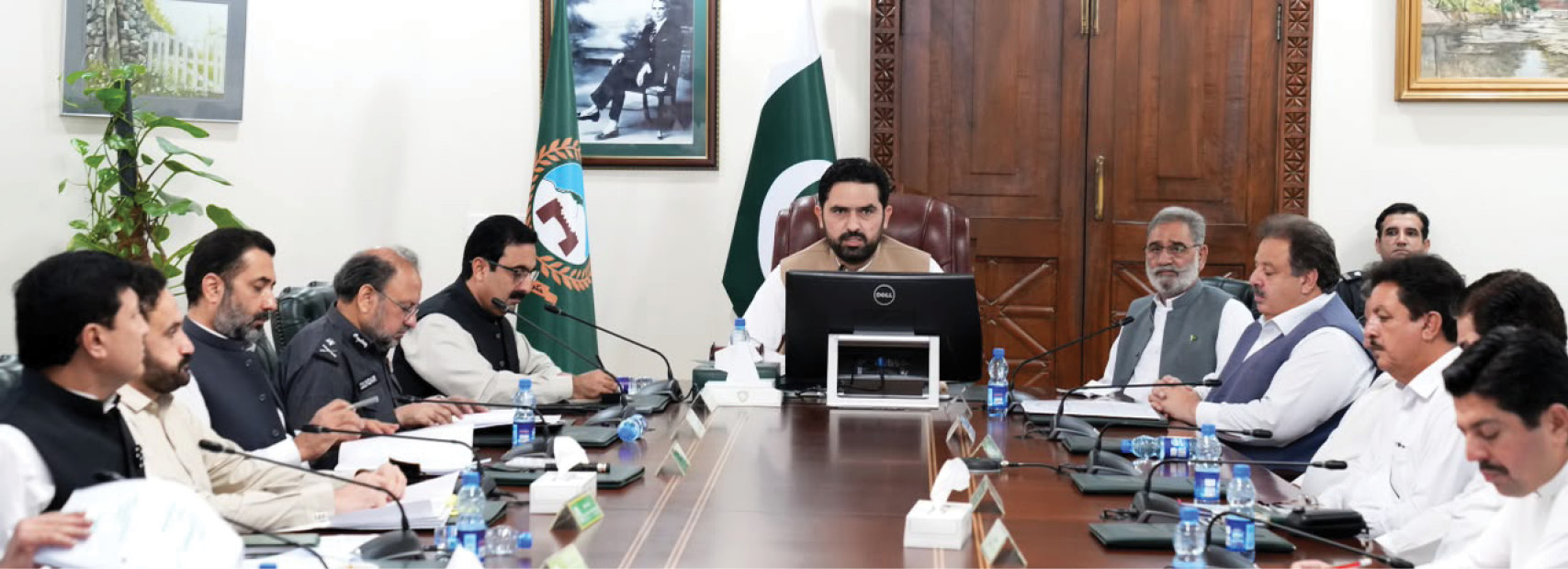
While accusations swirl, Pakistan’s military spokesman, Lt Gen Ahmed Sharif Chaudhry, has issued a single line heavy with threat in his much-anticipated presser, “To safeguard Pakistani lives and properties, what measures need to be taken will be taken.” But that moment of rhetorical restraint is dwarfed by what came next. The DG ISPR publicly admonished the provincial government of Khyber Pakhtunkhwa to stop begging Afghanistan for security and protect their own people. Cutting through the innuendos, these remarks are nothing short of a state’s awakening to its own failure.
Khyber Pakhtunkhwa is bleeding. Over the last year, the volume of militant attacks across the province has escalated dramatically. In 2024, more than five hundred terrorist strikes killed hundreds, the vast majority shaping a map of conflict that runs through KP and into Balochistan. As of September 2025, fatalities in KP had already neared the entire-year totals of the previous year. And the operations have been ceaseless. Islamabad’s military reports that in KP alone, more than ten thousand intelligence-based operations have been launched to date this year. Each one is a tactical fight, meant to uproot terrorists. Yet the cycle repeats. Why? Because operations without governance are fleeting, and because local police are understrength and undertrained. Lastly and most importantly, because our state has left the frontier in a limbo, defended by soldiers but uncared for by bureaucrats and technocrats. Khyber Pakhtunkhwa has become Pakistan’s bleeding margin.
Let us address the Afghan accusation squarely. If Pakistan conducted strikes, it must provide a paper trail with an undeniable emphasis on imagery, intercepted signals and forensic evidence. No matter what cock-and-bull concoction Kabul may provide, Islamabad should and must overload the denial with proof, leaving no room for spin. And if no strike occurred, the state must say so outright and pair that denial with a fresh dossier exposing cross-border militant logistics, known safe havens, and proven routes. Pakistan cannot be boxed into conceding sovereignty whenever Kabul issues theatrical statements. If Afghanistan refuses to act against militant sanctuaries, Pakistan’s strategic principle is simple: self-defence is non-negotiable.