Leh
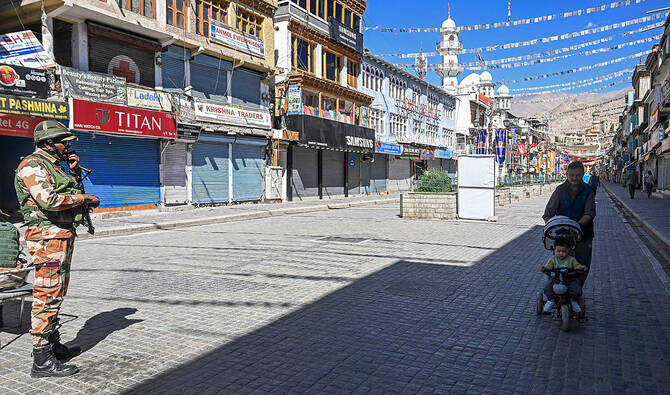
Weeks after the September 24 protests and the killing of four civilians in Indian forces’ firing, Leh’s main market and tourist areas remain eerily silent, exposing the hollow claims of normalcy by authorities in the Ladakh region of Indian illegally occupied Jammu and Kashmir.
According to the Kashmir Media Service, hotels and guesthouses that once thrived on tourism now stand deserted, with room rates slashed from Rs 5,000–Rs 10,000 to as low as Rs 500–Rs 1,000, yet still failing to attract guests. Taxi stands lie empty, and Leh town appears to host more Indian forces’ personnel than visitors.
Local business leaders expressed despair over the situation. “We’ve never seen such days before. Violence has robbed us of our season’s happiness, yet the Lieutenant Governor claims everything is normal,” said Rigzin Wagmo Lechik, president of the Leh chapter of the All Ladakh Hotel and Guest House Association.
The report said the economic impact has been devastating, with tourism losses reaching nearly 80%. Around 2,000 hotels and guesthouses remain vacant, and not a single pre-booking has been made for the upcoming tourist season.
Internet services, suspended for 16 days after the September 24 killings, were restored late Thursday night following protests, though no official notification was issued. Meanwhile, the district administration has warned of strict action against those spreading “fake news.”
Community leaders say restrictions such as Section 163 continue to suppress public gatherings, and despite schools reopening, classrooms remain empty. Taxi drivers report unprecedented idleness, with nearly 6,000 drivers unable to find work.
Residents continue to demand justice for the four civilians killed during the peaceful fast led by social activist Sonam Wangchuk, rejecting the ongoing administrative probe as biased and calling for a judicial inquiry.
Despite repeated official claims of calm, Leh’s silent streets and shuttered businesses paint a stark picture of economic paralysis and public disillusionment.