ISLAMABAD
Once known for its peaceful environment and spacious roads, Sector G-8 in the federal capital has become a hotbed of encroachments, making life miserable for its residents. The unchecked sprawl of illegal car showrooms, makeshift shops, and unauthorized workshops has overtaken footpaths and roads, leaving pedestrians with no choice but to walk on the streets—often at the risk of their safety.
Footpaths, meant for pedestrians, are now occupied by commercial setups, while the streets remain choked with double-parked vehicles. Residents have long complained about the lack of parking space near their homes and the worsening traffic situation, but their appeals have largely fallen on deaf ears.
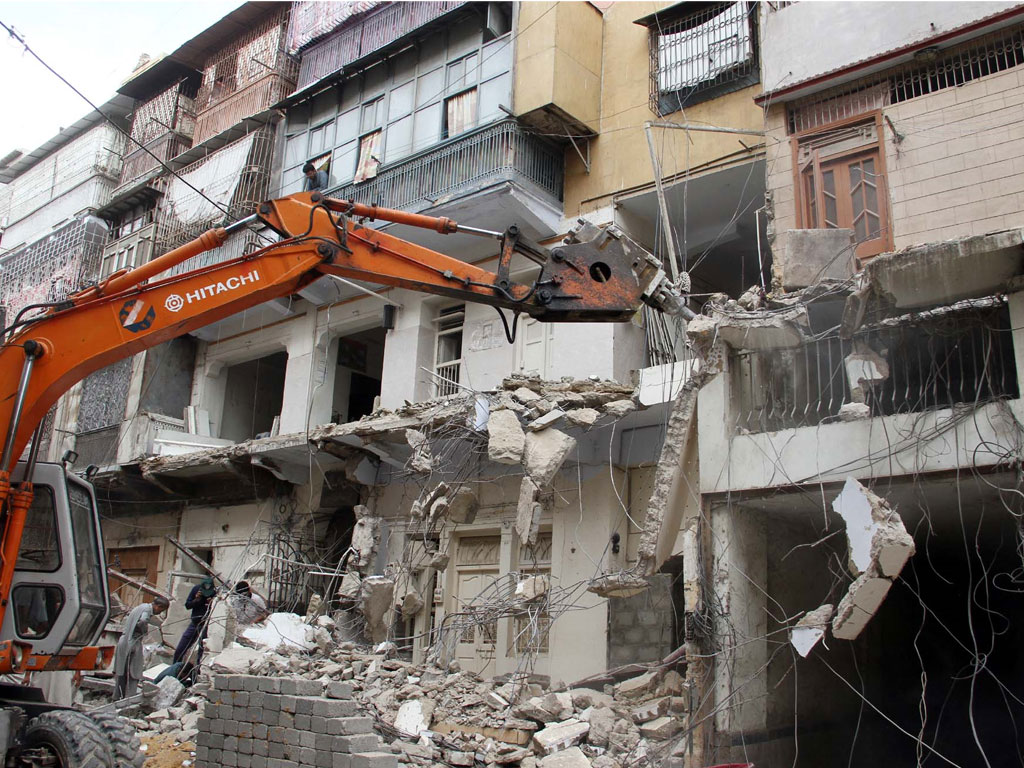
Despite occasional operations conducted by the Capital Development Authority (CDA), illegal structures quickly return. According to local sources and eyewitness accounts, a well-established nexus between encroachers and certain officials within the civic body allows this cycle to continue. Allegations of bribery and deliberate inaction are common, with reports suggesting that some CDA enforcement officers warn businesses ahead of scheduled operations.
The Islamabad Traffic Police (ITP) also faces criticism for turning a blind eye to growing traffic violations and unauthorized vehicle displays by car dealers. The lack of proactive enforcement has emboldened these illegal outfits to expand further. In stark contrast, the Punjab government has carried out effective anti-encroachment operations in cities like Lahore, Faisalabad, and Rawalpindi.
Hundreds of kanals of public land have been reclaimed, and authorities have ensured the encroachments do not reappear. Continuous monitoring, community engagement, and penalties for repeat violators have been key to Punjab’s success — a model that Islamabad has yet to emulate. As the capital city, Islamabad should reflect disciplined urban planning and efficient governance. However, the G-8 sector stands as a glaring example of administrative failure, where short-term financial interests overshadow long-term civic responsibility.
Car showrooms and workshops—meant to operate in designated commercial zones—are now occupying residential areas, polluting the environment and endangering public safety. In some places, even main road lanes are reduced to single-lane usage due to rampant double-parking.
To address this crisis, residents demand a sustained anti-encroachment drive backed by strong political will and administrative transparency. They call for the formation of a dedicated task force empowered to seal repeat violators and equipped with digital tools for public oversight. Collaboration between CDA, ITP, and local communities is essential to restore civic order.
The current state of G-8 is not just a local issue but a reflection of a broader systemic decay in urban governance. If Islamabad is to reclaim its image as a model city, decisive and consistent action against encroachments is urgently needed.