BELGRADE
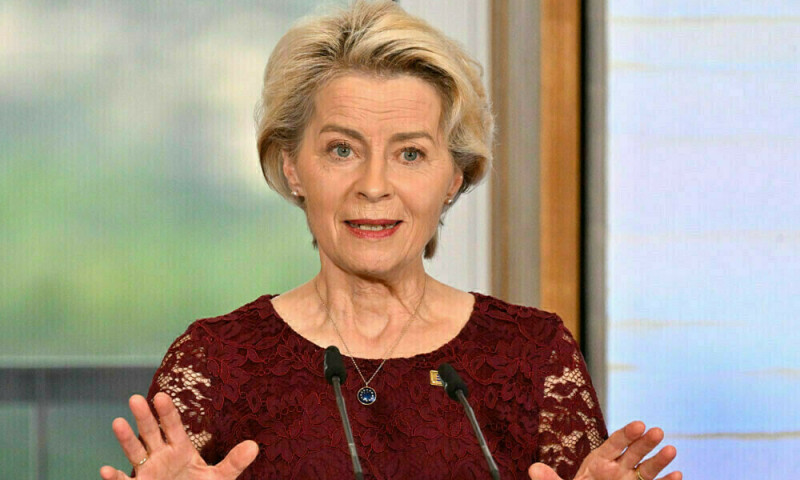
EU chief Ursula von der Leyen on Wednesday starts a tour of six Balkan nations aspiring to join the bloc amid signs that enlargement is back on the Brussels agenda.
Von der Leyen’s fourth visit to the region is an “important signal” that European Union enlargement is being discussed again, Heather Grabbe, an expert at Brussels-based think tank Bruegel, told AFP.
“The fact that she is going early in the second term and going frequently is a strong political signal of commitment and interest,” Grabbe said.
Her predecessor as European Commission president, Jean-Claude Juncker, said on becoming head of the EU executive that there would be no enlargement during his term, Grabbe underlined.
For Albania, Bosnia and Herzegovina, Kosovo, North Macedonia, Montenegro and Serbia, von der Leyen’s visit is an opportunity to show that they are serious about the reforms needed to hope to join the 27-nation bloc.
EU’s enlargement to the region of slightly less than 18 million people is a 20-year-old debate.
In some countries public support for EU membership and the political will to implement reforms fell during that period. But the mood changed with Russia’s 2022 invasion of Ukraine, that “re-energised the whole process”, Grabbe said.
“The geopolitical urgency around Ukraine and Moldova … that has helped them along,” she said referring to the Balkan EU hopefuls.
Von der Leyen’s four-day tour, that starts in Albania, will have a “rather optimistic tone since another mechanism has been launched to move the entire region closer to the EU,” said Jelica Minic, vice-president of the European Movement in Serbia, an NGO.
She was referring to the bloc’s growth plan for the Western Balkans adopted in November 2023.
To counter the economic influence of China and Russia in the region, the EU has proposed a six billion euro ($6.5 billion) initiative aimed at doubling the region’s economic capacity.
The plan is based on integration with EU’s single market, a regional common market, acceleration of reforms and increased financial assistance.
But payments will be strictly linked to reforms, notably alignment with the EU’s common foreign and security policy.