Newly-constituted task force to turn Gandhara heritage into a global Buddhist destination
ZUBAIR QURESHI
Islamabad
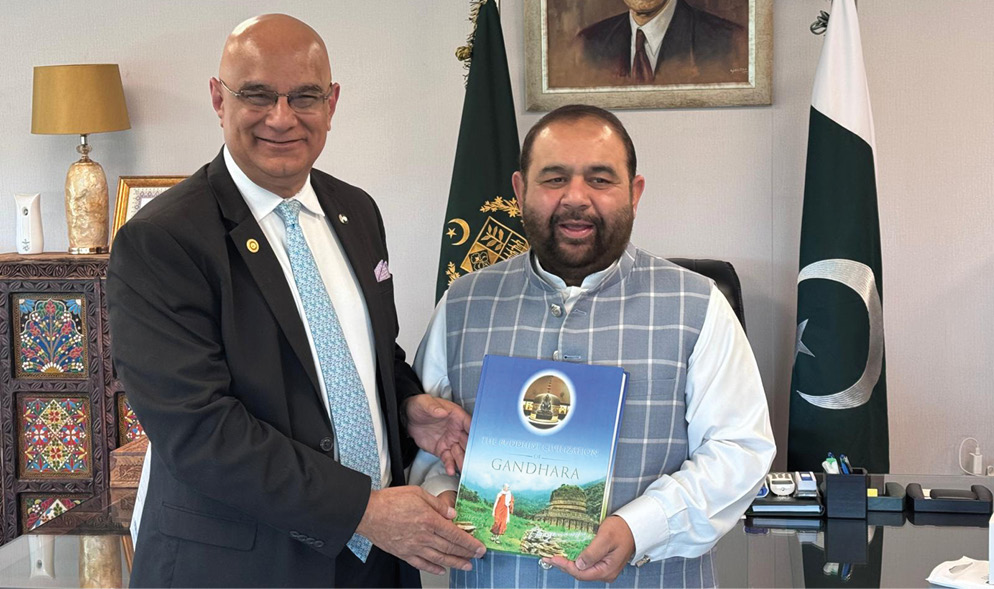
Former Senior Adviser to the Ministry of Health and renowned promoter of Gandhara and Buddhist tourism Mr Imran Shauket has been appointed Coordinator of the newly-constituted task force for Gandhara-Cradle of Buddhism (GCOB) Strategy.
The body will work under the Ministry of National Heritage and Culture, with Federal Minister Aurangzeb Khan Khichi as Chairman to transform Pakistan’s Gandhara heritage into a world-renowned destination for the millions of Buddhists around the world.
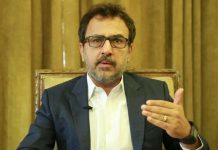
In an exclusive interview, Mr Imran Shauket explained and shared his plan and strategy to carry forward Prime Minister Shehbaz Sharif’s vision i.e. to make Pakistan a big attraction for the Buddhist tourists/pilgrims from around the world.
Lead Pakistan: Congratulations on assuming the role as Coordinator of the Prime Minister’s Task Force on Gandhara. What is its mandate?
Imran Shauket: Thank you. As you are aware Prime Minister Muhammad Shehbaz Sharif has constituted a task force on Gandhara. Besides Federal Minister fot National Heritage and Culture, Aurangzeb Khan Khichi and myself It includes senior representatives of relevant federal ministries and provincial departments, particularly Punjab and Khyber Pakhtunkhwa, which are the principal custodians of Gandhara heritage.
Our mandate, rather objective is to promote Pakistan’s rich and ancient Buddhist heritage in the world.
I have often said that Gandhara is to Buddhists what Mecca and Medina are to the Muslims in terms of spiritual significance. We have enormous heritage potential, but have not yet fully recognized or presented it to the world.
LP: It is a great service, something that can change Pakistan’s entire tourism landscape but are you aware of the fact that efforts were also made in the past to boost Gandhara tourism potential but they could not bear fruit. What changes or strategy you have in mind so that the initiative could kick off this time?
Shauket: Yes, we are aware of that but this time, we are not trying to take over anyone’s authority. Archaeology and tourism are provincial subjects under the Constitution, particularly after the 18th Amendment. Earlier efforts encountered resistance because of concerns about federal interference in provincial responsibilities.
This task force has deliberately been designed to coordinate and facilitate, not implement. We are not asking the provinces or ministries to surrender their control. Our role is to bring everyone together and help align their efforts around a common objective.
LP: What are your immediate priorities?
Shauket: We are approaching the issue from the perspective of the visitor or pilgrim. First is promotion. Rather than trying to reach the Buddhist tourists/pilgrims individually, we want to engage influential Buddhist leaders and monks. We hope to establish a “Patrons of Gandhara Sangha” of around 15 to 20 senior monks from different countries who can become ambassadors and promoters of Gandhara.
Secondly, we shall introduce a distinct Buddhism category in Pakistan’s visa system and eventually facilitate multi-year, multiple-entry visas for Buddhist monks and senior leaders.
Thirdly, we shall ensure freedom of movement. Pakistan needs a more streamlined internal travel and NOC regime. The default should be that the country is open, with restrictions only where there is a genuine and clearly communicated security concern.
The fourth point is regarding capacity and infrastructure. We need trained guides, tour operators and suitable facilities around Gandhara sites. One proposal is to earmark 5 to 10 acres around selected sites and invite Buddhist institutions to establish study and meditation centres where visitors can stay for longer periods.
An important element will be to involve local communities. They must be the first beneficiaries. People living around Gandhara sites should receive training in hospitality, food, handicrafts, guiding, transport and homestays.
LP: When can we expect concrete results?
Shauket: Prime Minister Sharif and Heritage Minister Khichi have a clear vision and the PM has rather indicated that he will personally review progress every month, which gives us a clear sense of urgency. We already have several initiatives underway. An International Gandhara Conference is planned for November, while delegations from Bangladesh and Sri Lanka are expected in October and November respectively.
We are also planning Pakistan Day in Bangkok in coming October in partnership with Ambassador Saadia Qazi. The immediate milestones include establishing the Patrons of Gandhara Sangha, advancing the proposed Buddhism visa category, streamlining the NOC regime and beginning training and pilot infrastructure projects.
LP: How much economic potential do you see in Buddhist tourism?
Shauket: Our long-term target is to attract just one percent of the global Buddhist population. That would mean around 5 million pilgrims annually. If visitors stay for approximately two weeks and spend around $200 a day, the potential comes to roughly $14 billion annually in today’s terms.
That would be several times Pakistan’s current tourism earnings. In a decade, the figure could potentially reach around $30 billion. But this is a goal, not a promise. It depends entirely on getting the fundamentals right—visas, security, infrastructure and trained people.
LP: Can the Kartarpur Corridor experience serve as a model?
Shauket: Kartarpur demonstrated that Pakistan can welcome a global faith community in a dignified, organised and meaningful way. Gandhara can be approached in a similar spirit. Pakistan is a Muslim-majority country, but it can also position itself as a custodian of Buddhist civilisation and a welcoming host to Buddhist pilgrims. That can make a constructive contribution to interfaith harmony.
LP: Why has Gandhara become such a personal mission for you?
Shauket: My engagement began nearly a decade ago when Pakistan’s ambassador in Thailand asked me to host a visiting monk and his delegation. That experience led to more Buddhist delegations and gradually introduced me to the depth of the connection between Gandhara and Buddhism.
Since then, I have been involved in more than 100 initiatives, including hosting monks, engaging potential investors, writing articles and speaking about Gandhara in Taiwan, Malaysia, Thailand, Cambodia and the United States. I could see what Pakistan was leaving on the table: a civilisation with enormous global resonance.
LP: Finally, what message do you have for the Buddhist communities and pilgrims worldwide?
Shauket: Pakistan sees itself as a guardian and custodian of Gandhara, not simply as a country that happens to possess its ruins. We know there is work to do, particularly on visas, infrastructure and ease of travel.
But we also recognise that we are not a Buddhist country and do not know Buddhism as Buddhist communities themselves do. So we invite the Buddhist leaders, monks and pilgrims to come to Pakistan, experience Gandhara and help us build this vision with them, rather than simply for them.