LAHORE
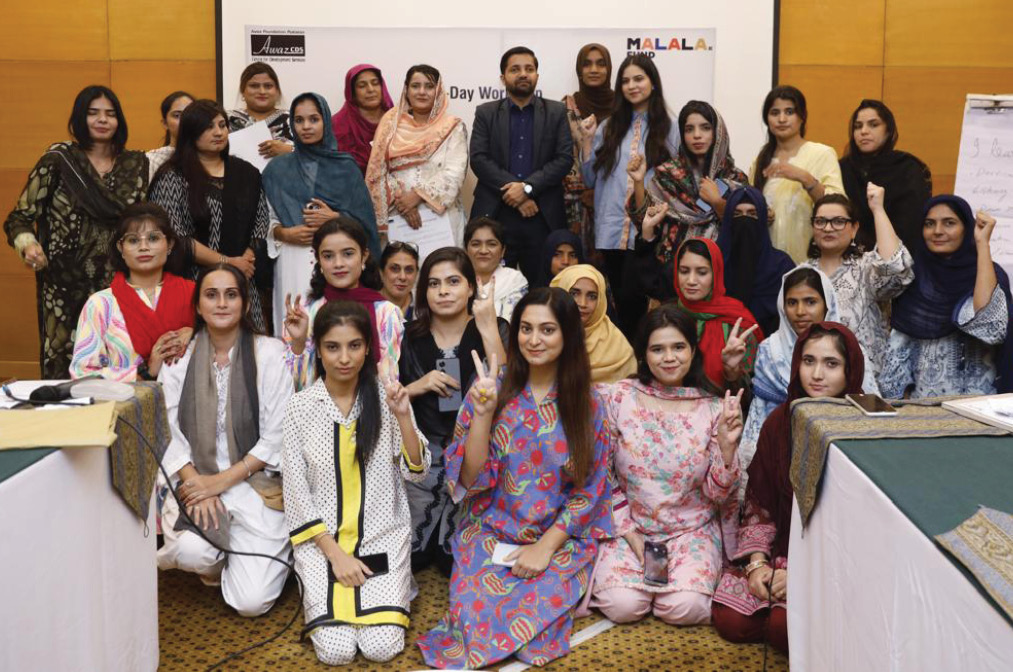
A two-day training for Girls’ Education Champions representing 16 districts of Punjab concluded in Lahore, focusing on strengthening girls’ leadership, advocacy skills and understanding of institutional mechanisms to advance the right to quality secondary education with support of Malala Fund.
Organized under the theme “Building Girls’ Leadership for the Right to Quality Secondary Education,” the training brought together 32 Girls’ Education Champions from 16 districts of Punjab, along with experts and representatives from key institutions, to strengthen participants’ understanding of girls’ education, gender equality, human rights, protection mechanisms and advocacy pathways, while building their leadership and capacity to advocate for girls’ rights.
During the training, Ms. Marium Amjad, Programs Lead, AwazCDS-Pakistan, shared key findings and evidence from “Stolen Futures,” highlighting the challenges and barriers affecting girls’ access to education and the importance of evidence-based advocacy for improving educational opportunities for girls.
Mr. Waheed Iqbal, Director, Punjab Commission on the Status of Women (PCSW), led an interactive session on the role, mandate and functions of PCSW.
He discussed the Commission’s contribution to promoting and protecting the rights of women and girls and explained how education champions can engage with relevant institutional mechanisms to raise issues concerning discrimination, protection, participation and empowerment of girls and women.
Addressing the intersection of gender, education and climate change, Mr. Joshua Dilawar, Climate Activist, facilitated a participatory discussion on how climate-related shocks can disproportionately affect girls’ education, safety, mobility and future opportunities.
The session explored the structural and gendered vulnerabilities that can prevent girls from continuing their education, particularly during climate-related emergencies.
Dr. Uzma Ashiq, Academia, facilitated a session on gender rights and breaking the cycle of violence, where champions discussed gender equality, discrimination and gender-based violence.
The session emphasized how quality secondary education can strengthen girls’ agency, confidence, knowledge and economic opportunities while challenging harmful gender norms and contributing to the prevention of violence.
An interactive theatre performance by Aurat Katha (Feministory) further engaged the champions around the right of girls to education.
Through participatory theatre, the session portrayed barriers faced by girls and encouraged participants to critically examine discriminatory social and cultural norms, harmful practices and attitudes that restrict girls’ access to education.
On the second day, Ms. Humera Aslam, facilitated a rights-based session on girls’ education and child rights. The discussion highlighted girls’ education as a fundamental right and explored how quality secondary education contributes to dignity, agency, participation, protection, informed life choices and long-term social and economic empowerment.
A key component of the training was the session led by Mr. Ghulam Abbas, Assistant Director, National Commission for Human Rights (NCHR) Punjab, who introduced the champions to the role, mandate and functions of NCHR Punjab.
He explained the mechanisms available for addressing human rights concerns and violations and guided the participants on how rights violations can be raised before the Commission, the process for seeking institutional support, and the mechanisms through which girls and women can pursue their rights and strengthen accountability.
The session enabled the champions to better understand where and how they can seek support when confronted with discrimination, violence or other human rights violations.
The training concluded with the Girls’ Education Champions making individual and collective commitments to take forward advocacy for girls’ education within their communities and districts.
The champions reflected on their role as advocates for girls’ rights and discussed ways to use their learning, community engagement and available institutional mechanisms to promote girls’ continued access to quality secondary education.
The two-day training provided the champions with a combination of knowledge, evidence, leadership skills and practical understanding of rights and accountability mechanisms, enabling them to become stronger advocates for girls’ education and gender equality across Punjab.