Peca targets free speech with vague charges, says Farieha Aziz
JAVED KHAN
PESHAWAR
The Human Rights Commission of Pakistan (HRCP) has strongly condemned the Prevention of Electronic Crimes Act (PECA) (Amendment) Act 2025, calling for its complete repeal and rejecting the coercive use of its earlier versions from 2016 and 2023.
In a report released on Thursday, the Commission warned that the law poses a serious threat to civil liberties, particularly freedom of expression. HRCP Director Farah Zia voiced deep concern over the rising trend of repressive legislation curbing civic space, while digital rights activist and report author Farieha Aziz criticized the amendment for criminalizing loosely defined categories such as “fake and false information,” carrying penalties of up to three years in prison.
The report, prepared by HRCP’s Legislation Watch Cell, describes the amended law as a serious threat to civil liberties, particularly freedom of expression and dissent.
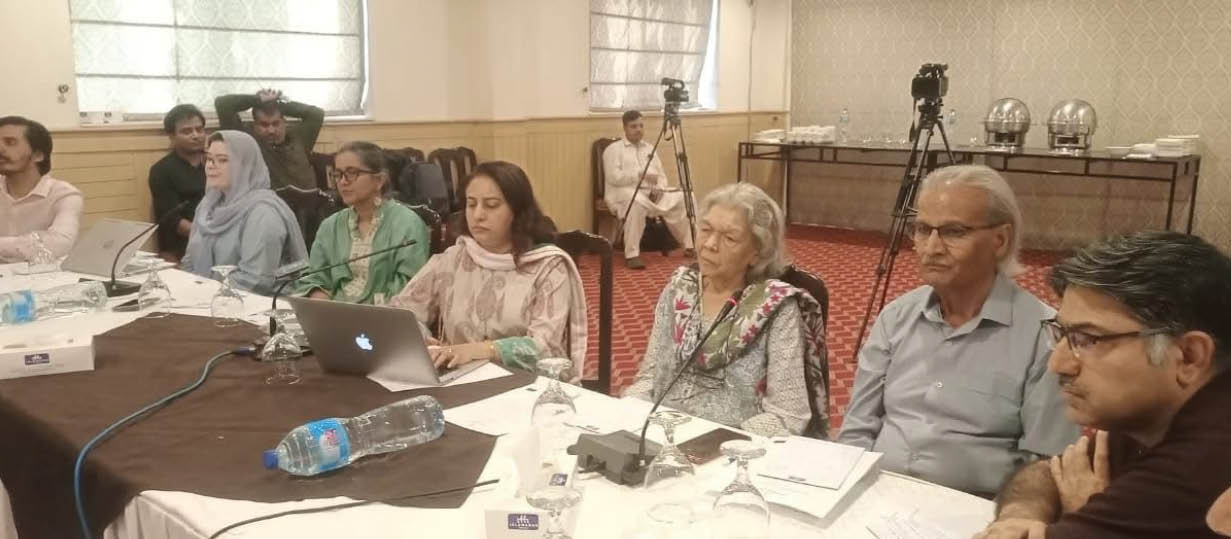
Opening the session, HRCP Director Farah Zia expressed alarm over the surge in repressive legislation shrinking civic space. Ms. Aziz, who authored the report, criticized the amendment for criminalizing vague categories such as “fake and false information,” with penalties of up to three years’ imprisonment.
She further warned against the law’s shift to non-bailable and cognizable offences, and the unchecked powers given to a new regulatory authority, a complaints council, and a tribunal—all under executive control.
Another major concern is the replacement of the Federal Investigation Authority with the newly formed National Cyber Crime Investigation Agency, which reportedly lacks essential oversight mechanisms.
Journalists and civil society figures echoed these concerns. Adnan Rehmat stressed the need to decriminalize free speech and urged political engagement through broad-based representation. Saleem Shahid labeled the amendments a direct violation of constitutional rights and called for unity among journalists and civil rights groups.
Former lawmaker Sanaullah Baloch underlined the importance of free expression for a vibrant parliament, while HRCP co-chair Munizae Jahangir highlighted the hyper-regulated internet access in Balochistan, Gilgit-Baltistan, and Azad Jammu and Kashmir.
She also condemned the targeting of journalists through economic measures, citing the example of journalist Asad Ali Toor, whose family’s bank accounts were frozen.
Digital rights experts Usama Khilji and Aftab Alam proposed forming a national coalition of civil society, media, and human rights defenders to resist the tightening grip on freedom of expression.
Supporting this, HRCP Council member Farhatullah Babar stressed the need to balance counter-disinformation efforts with safeguarding free speech.
Concluding the event, HRCP Islamabad vice-chair Nasreen Azhar recommended that this coalition also identify all laws that contradict constitutional guarantees of fundamental rights.
PECA 2025 must be repealed in full. However, even the repeal will not legitimize the oppressive use of earlier versions of the law, the HRCP members added.
The commission called for accountability of investigating agencies and regulators for past abuses, and demanded broader criminal justice reform to ensure laws serve citizens—not silence them.