ISLAMABAD
Electric vehicles (EVs) can play a transformative role in achieving low-carbon transport; however, for scaling EVs in Pakistan, local manufacturing, charging and swapping infrastructure, and research and development (R&D) are necessary.
While numerous incentives have been laid out in new EV policies, limited purchasing power, grid readiness challenges, and a lack of repair and service facilities continue to obstruct their uptake in the country.
This highlights the need for integrated policies, technological readiness, and infrastructure development to ensure that EV adoption contributes to reducing emissions, managing energy demand, and advancing the country’s broader climate and sustainability goals.
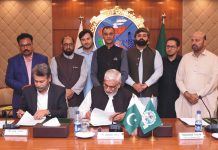
Experts observed this at a roundtable titled ‘Prospects of Low-Carbon Transport in Pakistan: Exploring EVs Future,’ held at the Institute of Policy Studies (IPS), Islamabad.
The session was addressed by Khalid Rahman, chairman, IPS, keynote speaker Engr. Asim Ayaz, general manager policy, Engineering Development Board, Sulaiman Majeed, director planning, Punjab Transport Authority, and Dr Faisal Ahmad Khan, CEO, Balochistan Public Private Partnership Authority, while Dr Usman Qadir, senior economist, Pakistan Institute of Development Economics, Dr Muhammad Adil Khan, assistant professor, Air University, Islamabad, Mehrosh Fatima, EV charging solutions expert, National Radio Telecommunication Corporation, Afzaal Khan, National University of Science and Technology USPCAS-E, and Engr Asad Mehmood, a climate expert, also spoke on the occasion.
The session was chaired by Mirza Hamid Hassan, former federal secretary water and power, and moderated by Ameena Sohail, energy sector lawyer.
Speaking on the policy preparedness at the federal level, Asim Ayaz underlined that the government has been working on making a comprehensive EV policy since 2019. He noted that the government has introduced several policy incentives, such as sales tax exemptions, only 1% duty on EV imports, and initiatives like EV bike distribution schemes to stimulate demand.
However, the EV penetration is still limited. In this regard, he highlighted three main challenges: the high upfront price of two-wheeler EVs as compared to petrol ones, the lack of battery swapping facilities, and the dearth of charging infrastructure. Sulaiman Majeed shared Punjab’s perspective, noting that two-wheelers account for 89% of registered vehicles in the province. He emphasized that replacing this dominance with electrified mass transit is the government’s priority, citing the Orange Line’s success in carrying 200,000 passengers daily.
He also underlined ongoing work on Blue and Purple Line transport in major cities, including Lahore, Multan, and Faisalabad, where procurement of 500 electric buses and 400 more under the Punjab Clean Air Program to mitigate emissions and smog is in process. Regarding Balochistan, Dr Faisal Khan shared that given the province’s geographical constraints, large-scale mass transit projects are impractical.
Instead, the provincial government is pursuing a pilot P3 model for Quetta’s downtown, where EV-based transit will be operated within a three-square-km area by private investors with zero subsidy, while the government will provide space for parking and charging stations. During the discussion session, Dr Usman Qadir emphasized that without localized manufacturing and proper R&D, EV adoption would remain unsustainable. Additionally, he questioned the viability of subsidizing EVs in a country where less than 10% of households own private vehicles.