As Pakistan finalises its agenda for the upcoming Joint Cooperation Committee in Beijing, expectations are running far deeper than a list of projects. The ML-1 railway upgrade, the Karakoram Highway Phase-II realignment, and Gwadar’s Eastbay Expressway are often dismissed as routine infrastructure schemes. But for a country striving to anchor itself more firmly in the regional economy, they are arteries of connectivity, competitiveness, and credibility. Their timely approval and execution will determine whether the next phase of CPEC can move from promise to performance.
This urgency is reinforced by a broader five-year action plan agreed between Islamabad and Beijing, which seeks, beyond the usual physical projects, to expand cooperation into politics, security, defence, technology, and culture; reflecting a determination to future-proof the partnership against the turbulence of shifting global alignments.
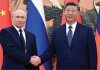
The durability of the Pakistan-China bond has always rested on trust and reciprocity. In moments of upheaval, each has stood by the other on issues of core concern. From energy corridors to industrial parks, China’s role in Pakistan’s development has been long-term and strategic. Islamabad, in turn, has also remained a reliable partner, giving the relationship a unique weight in a world of fleeting and transactional alignments.
That trust is nowhere clearer than in defence and aviation. President Asif Ali Zardari’s unprecedented visit to China’s Aviation Industry Corporation, the first by any foreign leader, that too, on the heels of a roaring welcome received by Prime Minister Shahbaz Sharif during the recent SCO summit symbolised an extraordinary level of confidence. Together, these moments symbolise an extraordinary level of confidence. Joint production of the JF-17 Thunder, induction of J-10C fighters, and now collaboration in advanced aerospace technologies all speak to the maturity of this partnership and the depth of its strategic alignment.
Yet the external environment is far more complex. After years of estrangement, Washington has re-emerged with aid, investment, and interest in Pakistan’s mineral wealth. Both China and the United States share an interest in Pakistan’s stability, though their rivalry narrows Islamabad’s room for manoeuvre. The challenge is not to choose between them, but to engage both without losing balance. That requires clarity, discipline, and a refusal to slide into dependency.
Redefining ties with China, therefore, is not about closing other doors. It is about recognising where Pakistan’s interests have been most consistently safeguarded, and building outward from that secure foundation. In uncertain times, few bonds inspire confidence. The Pakistan-China relationship–often described as higher than the Himalayas, deeper than the oceans, and sweeter than honey–remains rooted in trust, tested by history, and recalibrated for the future.