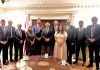
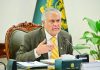
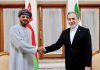
The Islamic world’s denunciation of India for its domestic Islamophobic rhetoric and attacks on the community is part of a trend where the Narendra Modi government’s perceived excesses are being noticed and reviled the world over. There is a widening perception that the Modi government’s apparent policy failures and contempt for democracy are diminishing India’s geopolitical standing across the world, with the present controversy threatening the Islamic world’s trade relations with India, and endangering the vast Indian diasporas these countries harbour.
Several Arab-Islamic countries from across Asia, Africa and the Middle East, and spearheaded by the six-member Gulf Cooperation Council (GCC) and the 57-member Organisation of Islamic Cooperation (OIC), have condemned the Indian government for its alleged excesses against Muslim citizens, the latest being shocking anti-Prophet utterances on national television by the spokeswoman of the ruling Bharatiya Janata Party (BJP).
As calls for boycotting Indian products and for repatriating the Indian settlers resounded in these countries, and Indian envoys were summoned by many of their foreign offices to record their protest, the BJP-led government suspended the spokeswoman, Nupur Sharma, and also expelled Delhi BJP media in-charge Naveen Jindal for similarly provocative comments. Many felt, however, that as Indian citizens are today being routinely arrested under the draconian sedition law, which provides for life imprisonment, simply for remarks, writings or social media posts, even forwards, critical of the Prime Minister and other BJP leaders, Sharma’s and Jindal’s public comments should have invited at least comparable action.
However, the absurdity of such selective action was clear from the fact that Sharma issued no apology, but simply a statement informing that she wished to withdraw her remarks, and the government, in turn, assigned her and her family high security on fears of reprisals following her televised comments. The concerned television channel too has not been questioned on the episode, when there has often been swift official action against certain media on various grounds. In another foreign policy gaffe, India had Vice President M. Venkaiah Naidu embarking on a state visit to Qatar even as outrage was building up in the Gulf countries. Qatar’s Deputy Emir abruptly cancelled a state banquet he was to host for Naidu, though on health grounds and the Vice President also called off his scheduled press conference in Doha. Upon his arrival on Saturday, Naidu was received by Minister of State for Foreign Affairs Soltan bin Saad Al Muraikhi, who the next day summoned Indian Ambassador Deepak Mittal to convey his country’s protest over the comments. An economic and diplomatic backlash can have disastrous consequences for India, which has enjoyed enduring ties with most Islamic countries despite the communal polarisation arising from the inexorable, but unstated, march towards a Hindu rashtra. Attempts are being made to desecrate Mughal-era mosques and monuments, including the world heritage Taj Mahal in Agra, on the belief that they were raised on the sites of demolished Hindu temples, Muslims have been lynched or humiliated in the streets for being Muslim or on charges of consuming beef, targeted Muslim homes and shops have been razed with bulldozers, protests are organised against the head-dress of Muslim women and loudspeakers on mosques, the controversial Citizenship (Amendment) Act seeks to deport undocumented Muslims and hold them in detention centres until their deportation.