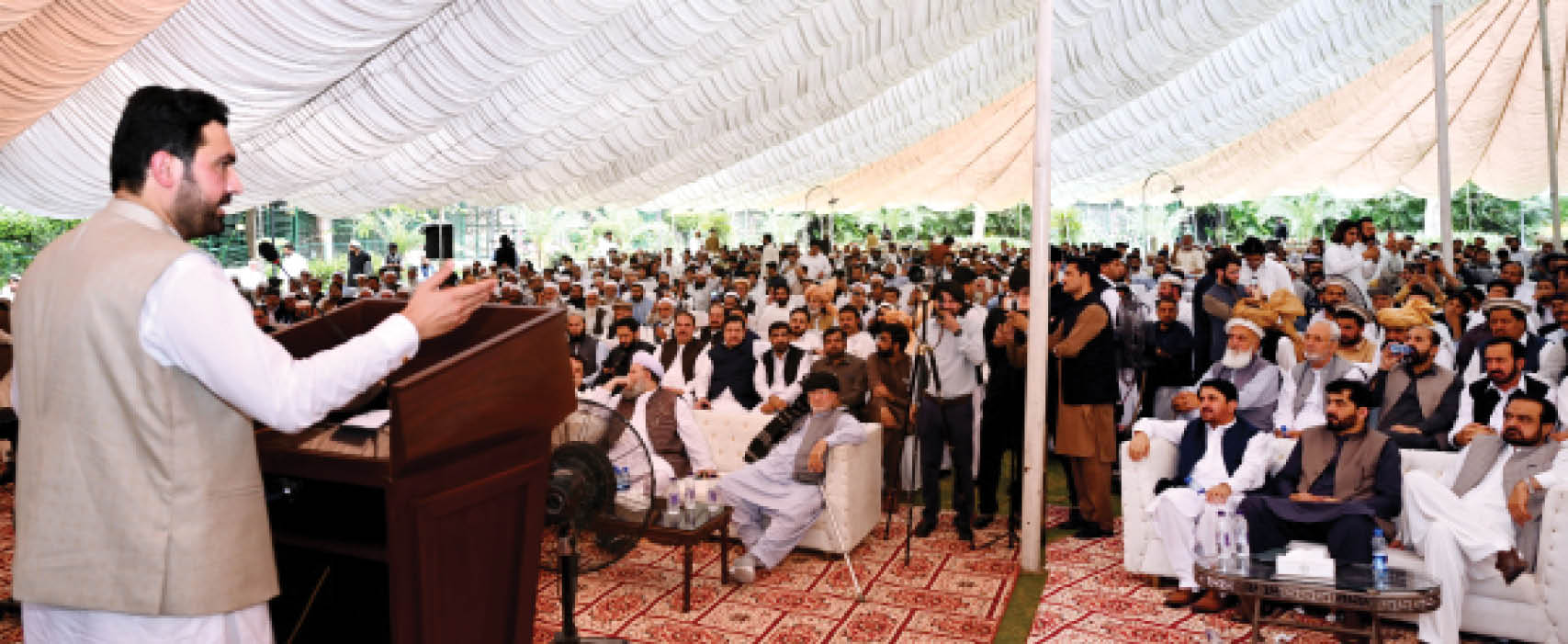
A grand jirga convened at CM House Peshawar. CM Afridi warns of Islamabad march if talks fail, vows steps to stop drone strikes
PESHAWAR
Khyber Pakhtunkhwa Chief Minister Muhammad Sohail Afridi on Saturday warned that a march towards Islamabad could be considered if negotiations on the province’s security situation fail, while announcing immediate measures to prevent drone strikes.
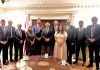
According to a statement issued here that a grand Jirga was convened at the Chief Minister’s House under the chairmanship of Mr Afridi to deliberate on a coordinated response to ongoing drone strikes and the broader security situation in the province.
Participants, including elected representatives from the tribal districts, senators, opposition members, religious scholars and tribal elders, held detailed consultations on formulating a joint strategy aimed at restoring peace and stability.
The jirga also discussed the constitutional and financial rights of the tribal districts and the province, reaching a consensus on adopting a unified course of action to secure these rights.
The forum strongly condemned incidents of civilian casualties, including women, children and the elderly, resulting from drone strikes, and called for structured dialogue with all relevant stakeholders.
In line with the jirga’s recommendations, the chief minister announced that negotiations would be given another opportunity. He added that a smaller representative jirga would be constituted to engage with the federal government and other stakeholders.
Mr Afridi said that if talks did not yield results, a march towards Islamabad could be considered, adding that participants would continue their efforts until peace was restored.
He expressed concern over the reported mistreatment of jirga participants at security checkposts, stating that such conduct fosters public resentment and undermines trust.
The chief minister said immediate and effective measures would be taken to prevent drone strikes. He also noted that attempts by militant elements to re-enter Malakand had been rejected by local communities, reflecting public resistance to instability.
He cautioned that without unified public engagement in the tribal districts, prospects for lasting peace would remain uncertain.
Referring to governance issues, Mr Afridi said the provincial cabinet had decided in its first meeting to withdraw the Action in Aid of Civil Power Regulation. He added that around 970 individuals remained detained in various centres without publicly available records.
Despite repeated requests by the provincial government for details of detainees, no formal response had been received, he said, stressing that transparency was essential to ensure accountability and prevent misinformation.
Mr Afridi further said that more than 22 major military operations and over 14,000 intelligence-based actions had failed to deliver sustainable peace despite significant resource deployment. He termed the situation a matter of concern and claimed that the provincial government could restore peace within 100 days if provided with similar resources.
He warned against attempts to provoke tribal youth into confrontation, reaffirming a commitment to a peaceful and lawful approach, while asserting the province’s right to defend itself against unlawful actions.
Highlighting fiscal concerns, the chief minister said that although Rs100 billion annually had been committed at the time of the former FATA merger, only Rs168 billion had been released so far against a cumulative entitlement of around Rs800 billion.
He added that despite the increase in population following the merger, the province’s share in the National Finance Commission Award had not been revised from 14.6pc to the expected 19pc since 2018.
The chief minister said the representative jirga would actively pursue these financial and constitutional rights alongside efforts to restore peace in the province.