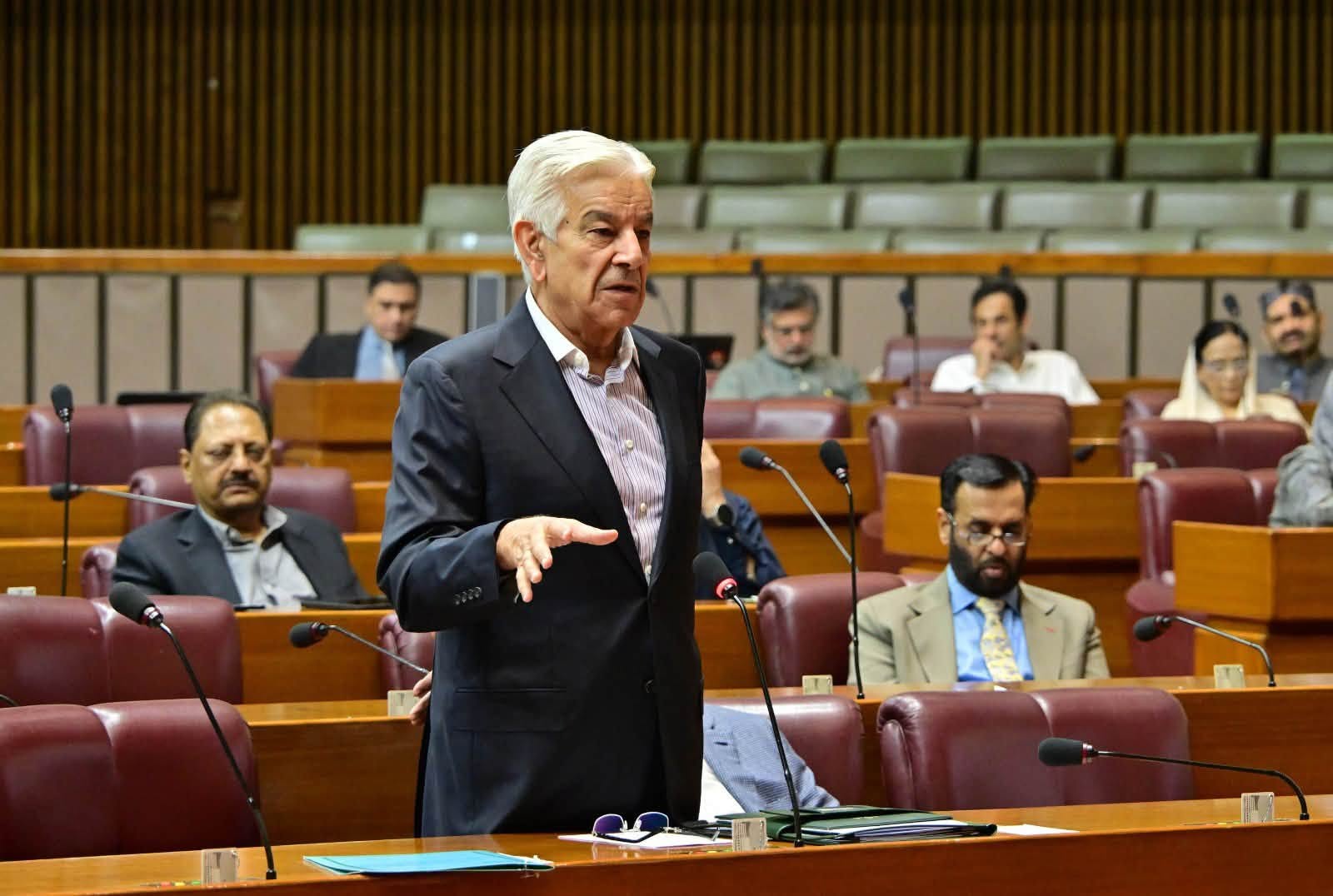
Federal Minister for Defence Khawaja Muhammad Asif on Thursday urged political leaders to prioritise constitutional politics, national integrity and the country’s security over personal and group interests, saying Parliament should convey a message of dignity and unity to the country’s 260 million people.
Speaking on the floor of the National Assembly, he said political leaders should find ways to resolve their differences rather than create obstacles to dialogue, adding that confrontational politics would only deepen bitterness.
He urged parliamentarians and political leaders to settle disputes through negotiations, stressing that political differences should not undermine national interests or close avenues for reconciliation.
He said the political leadership, including senior parliamentarians, should convey a message of respect and responsibility instead of engaging in verbal clashes.
Referring to a speech delivered the previous day by the JUI-F chief, he said the situation might have been different if the party had been given a share in the Khyber Pakhtunkhwa government.
He said the JUI-F chief had levelled several allegations but had not provided evidence to substantiate them.
He acknowledged Maulana Fazlur Rehman’s stature in the country’s political history but said political disagreements should not prevent leaders from recognising positive developments in Pakistan’s national and international interests.
He also questioned the performance of a former chairman of the Kashmir Committee, asking what he had done for Kashmir during his 10-year tenure.
He said Field Marshal Syed Asim Munir had played a key role in facilitating dialogue and de-escalation in the region.
In response to remarks by Jamiat Ulema-e-Islam-Fazl (JUI-F) chief Maulana Fazlur Rehman, the defence minister clarified that the discussions in Iran were not related to a defence agreement or Pakistan’s defence policy, but were aimed at promoting peace and dialogue.
He said Pakistan’s leadership had worked to create space for negotiations following the recent conflict, helping prevent further deterioration of the regional situation, including tensions relating to Yemen.
Khawaja Asif said Pakistan had also entered into defence arrangements involving Saudi Arabia, Türkiye and Pakistan, as well as Qatar, Türkiye, Pakistan and Indonesia, adding that these developments had become part of the country’s history.
He said he had participated in the relevant defence agreements in his capacity as defence minister.
However, he clarified that the discussions in Tehran did not fall within the direct mandate of the Ministry of Defence.
The defence minister urged political parties to set aside their differences and acknowledge the country’s military and diplomatic achievements, saying Parliament should convey a message of unity on issues of national importance.
He said the entire nation should have stood alongside the armed forces at a critical time.
He added that Pakistan had subsequently achieved diplomatic successes recognised by major powers, neighbouring countries, Iran and Gulf states.
However, he regretted that political differences with the government had prevented some members of the House from acknowledging these achievements.
Asif said political parties should convey to their voters and the public that there were issues on which they could demonstrate unconditional unity, regardless of their political differences.
The defence minister urged politicians to demonstrate tolerance and avoid turning minor disagreements into major confrontations.