ISLAMABAD
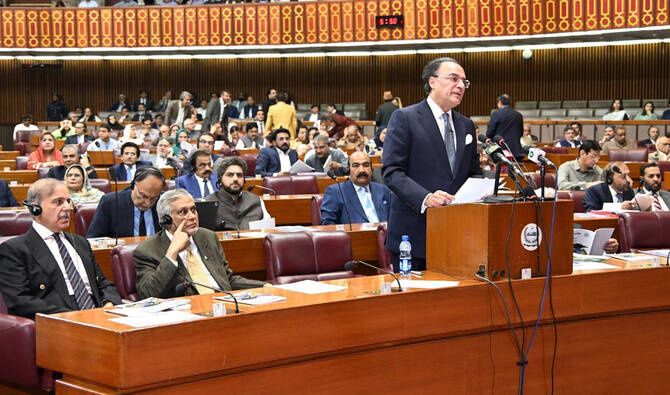
Lawmakers in the National Assembly on Saturday delivered a detailed and constructive review of the federal budget for FY2025-26 and called for providing more relief to the common man. While participating in the general discussion on Budget 2025-26, Pakistan Peoples Party (PPP) senior leader Mirza Ikhtiar Baig emphasized the pivotal role of the industry, agriculture and services sector in driving long-term economic stability.
Acknowledging the ongoing economic challenges, he said the government’s push toward reforms, though modest GDP growth of 2.6% continues to be overshadowed by inflation, population pressure and mounting national debt.
He raised concern over pension reforms, particularly the withdrawal of posthumous benefits for pensioners’ children after 10 years, warning this could create financial distress for many families.
The lawmaker also cautioned against harsh tax enforcement measures, such as granting arrest powers to income tax officers, which he said could dampen business confidence.
However, he welcomed incentives in the construction and property sectors, including the reduction in withholding tax on property transactions from 4% to 2.5%, elimination of federal excise duty on commercial property transfers and reduction of stamp duty in Islamabad from 4% to 1%—measures expected to boost real estate activity.
He also supported the increased defense budget, recognizing the valor and international standing of Pakistan’s armed forces, particularly in light of recent hostilities.
Mirza Ikhtiar praised the record-breaking $38 billion in remittances sent by overseas Pakistanis and called for an export-led growth model, especially through sectors like IT and rice.
Pakistan Tehreek-e-Insaf (PTI) legislator Asad Qaiser urged the government to revisit its decision to impose new taxes in the erstwhile FATA region, emphasizing the area’s sacrifices in the war on terror.
Asad Qaiser warned that further burdens could hinder socio-economic rehabilitation.
He also highlighted issues of power outages and damage to household appliances in Khyber Pakhtunkhwa due to erratic electricity supply, urging greater PSDP allocations for the province.
Asad Qaiser raised alarms about the tobacco sector, noting the lack of a fixed minimum support price, which is driving companies out of KP. He called for urgent government intervention to protect farmers.
Senior MQM leader Dr. Farooq Sattar hailed the armed forces for their resilience during recent Pakistan-India tensions, crediting divine help and national unity under Field Marshal General Asim Munir.
He appreciated relief measures for salaried classes in the budget but warned that the middle class continues to bear a disproportionate tax burden.
Farooq Sattar urged reforms to reduce electricity and gas tariffs and proposed a national economic dialogue to adopt a unified “Charter of Economy.”
He stressed the importance of taxing agricultural income through provincial consensus under Article 177 to improve Pakistan’s fiscal credibility with international lenders. Condemning Israeli aggression, he reaffirmed solidarity with Iran amid recent tensions.
PPP stalwart Syed Naveed Qamar took a strategic view, asserting that the federal budget must not be limited to a balance sheet but should reflect a coherent economic vision.
He stressed that budgetary allocations must align with policy goals rather than serve as mere political optics.
Naveed Qamar criticized the neglect of agriculture, especially in terms of food security and misdirected subsidies that favor foreign producers over domestic farmers.
He lamented that serious economic reformers are often sidelined while superficial narratives dominate policymaking.
Naveed Qamar criticized Pakistan’s reliance on international lenders and the failure to promote domestic exports, particularly in the cotton sector.
The fertilizer subsidies and price controls, he argued, have hurt small farmers while benefiting powerful industrial lobbies.
Naveed Qamar has called for the adoption of a clear, flexible, and consistent economic policy in anticipation of potential global oil price hikes, warning that the country cannot afford to remain tethered to outdated and reactive financial planning models.
He cautioned that international oil price fluctuations pose direct risks to Pakistan’s fiscal strategy, inflation targets, and energy affordability.
He criticized the government for preparing budgets based on optimistic oil price assumptions without accounting for geopolitical volatility.
“In recent years, our budgets were framed based on declining global oil prices. But if the situation in the Middle East worsens and prices suddenly spike, do we have an alternative strategy in place?” he asked, urging the finance ministry to explain whether price increases would be passed on to consumers or absorbed through subsidies.
He stressed that such vital economic variables demand transparency and contingency planning. “There must be clarity. If the benchmark price increases by 20%, what is the fallback? Ad hocism will not take us forward.”
Naveed Qamar underlined the need for economic policies that transcend partisan agendas and prioritize institutional coherence. “We hear at the Prime Minister’s level about the need for policy consistency. But if decisions continue to be made in silos, without coordination, instability will persist.”
He also urged serious consultation among political leadership, bureaucratic institutions, and the business community, warning against policy capture by a select few. “It’s unacceptable that one individual travels abroad and makes decisions on the nation’s behalf, while key institutions remain unaware. Responsible policymaking requires collective ownership.”
He criticized the enduring influence of those who, he alleged, negotiated economically detrimental deals in past decades, leading to chronic dependence on external actors. “The same people who committed the country 30 years ago are still writing our policies. If we want sovereignty, we must abandon these recurring policy patterns.”
He stressed the need for a forward-looking, sovereign, and inclusive economic framework—one that replaces reaction with resilience. “We must move beyond fire-fighting. Only with vision, transparency, and consensus can we break the cycle of economic instability.”