PESHAWAR
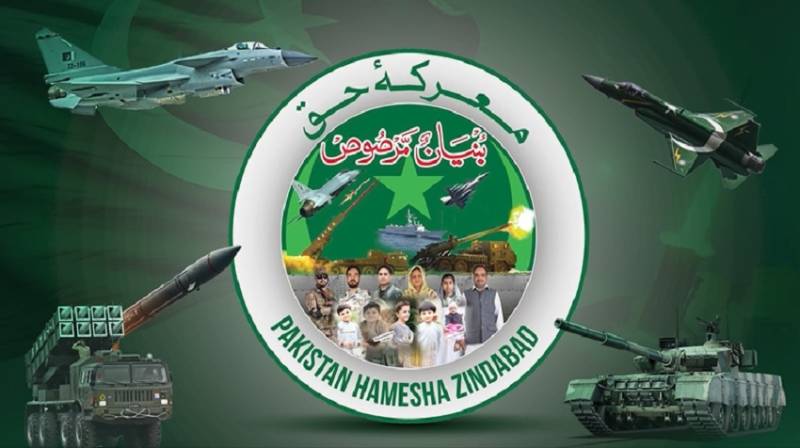
Marka-e-Haq is being remembered as a defining chapter in Pakistan’s recent military history, where the country’s armed forces demonstrated examplary bravery, resilience, strategic coordination, and national unity in the face of an external aggression.
Security experts and former military officials on Saturday said the conflict has not only tested Pakistan’s defense capabilities on land, sea, and air, but also strengthened national solidarity and reinforced public confidence in the country’s armed forces fully capable to destroy nefarious design of the adversary.
Speaking to APP, former Secretary Law and Order of erstwhile FATA, Brigadier (Retd) Mahmood Shah, said Pakistan’s response during the conflict reflected the war fighting skills, professionalism and preparedness of its military that defeated a three times larger enemy on May 10, 2025.
“From generals to frontline soldiers, the armed forces of Pakistan displayed exemplary courage, discipline, and operational excellence during Operation Bunyanum Marsoos,” he said. “The nation witnessed how Pakistan defended its sovereignty with unity, precision, and determination.”
He termed Marka-e-Haq more than a military confrontation, describing it as a battle that protected the honor, dignity, and prestige of every Pakistani.
“The sacrifices rendered by our martyrs and the patience shown by their families will continue to inspire generations,” Brigadier Mahmood added.
“The people of Pakistan stood shoulder-to-shoulder with their armed forces during every phase of the conflict while poets and singers raised their morals.”
He said the Marka e Haq period spanning April 22 to May 10, 2025 witnessed extraordinary public unity across the country, with citizens expressing solidarity with the armed forces through massive rallies, social media campaigns, patriotic songs, poetry, art exhibitions and community gatherings.
“The spirit shown by the Pakistani nation during Marka-e-Haq reminded many of the unity witnessed during the 1965 war,” Brigadier Mahmood remarked.
From Karachi to Khyber, Gwadar to Skardu and Haiderabad to Kohistan, the entire nation stood united, passing a strong message accross the border that unprovoked missile and drone strikes carried out by Indian forces that targeted multiple civilian areas, including Ahmedpur Sharqia, Muridke, Sialkot, Shakargarh, Muzaffarabad, and Kotli, resulting in civilian casualties, which will be met with full might.
“These unprovoked attacks on civilian populations in Punjab and Azad Kashmir by India reflected desperation, strategic miscalculation and lack of professional preparedness especially in technology and air warfare,” Brigadier Mahmood said.
“Despite intense pressure, Pakistan responded with restraint initially, but later exercised its right to self-defense especially on May 10, 2025 and defeated India on all fronts.”
He maintained that Pakistan’s military response successfully neutralized several strategic targets and demonstrated the country’s growing expertise in modern warfare.
“The conflict proved that conventional superiority is no longer determined merely by numbers. Technology integration, rapid decision-making, and coordinated intelligence now define success on the battlefield.”
Brigadier Mahmood further said that the Pakistan Air Force has played a decisive role during the conflict and established operational dominance through precision targeting, technology warfare and superior tactical planning.
“Operation Bunyanum Marsoos has changed security dynamics and it will be studied as examples of integrated, technological advancement and network-centric warfare in the world’s military academies and colleges .”
He added that Pakistan’s armed forces demonstrated the capability to counter advanced aerial and missile systems effectively.
“When deterrence thresholds are crossed irresponsibly, the risks for regional peace increase significantly,” he warned. However, Pakistan’s measured and calculated response restored strategic balance.
Referring to the broader regional situation, Brigadier Mahmood claimed India attempted to divert international attention from internal challenges, separatist movements and the human rights abuses in Indian Illegally Occupied Jammu and Kashmir (IIOJK).
“The unresolved Kashmir dispute remains the core issue affecting lasting peace in South Asia,” he said. “Without a just and peaceful resolution in accordance with UN Security Council (UNSC) resolutions and the aspirations of the Kashmiri people, durable stability in the region will remain difficult.”
Chairman of the Department of International Relations at the University of Peshawar, Dr. Shaheed Hussain Soharwardi, said the conflict highlighted the changing dynamics of warfare in the modern era.
“Marka-e-Haq demonstrated that future wars are no longer fought solely through conventional means and numerically,” he observed. “Cyber capabilities, precision weapons, real-time intelligence, and information management now play equally critical roles,” he said.
He said Pakistan’s response reflected institutional preparedness and strategic maturity.
“The conflict sent a clear message that Pakistan possesses all the capability and resolve to defend its sovereignty against any aggression,” Dr. Soharwardi reiterated. “At the same time, peace must remain the ultimate objective for all states in the region.”
He emphasized that dialogue and diplomacy remain essential for sustainable peace and development in South Asia.
“Military confrontations may produce temporary outcomes, but long-term peace can only emerge through negotiations, restraint, and respect for international norms,” he said.
As result of Pakistan’s success in Marka e Haq, he said Pakistan has emerged as a stronger force in world and its military strength was globally recognized.
Political analysts said that despite heightened tensions, the conflict also underscored the importance of maintaining strategic stability between two nuclear-armed neighbours.
Experts agreed that Marka-e-Haq would allways be remembered as a significant case study in modern military strategy, national resilience, and the evolving security environment of South Asia.
The experts said Pakistan heroic battlefield performance has increased its diplomatic standing in world and today every Pakistani can move with dignity and prestige in globe.