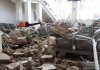
The clearest picture of Pakistan’s monsoon failure lies in flooded underpasses and washed-out bridges. Both have become routine. That alone should ring shrill alarm bells across all corners. Torrential rain has washed away roads and bridges in GB, disrupting travel where communities depend on precarious corridors. Lahore received 343 millimetres of rain in 48 hours. Water accumulated at more than 130 points, underpasses closed, and streets held three to four feet of water.
Punjab’s disaster authority has recorded 21 deaths and 154 injuries this monsoon, including 15 deaths from collapsing buildings. Electrocution, lightning and drowning made up the rest. Another 22 died in Khyber Pakhtunkhwa while 23 had been injured in rain-related incidents.
Officials may cite emergency drainage, 21 relief camps, a control room and more than 200 cameras in Lahore, but an apparatus designed to monitor failure has once again been mistaken for preparedness.
GB illustrates the other half of the problem. Mountain roads and bridges are not provincial amenities. They are the supply lines for households, markets, and, at times, the only route by which the state can reach citizens. Last year’s flash floods in Diamer washed away four bridges alongside a girls’ school, a wheat depot, a police checkpoint and a tourism shelter, while more than 100 houses were fully damaged across GB. Even if a road gets cleared in days, the repeated loss of the same lifelines points to a development model built for ceremonial connectivity rather than climatic reality.
The country has known the scale of this danger since the 2022 catastrophe, which affected 33 million people and caused losses estimated at over $30 billion. Yet resilience has too often meant relief stocks, excavators after a landslide and press conferences before the rains. What is missing here is the less photogenic work, including but not limited to mapping flood paths before housing schemes are approved; maintaining natural drains; separating stormwater systems from overloaded sewers; auditing bridges against revised rainfall and debris-flow projections.
Lahore’s waterlogging (despite the government’s quick clearance claims) is also a political choice. The city has expanded through concrete, gated schemes and road projects while its natural drainage has been narrowed, buried or left to ageing sewers. The bill is, therefore, paid by residents of low-lying settlements and commuters, not by those who profit from unplanned construction.
As for GB, federal and regional authorities must stop repairing isolated breaches and finance climate-resilient road corridors and local rescue and prevention capacity. Pakistan cannot manage a harsher monsoon with the habits fashioned for an age gone by.