Peshawar
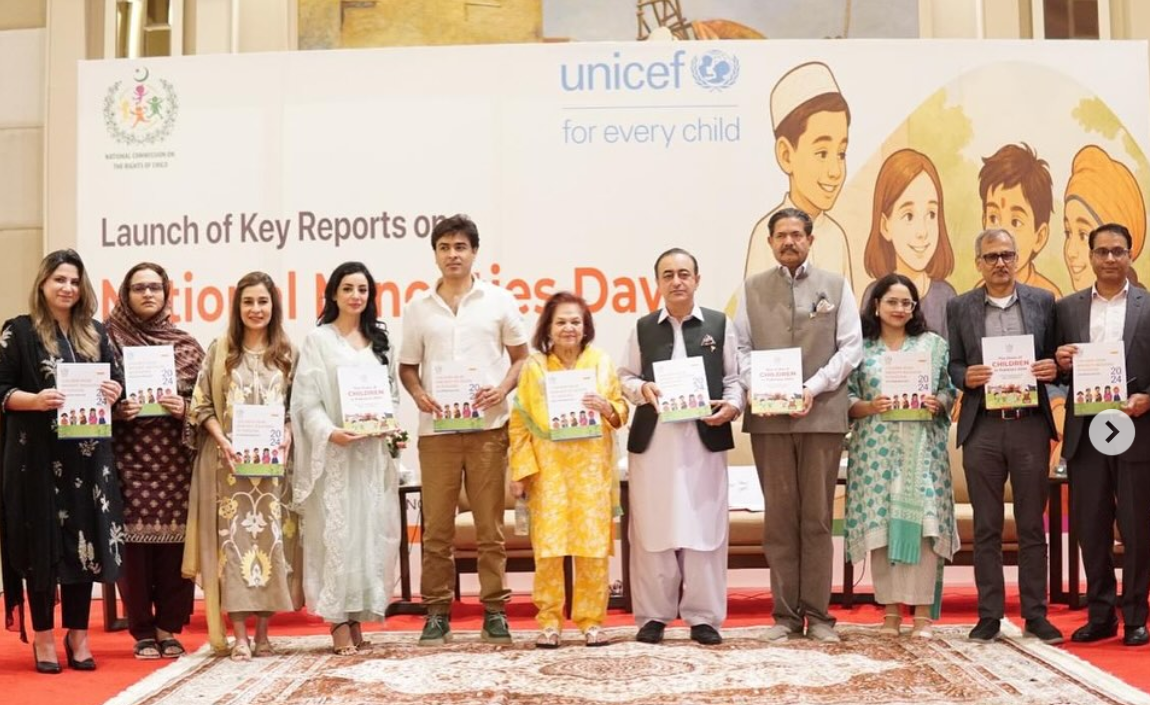
The National Commission on the Rights of Child (NCRC) launched two important publications today at a provincial event in Khyber Pakhtunkhwa: the State of Children in Pakistan 2024 Report and the Situational Analysis of Children from Minority Religions in Pakistan. The audience included senior government officials, representatives from civil society, academia, law enforcement, and international organizations.
In her remarks, Ms. Maham Afridi, Program Coordinator, presented the State of Children in Pakistan 2024 Report, which provides a comprehensive overview of children’s status across health, education, protection, and participation. “This report fills critical data gaps and proposes actionable recommendations that are already under discussion with federal and provincial authorities. It is not just a document, but a roadmap to ensure that every child in Pakistan enjoys their rights to health, education, and protection,” she said.
Introducing the Situational Analysis of Children from Minority Religions in Pakistan, Mr. Pirbhu Satyani, Member Sindh/Minorities, NCRC, said: “Children from minority religions face systemic discrimination in multiple areas of life. This report shines a light on the challenges of access to education, protection from violence, and equal participation. It is a call to action for all stakeholders to ensure inclusivity, equality, and dignity for these children.”
The event featured a panel discussion on the impact of education, labour, and forced conversions on children, especially from minority religions, moderated by Mr. Satyani.
Mr. Ijaz Khan, Deputy Chief, KP Child Protection & Welfare Commission (KPCPWC), emphasized the importance of localized solutions: “Protecting children requires strong provincial mechanisms. We need to strengthen referral pathways, improve coordination among institutions, and ensure laws are implemented in both letter and spirit.”
Ms. Aneela Naz, Additional IG (Gender & Human Rights), highlighted law enforcement’s role in child protection: “The police is committed to protecting all children, but we need continuous training, resources, and sensitivity to address cases of child labour, abuse, and forced conversions. The voices of minority children must be heard and acted upon.”
Mr. Habib Afridi, Deputy Secretary, Auqaf, Hajj, Religious & Minority Affairs Department, stressed inclusivity in policymaking:
“Minority children are often invisible in policy frameworks. This has to change. Our collective responsibility is to ensure that every child, regardless of their faith, has equal access to education, protection, and opportunities.”
In the closing remarks, Ijaz Khan, Deputy Chief KPCPWC said “Protecting children is not the responsibility of one institution alone—it requires joint efforts from government, civil society, law enforcement, and communities. Only by working together can we build a safer and more inclusive future for every child in Pakistan.”