Protesters torched ex-PM Oli’s house, stormed parliament with rifles
Kathmandu
Nepal Prime Minister KP Sharma Oli resigned on Tuesday as anti-corruption demonstrators defied an indefinite curfew and clashed with police, a day after 19 people died in violent protests triggered by a social media ban.
Oli’s government lifted the ban after protests intensified on Monday, with police firing tear gas and rubber bullets at protesters trying to storm parliament. Nineteen people were killed and more than 100 injured in the unrest.
Nepali youth protesters set fire to parliament on Tuesday as the veteran prime minister obeyed furious crowds to quit, a day after one of the deadliest crackdowns in years in which at least 19 people were killed.
The protests, which began on Monday with demands that the government lift a ban on social media and tackle corruption, reignited despite the apps going back online.
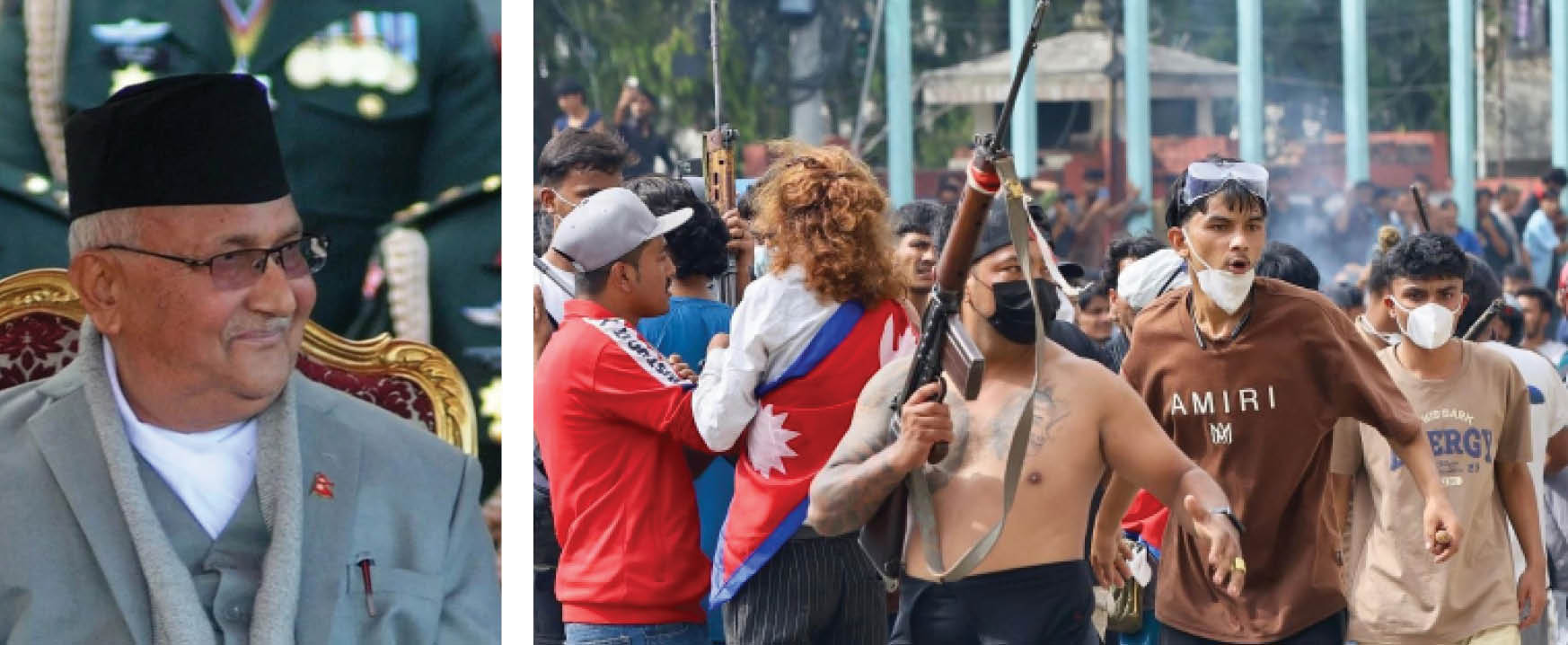
Demonstrators on Tuesday attacked and set fire to KP Sharma Oli’s house, the 73-year-old, four-time prime minister and leader of the Communist Party.
Shortly after, chanting protesters — some wielding assault rifles, according to an AFP reporter at the site — gathered outside main government buildings.
Plumes of smoke also covered Nepal’s parliament as demonstrators set the building ablaze.
“Hundreds have breached the parliament area and torched the main building,” Ekram Giri, spokesman for the Parliament Secretariat, told AFP.
Protesters, mostly young men, were seen waving the country’s national flag as they dodged water cannons deployed by the security forces.
Other demonstrators targeted the properties of politicians and government buildings.
Kathmandu’s airport remains open, but some flights were cancelled after smoke from fires affected visibility, airport spokesman Rinji Sherpa said.
“I have resigned from the post of prime minister with effect from today… in order to take further steps towards a political solution and resolution of the problems,” Oli said Tuesday in a statement.
His political career stretched nearly six decades, a period that saw a decade-long civil war, with Nepal abolishing its absolute monarchy in 2008 to become a republic.
First elected as prime minister in 2015, he was re-elected in 2018, reappointed briefly in 2021, and then took power in 2024 after his Communist Party forged a coalition government with the centre-left Nepali Congress in the often-volatile parliament.
His resignation followed that of three other ministers, and came despite the government repealing the ban.
Bringing social media back online “was among the Gen Z’s demands”, Minister for Communication Prithvi Subba Gurung told AFP, referring to young people aged largely in their 20s.