CAMARILLO
Helicopter pilot Tim Thomas has fought dozens of wildfires all over the world, but nothing prepared him for the scale and the challenge of the devastating blazes that ripped through Los Angeles.”I’ve never seen anything the scale that we saw the first night,” he told media.
Fires erupted almost simultaneously in two separate neighborhoods during a furious windstorm on January 7.Whole streets were engulfed as hurricane-force gusts flung fireballs from house to house. Forecasters had been warning of extreme fire risk for days because of punishing dryness and winds up to 100 miles (160 kilometers) an hour, saying any small fire would quickly spread.
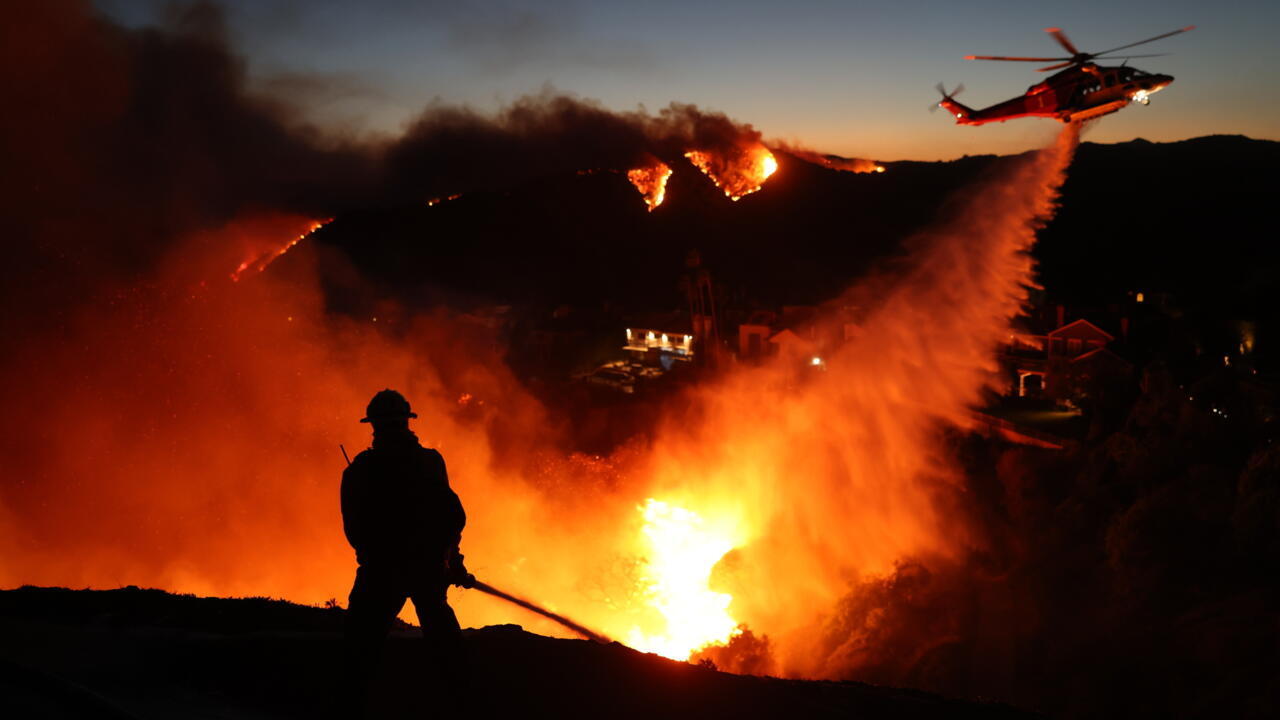
Extra resources were positioned all over the at-risk region, which extended for miles around the sprawling metropolis. But the fires, when they came, were overwhelming, defeating the hundreds of firefighters on the ground. Only an air assault would stop them.
A terrifying 24 hours after the first smoke blackened the air, winds dropped just enough for helicopters to take to the skies. “It was some of the most turbulent wind I’ve seen,” said helicopter coordinator John Williamson. Under the careful eye of experienced operators like Williamson, each pilot took turns in an elaborate airborne ballet.
The life-saving airshow they put on for nearly two weeks became a defining feature of the fires, watched with awe and gratitude by a terrified region.Television viewers were transfixed by the incredible skills of helicopter pilots loading up hundreds of gallons (liters) of water into the bellies of their aircraft while hovering over a reservoir, then dumping it with pinpoint accuracy on a wall of flames.
The sight of huge jet planes swooping over a fire line and unleashing a trail of bright red retardant thrilled and relieved those whose homes were threatened.But while they might have made it look easy, the pilots say the reality was far from it, with strong winds and unfamiliar terrain a constant challenge.
“There were definitely some uneasy moments going over the mountains where the crew was looking for me to see if I’m comfortable,” said Thomas. “There’s definitely some times where the aircraft’s 23,000 pound (11.5 tons), and you’re getting rocked around, thrown around in the air.”
Paul Karpus, who has overseen operations at an airbase in Camarillo, 45 miles (70 kilometers) west of Los Angeles, said the opening days of the firefight were like nothing he has experienced in 23 years. “Every season, you say, I’ve seen it all… And then you’re surprised,” he told media.
“Seeing the amount of devastation for the first time, when the sun was coming up, and the amount of structures lost, it takes your breath away. “Aerial teams operated 24 hours, pulling long shifts that left them exhausted and fraught. “On a scale of one to 10, this one was a 10, stress-wise,” said Karpus.