KARACHI
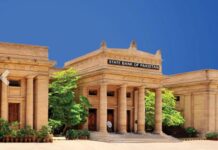
Faisal Moiz Khan President of the North Karachi Association of Trade and Industry (Nkati), has strongly condemned the State Bank of Pakistan’s decision to raise the policy rate by one percentage point, warning that the move will prove deeply damaging to industrial growth at a time when the country’s manufacturing sector is already grappling with a host of serious challenges.
In a statement, Faisal Moiz Khan said that the rate increase would make financing considerably more expensive, directly pushing up the cost of doing business and making it significantly harder for industrialists to sustain their operations. “Our industrialists are already crushed under the dual burden of high production costs and runaway inflation — this rate hike will only make things worse,” he said.
He pointed out that a particularly alarming aspect of the situation is that while regional economies operate with single-digit interest rates, Pakistan continues to saddle its industry with double-digit borrowing costs. This growing disparity, he warned, is eroding Pakistan’s industrial competitiveness and driving investors away at a time when the country can least afford it.
He noted that the surge in petroleum product prices had already driven up industrial production costs considerably, leaving manufacturers deeply worried about their financial viability. The latest rate increase, he said, was adding fuel to an already raging fire.
He expressed particular concern for small and medium-sized enterprises, stressing that SMEs — the backbone of Pakistan’s economy — were already struggling to access affordable credit. With the policy rate now higher, this critical segment of the business community would find the doors to financing even more firmly shut. “Ignoring the SME sector will come at a great cost to the national economy,” he cautioned.
Faisal Moiz Khan also highlighted the broader global context, noting that rising tensions between the United States and Iran had already placed regional economies under significant strain, and Pakistan was no exception.
Against this difficult backdrop, he said, the business community had at least hoped that the State Bank would hold rates steady — let alone consider a cut. The hike, he said, had gone squarely against the expectations of the industrial community.
He further stressed that the export sector, which serves as the primary engine of foreign exchange earnings and a critical pillar of economic stability, had been desperately in need of relief during these turbulent times. Unfortunately, he said, those hopes had gone unfulfilled.
Calling on both the government and the State Bank of Pakistan to take immediate corrective action, the Nkati president demanded that interest rates be restored to their previous level and that petroleum product prices be reduced without delay. He said these steps were essential to keep the wheels of industry turning, protect existing jobs, and put the national economy back on a sustainable path of growth and development.