ISLAMABAD
Crude oil prices edged lower on Friday after going 3 percent up a session earlier; however, the commodity is set for its biggest weekly gain since October as supply concerns continue amid geopolitical tension in the Middle East and prospects of higher demand boosted by positive economic growth in the US.
As of 1255 hours GMT, Brent, the international benchmark for two-thirds of the world’s oil, shed $0.54 (-0.66 percent) to reach $81.89 a barrel. Similarly, the West Texas Intermediate (WTI), the main oil benchmark for North America, went down by $0.70 (-0.90 percent) to $76.66 a barrel.
Both Brent and WTI ended the last week higher by 0.34 percent and one percent, respectively. Both benchmarks shed more than 10 percent in 2023 on a year-on-year basis.
On the other hand, the price of Russian Sokol increased by $1.41 (+1.90 percent) to $75.53. Arab Light prices witnessed an increase of $1.44 (+1.77 percent) to reach $82.58 a barrel. Similarly, the price for Opec Basket increased to $81.05 a barrel with an uptick of $1.35 (+1.69 percent). The OPEC Reference Basket of Crudes (ORB) is made up of Saharan Blend, Girassol, Djeno, Zafiro, Rabi Light, Iran Heavy, Basra Light, Kuwait Export, Es Sider, Bonny Light, Arab Light, Murban and Merey.
Brent and WTI both closed 3 percent higher on Thursday putting oil on track for the biggest weekly gain since October. Lower US crude stockpiles, the prospect of greater stimulus from China and elevated geopolitical tension in the Middle East have been the main factors behind the rise in oil prices this week, but better than expected growth data from the US and the prospect of earlier monetary policy easing in Europe have also likely contributed to the improved sentiment.
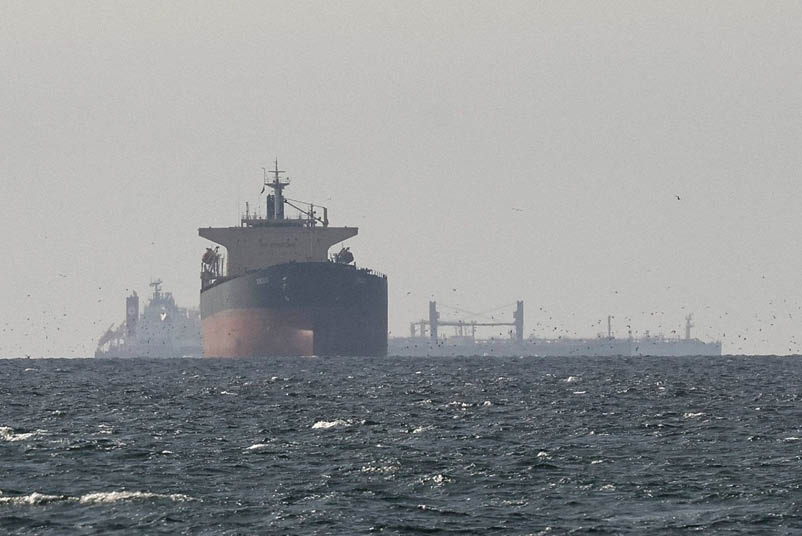
Middle East tensions continued with Yemen’s Houthi rebels attacking ships passing through the Red Sea – a key trade route connecting Asia and Europe – which raised concerns that the attacks could disrupt energy supplies from the Middle East producers.
The US crude inventories, an indicator of fuel demand, decreased by 9.2 million barrels in the week that ended on January 19, the data from the US Energy Information Administration showed, supporting oil prices.